Ramadan is the heart of the Islamic year. For one month every year, Muslims across the world abstain from food, drink, and intimacy from dawn to sunset, not because of medical or cultural reasons, but because Allah ﷻ commanded it as an act of pure worship. The significance of Ramadan goes far beyond not eating during daylight. It is a structured spiritual training programme, a yearly recalibration of the heart, and the month in which the Qur’an was first revealed.
This guide explains why Ramadan holds its central place in Islam, what the Qur’an and authentic hadith say about it, the meaning of Laylat al-Qadr, and practical ways to maximise the month’s blessings whether you are fasting your first Ramadan or your fortieth.
Why Ramadan Holds Its Sacred Place in Islam
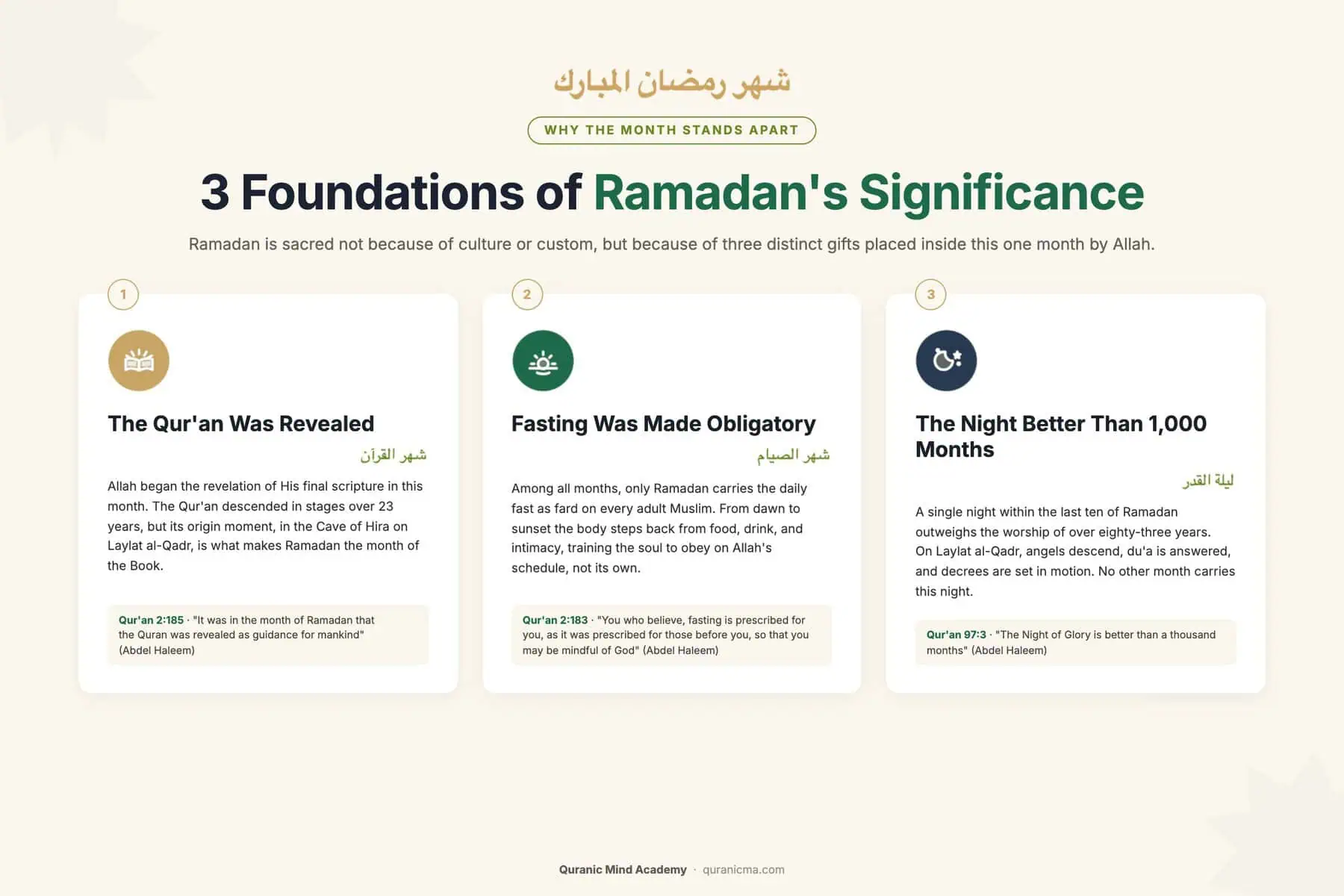
The status of Ramadan rests on three pillars rooted directly in the Qur’an.
The Month the Qur’an Was Revealed
Allah ﷻ said: “It was in the month of Ramadan that the Quran was revealed as guidance for mankind, clear messages giving guidance and distinguishing between right and wrong …” (al-Baqarah 2:185, trans. Abdel Haleem)
No other month in the Islamic calendar shares this distinction. Ramadan is the container in which the divine guidance reached humanity, beginning with the first revelation to the Prophet Muhammad ﷺ in the Cave of Hira.
The Month Fasting Was Made Obligatory
Allah ﷻ commanded: “You who believe, fasting is prescribed for you, as it was prescribed for those before you, so that you may be mindful of God.” (al-Baqarah 2:183, trans. Abdel Haleem)
The purpose stated is precise: not weight loss, not cultural belonging, but taqwa, a heightened God-consciousness that comes from voluntarily restraining basic appetites for the sake of the One who created them.
The Month That Contains Laylat al-Qadr
Allah ﷻ said: “We sent it down on the Night of Glory. What will explain to you what that Night of Glory is? The Night of Glory is better than a thousand months.” (al-Qadr 97:1-3, trans. Abdel Haleem)
A single night in Ramadan is worth more than 83 years of worship. There is no equivalent night in any other month.
What the Prophet ﷺ Said About Ramadan
The Sunnah is rich with explicit promises and protections for the fasting Muslim. The most cited:
- “Whoever fasts Ramadan out of faith and seeking reward, his previous sins will be forgiven.” (Sahih al-Bukhari 38, Sahih Muslim 760)
- “When Ramadan enters, the gates of Paradise are opened, the gates of Hell are closed, and the devils are chained.” (Sahih al-Bukhari 1899, Sahih Muslim 1079)
- “The breath of the fasting person is more pleasant to Allah than the scent of musk.” (Sahih al-Bukhari 1904)
- “There is a gate in Paradise called ar-Rayyan, through which only those who fasted will enter on the Day of Resurrection.” (Sahih al-Bukhari 1896)
- “Fasting is a shield. So when one of you is fasting, he should not use foul language.” (Sahih al-Bukhari 1894, Sahih Muslim 1151)
- “Whoever does not give up false speech and acting upon it, Allah has no need for him to give up his food and drink.” (Sahih al-Bukhari 6057)
The last hadith is especially weighty. Fasting from food while not fasting from lies, gossip, and bad behaviour misses the entire point. The point of Ramadan is character transformation, not hunger.
The Spiritual Dimensions of Ramadan
Renewal of Iman
Ramadan rebuilds the connection with Allah ﷻ in a way no other month can. Fasting suspends the routine appetites that dominate daily life. The space that opens up gets filled with prayer, Qur’an, and reflection. By the end of the month, the heart often feels reset.
Practical anchors:
- Fix a daily Qur’an portion (juz or half-juz). Aim to complete a full reading by ʿEid.
- Pray Taraweeh nightly. Standing in long prayers behind a hafiz reciting from memory is one of the unique gifts of Ramadan.
- Make istighfar a habit, especially in the last hour before suhoor.
Self-Purification and Restraint
Fasting is not just about food. The Prophet ﷺ tied the reward of the fast to restraint from sin (Sahih al-Bukhari 6057). Gossip, lying or losing your temper does not break the fast, but it can drain its reward until little is left (Dar al-Ifta). Ramadan asks for restraint across the whole self.
- Watch the tongue. No backbiting, no arguing, no foul language.
- Watch the eyes. Lower the gaze, limit useless scrolling.
- Watch the heart. Audit envy, arrogance, and grudges before they grow.
Empathy and Generosity
Going without food and water by choice connects you to those who go without by necessity. In Ramadan, when Jibril met him each night to study the Qur’an, the Prophet ﷺ was described as “more generous than the free-blowing wind.” (Sahih al-Bukhari 6)
Practical anchors:
- Sponsor iftar meals for those in need, locally or through trusted charities.
- If your zakah falls due in Ramadan, it is a good time to give it, but zakah should not be delayed past its due date to wait for Ramadan (Dar al-Ifta).
- Make sadaqah a daily habit, even a small amount.
Laylat al-Qadr: The Night Better Than a Thousand Months
Among the rewards of Ramadan, Laylat al-Qadr stands apart. Allah ﷻ describes it as “better than a thousand months” (al-Qadr 97:3, trans. Abdel Haleem), and the Prophet ﷺ explained that the night sits in the last ten nights of Ramadan, most likely on one of the odd-numbered nights (Sahih al-Bukhari 2017).
The Prophet ﷺ would intensify his worship dramatically in the last ten nights: “When the last ten nights began, the Prophet would tighten his waist-belt, spend the nights in worship, and wake his family.” (Sahih al-Bukhari 2024)
Aisha (may Allah be pleased with her) asked the Prophet ﷺ what to say if she caught Laylat al-Qadr. He taught her: “Allahumma innaka ʿAfuwwun, tuhibbu al-ʿafwa, faʿfu ʿanni” (O Allah, You are Pardoning and love to pardon, so pardon me). (Sunan Ibn Majah 3850, graded sahih by Darussalam; also Jami at-Tirmidhi 3513, graded hasan sahih by al-Tirmidhi)
The practical implication: in the last ten nights, prioritise night worship over everything else. Even if you cannot stay up all night, two hours of focused tahajjud and du’a on the right night earns more than 83 years of worship without it.
A Practical Daily Framework for Ramadan
Fasting reorders the day. Building a sustainable rhythm matters more than peak intensity.
| Time | Activity | Purpose |
|---|---|---|
| Pre-dawn (Suhoor) | Light, nutritious meal + Fajr prayer | Sustain energy, follow Sunnah of suhoor (Bukhari 1923) |
| Morning | Qur’an reading, planned daily portion | Connect with revelation, build reflection |
| Midday | Work or study with short dhikr breaks | Productivity within the fast |
| Late afternoon | Quiet du’a in the final hour before iftar | The fasting person’s du’a at iftar time is answered (Jami at-Tirmidhi 3598, graded hasan by al-Tirmidhi) |
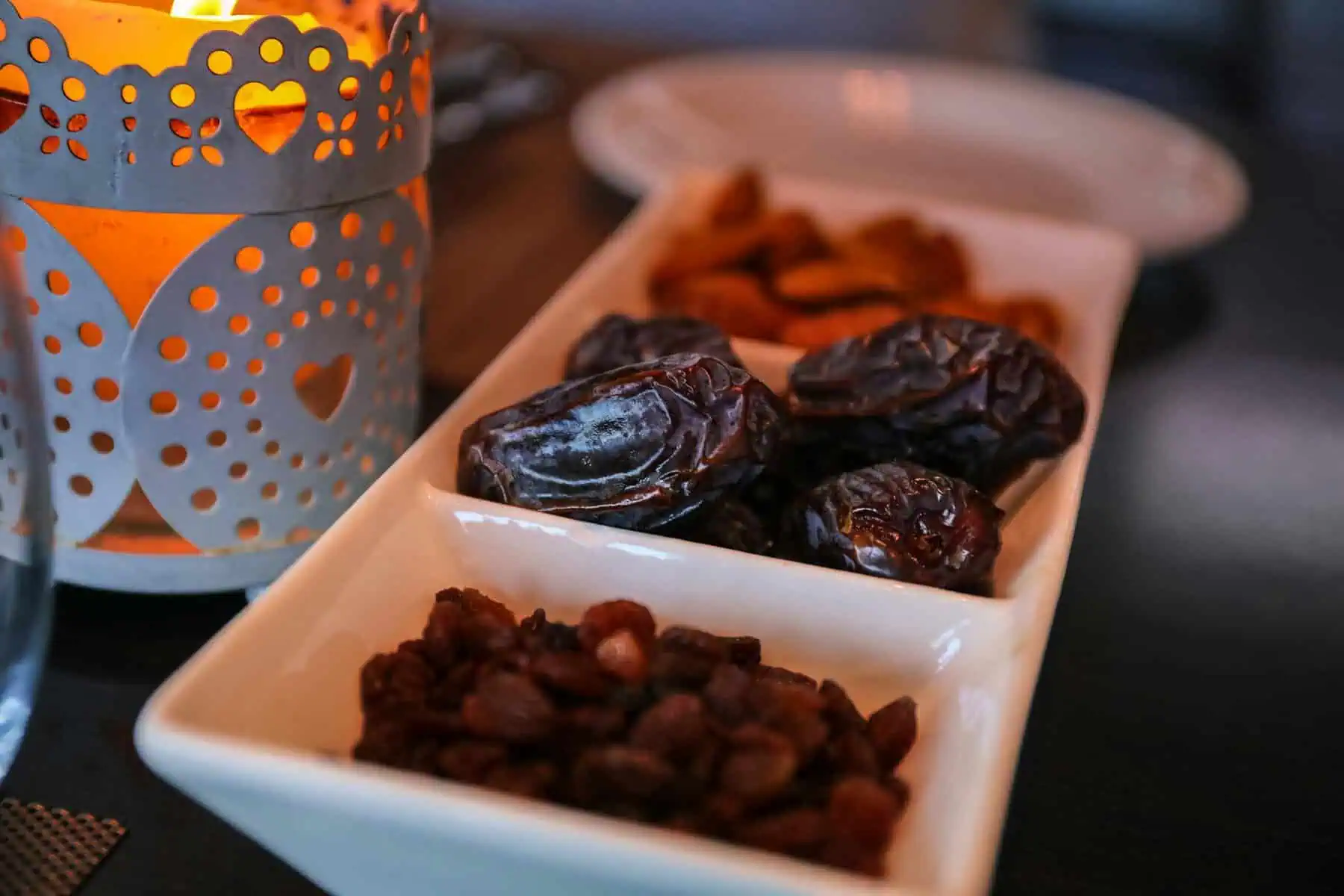
| Sunset (Iftar) | Open with fresh or dry dates (or water if there are none), then Maghrib | Sunnah of the Prophet ﷺ (Sunan Abi Dawud 2356, graded hasan sahih by al-Albani) |
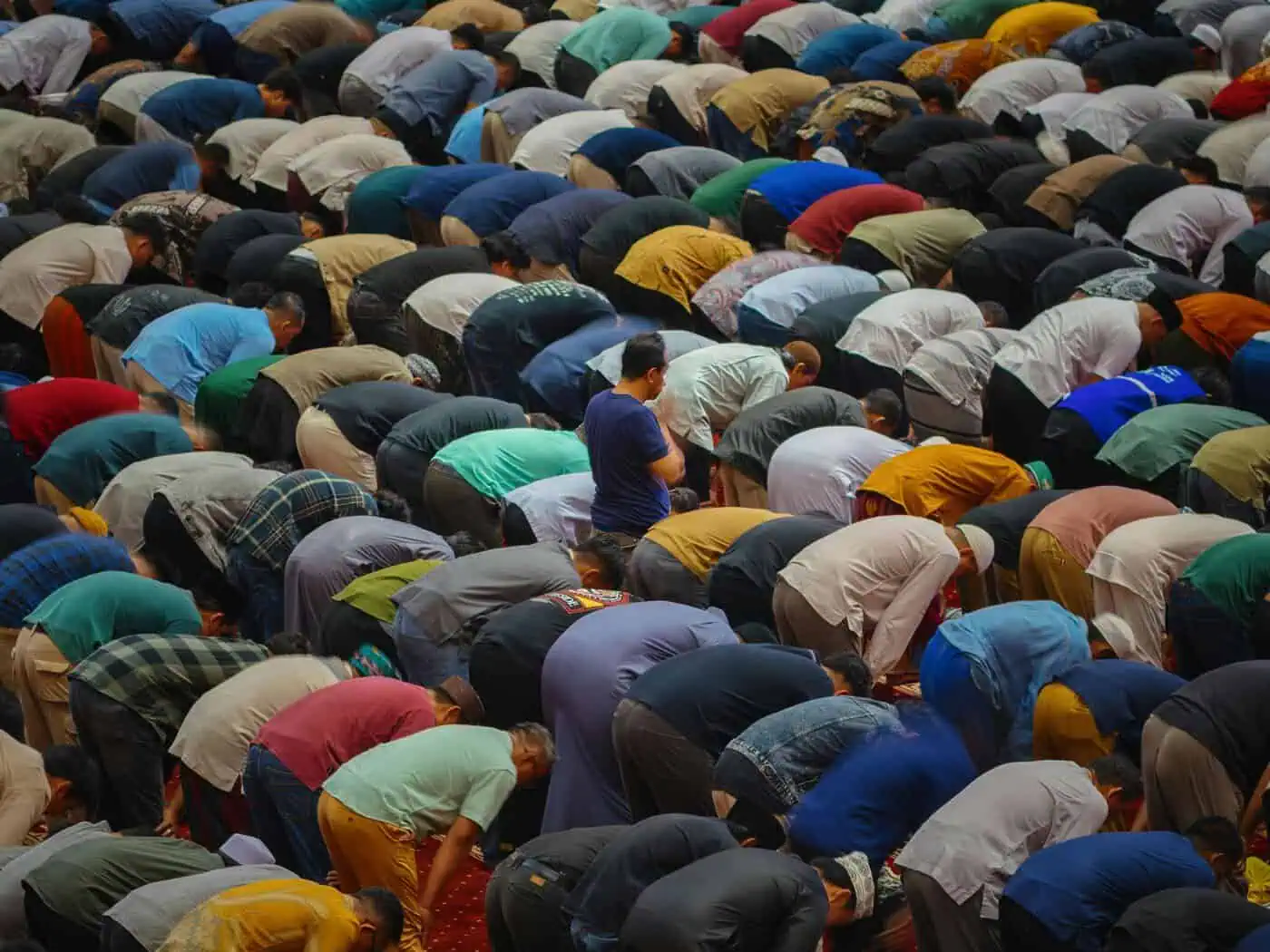
| Evening | Taraweeh prayer, ideally in congregation | The Prophet ﷺ called it qiyam Ramadan (Bukhari 37) |
| Last third of night | Tahajjud + istighfar, especially in last 10 days | Catch Laylat al-Qadr, Allah descends to the lowest heaven (Bukhari 1145) |
This is a template, not a script. The Prophet ﷺ strove in worship in the last ten nights more than at any other time (Sahih Muslim 1175), so build up to them. Build the rhythm gradually.
Common Pitfalls to Avoid
Many Muslims complete Ramadan feeling they got less out of it than they hoped. The same patterns repeat:
- Over-eating at iftar. A heavy iftar kills Taraweeh focus and ruins sleep. The Sunnah is moderation, not feast.
- Treating Ramadan as a food festival. If your monthly food budget rises in Ramadan, something has gone wrong. The point is restraint, not elaboration.
- Sleeping through the day. Working night shifts is a legitimate exception, but routinely flipping day and night strips the fast of its training effect.
- Bingeing entertainment to “pass time”. The hours of hunger are not obstacles to endure but space to fill with worship. Replace one Netflix episode with one Qur’an juz.
- Front-loading effort. Many start the first week strong, then taper. The last ten nights are the most rewarded; save energy for them.
Deepen Your Ramadan With Islamic Studies
One of the most underrated ways to maximise Ramadan is to commit to structured Islamic learning during the month. The combination of fasting (which sharpens focus) and dedicated study (which fills the mind with beneficial knowledge) compounds beyond either alone.
Quranic Mind’s Islamic Studies course covers aqeedah, fiqh, seerah, and hadith with Al-Azhar trained teachers. What students get:
- One-to-one live classes with certified teachers.
- Flexible scheduling that fits around Ramadan’s reordered day.
- English-speaking scholars for non-Arab learners.
- Two free trial classes before any commitment.
Start with the Islamic Studies course or explore all Quranic Mind courses.
Those two trial classes are the whole commitment to begin with, and they are taught by two different teachers, so it is worth settling on one before Ramadan starts rather than during it. Book a free trial class.
Related Guides
- Ramadan Preparation Guide: practical steps to prepare for a blessed Ramadan.
- Virtue of Reading the Qur’an: spiritual rewards of daily recitation.
- Seeking Knowledge in Islam: why learning is fard on every Muslim.
- Sacred Months in Islam: the four sacred months and their virtues.
- Principles of Fiqh: the rulings of fasting and worship explained.
Frequently Asked Questions
What is the significance of Ramadan in Islam?
Ramadan is the month in which the Qur’an was revealed (al-Baqarah 2:185), the month in which fasting was made obligatory (al-Baqarah 2:183), and the month containing Laylat al-Qadr, a single night better than 1,000 months (al-Qadr 97:3). Its significance lies in being the structured spiritual training month Allah ﷻ chose for the Muslim community.
Why is fasting in Ramadan obligatory?
Allah ﷻ commanded it in the Qur’an (al-Baqarah 2:183) with the stated purpose of attaining taqwa, God-consciousness. The Prophet ﷺ named it among the five pillars of Islam, listing it fourth (Sahih Muslim 16). Fasting trains the Muslim in restraint, gratitude, and spiritual focus, qualities that carry beyond the month itself.
What is Laylat al-Qadr and when is it?
Laylat al-Qadr (the Night of Decree) is the night the Qur’an was first revealed. Allah ﷻ describes it as “better than a thousand months” (al-Qadr 97:3, trans. Abdel Haleem), meaning worship on this single night earns the reward of over 83 years of worship. The Prophet ﷺ taught it falls in the last ten nights of Ramadan, most likely on one of the odd-numbered nights (21st, 23rd, 25th, 27th, or 29th).
What invalidates the fast?
Intentional eating, drinking, or intimacy from dawn to sunset breaks the fast. Vomiting deliberately, intentional ejaculation, and (for women) menstruation also invalidate it. Forgetfully eating or drinking, however, does not break the fast according to the majority of scholars, as the Prophet ﷺ taught: “Whoever forgets while fasting and eats or drinks, let him complete his fast, for it is Allah who fed him and gave him to drink.” (Sahih Muslim 1155; also Sahih al-Bukhari 6669). The Maliki school asks for a make-up day if this happens in a Ramadan fast (Dar al-Ifta)
How can I maximise Ramadan for personal growth?
Combine fixed worship (the five prayers, Taraweeh, fixed daily Qur’an portion) with personal restraint (tongue, eyes, heart) and generosity (sadaqah, zakah, iftar for others). Save the highest intensity for the last ten nights to catch Laylat al-Qadr. Avoid the common pitfalls of overeating, oversleeping, and treating the month as a food festival.
Can I study Islam online during Ramadan?
Yes, and Ramadan is one of the best months to do so. Fasting sharpens focus and the long days of restraint create natural time for learning. Structured online programmes with qualified teachers offer flexible scheduling that fits around suhoor, iftar, and Taraweeh. Quranic Mind’s Islamic Studies course is designed for working professionals and students with two free trial classes before commitment.
Ready to make this Ramadan your most meaningful?