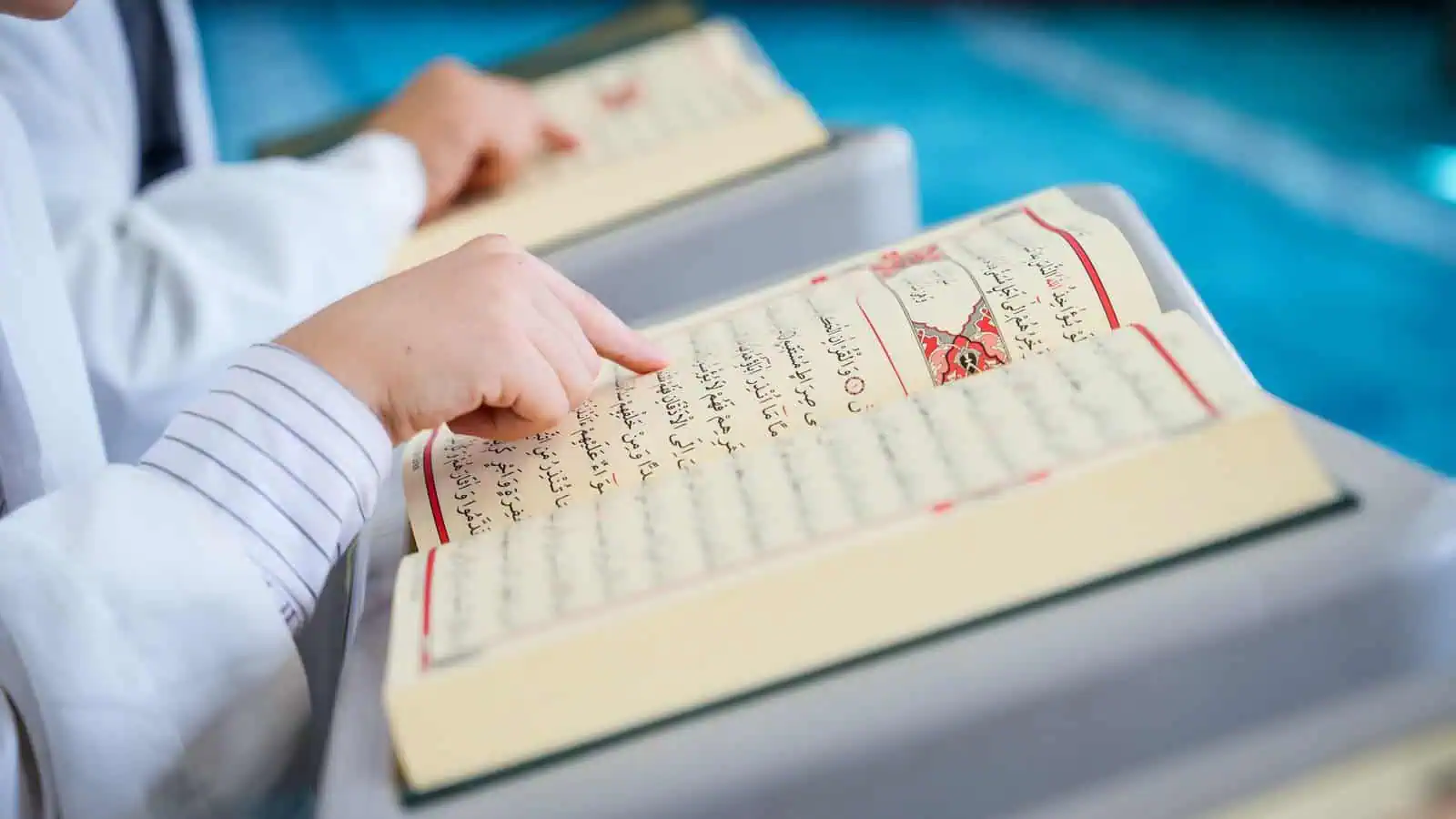

Surah Yaseen is one of the most loved surahs in the Quran. Many Muslims read it every morning, after Fajr, on Thursday nights, or beside someone who is very ill. Ask why, and you will usually hear a list of promises: it is “the heart of the Quran”, it counts as reading the whole Quran ten times, it brings forgiveness, it meets your needs. This guide sets out the Surah Yaseen benefits that stand on firm ground, gives you the source and grade of every popular narration, and explains how scholars at Egypt’s Dar al-Ifta handle the weaker ones. The aim is not to make you read Yaseen less. It is to help you read it knowing exactly what you can rely on.
Surah Yaseen at a Glance
Yaseen (also written Yasin or Ya-Sin, يس) is the 36th surah of the Quran. It opens with two of the separate Arabic letters, Ya and Sin, that begin several surahs. In his tafsir al-Wasit, Shaykh Muhammad Sayyid Tantawi notes that commentators differed over what these letters mean: some took them as a name of the surah, of the Quran or of the Prophet ﷺ, others as “O man”. He considers the strongest view to be that they are among the disjointed letters that open certain surahs, pointing to the Quran’s inimitability: it is built from the same letters people speak, yet no one can produce anything like it.
| Detail | Surah Yaseen |
|---|---|
| Position in the Mushaf | Surah 36 |
| Number of verses | 83 |
| Revealed in | Makkah |
| Where you find it | End of juz 22 into juz 23, pages 440 to 445 of the standard Madinah Mushaf |
| Main themes | The truth of the Prophet’s ﷺ message, the signs of Allah in creation, the Day of Judgement and the resurrection |
The Surah Yaseen Benefits You Can Rely On
Start with what is certain, because it is more than people expect.
1. Every letter carries reward
Yaseen is Quran, so everything authentically said about reciting the Quran applies to it in full. ʿAbdullah ibn Masʿud reports that the Messenger of Allah ﷺ said that whoever recites a letter from Allah’s Book receives a reward for it, and the reward is multiplied by ten. He added: “I do not say that Alif Lam Mim is a letter, but Alif is a letter, Lam is a letter and Mim is a letter” (Jami’ at-Tirmidhi 2910, graded hasan by Darussalam). Eighty-three verses is a great many letters. That promise alone is reason enough to make Yaseen a regular part of your reading.
2. The Quran will intercede for those who recite it
Abu Umamah heard the Prophet ﷺ say: “Recite the Qur’an, for on the Day of Resurrection it will come as an intercessor for those who recite it” (Sahih Muslim 804a). The hadith goes on to name Surah al-Baqarah and Al ‘Imran specifically, not Yaseen, but its opening sentence covers every part of the Quran a person keeps up.
3. It strengthens certainty in the Hereafter
Yaseen argues for the resurrection head on. It quotes the person who disputes it, “forgetting his own creation”, and asks, “Who can give life back to bones after they have decayed?” and answers him: “He who created them in the first place will give them life again: He has full knowledge of every act of creation” (Quran 36:78-79, Abdel Haleem translation). Tantawi explains the logic of the reply: the One who brought these bodies into being from nothing is, all the more, able to bring them back after they have decayed. Near its close comes the verse many Muslims know by heart:
إِنَّمَآ أَمۡرُهُۥٓ إِذَآ أَرَادَ شَيۡـًٔا أَن يَقُولَ لَهُۥ كُن فَيَكُونُ
“When He wills something to be, His way is to say, ‘Be’, and it is!” (Quran 36:82, Abdel Haleem translation).
4. It reminds you that every deed is recorded
“We shall certainly bring the dead back to life, and We record what they send ahead of them as well as what they leave behind: We keep an account of everything in a clear Record” (Quran 36:12, Abdel Haleem translation). Later the surah describes a Day when “We shall seal up their mouths, but their hands will speak to Us, and their feet bear witness to everything they have done” (36:65). A reader who takes these two verses seriously will think twice about what they leave behind.
5. It teaches courage in calling to the truth
At the centre of the surah is a man who “from the furthest part of the city … came running” to urge his people to follow the messengers (36:20-27). Tantawi notes that the passage suggests his people killed him, and that he was then told, “Enter the Garden.” His reply is striking: “If only my people knew how my Lord has forgiven me and set me among the highly honoured.” Tantawi quotes Ibn Kathir on what the man meant: had his people seen the reward he received, it would have led them to follow the messengers. Even after they killed him, he wished them good. He also cites al-Zamakhshari, who draws from it a lesson in restraining anger and caring for people who wrong you.
6. It shows the reward that waits for the believers
The people of Paradise are described “seated on couches in the shade” with “whatever they ask for” (36:55-57), and then comes a single short verse of greeting:
سَلَٰمٞ قَوۡلٗا مِّن رَّبّٖ رَّحِيمٖ
“‘Peace,’ a word from the Lord of Mercy” (Quran 36:58, Abdel Haleem translation).
7. It is a reminder for a living heart
Allah describes the Quran in this surah as “a revelation, an illuminating Quran to warn anyone who is truly alive” (Quran 36:70, Abdel Haleem translation). Tantawi explains “alive” here as a believer with a living heart, a pure soul and an attentive ear, because a person like that benefits from the warning and the reminder. That is the real condition for benefiting from Yaseen: not how often you recite it, but whether your heart is awake while you do.
The Famous Surah Yaseen Hadith, and How Strong Each One Is
Most of what is shared online about Yaseen comes from a handful of narrations. Here they are with their sources and the grades shown on sunnah.com. A da’if (weak) grade means the chain of narrators has a defect, so the hadith scholars could not confirm that the Prophet ﷺ said it. It does not mean the words are false, and it does not mean Yaseen lacks virtue.
| What the narration says | Where it is found | Grade |
|---|---|---|
| “Everything has a heart, and the heart of the Quran is Yaseen. Whoever recites Yaseen, Allah records for him the reward of reading the Quran ten times.” | Jami’ at-Tirmidhi 2887; also in al-Darimi (Mishkat al-Masabih 2147) | Da’if (Darussalam; al-Albani). Al-Tirmidhi himself called it gharib. Some critics judged it more severely: Imam Ahmad called it fabricated, and al-Albani graded it mawdu’ (fabricated) in Da’if al-Tirmidhi. |
| “Recite Yaseen over your dying.” | Sunan Abi Dawud 3121; Sunan Ibn Majah 1448 | Da’if (al-Albani on Abu Dawud; Darussalam on Ibn Majah) |
| “Whoever recites Yaseen seeking Allah’s pleasure, his past sins are forgiven, so recite it over your dying.” | Al-Bayhaqi, Shu’ab al-Iman (Mishkat al-Masabih 2178) | Da’if (al-Albani) |
| “Whoever recites Yaseen at the start of the day, his needs will be met.” | Al-Darimi, from ʿAta’ ibn Abi Rabah (Mishkat al-Masabih 2177) | Mursal: ʿAta’ was a Successor, so the link to the Prophet ﷺ is missing. Sunnah.com shows no completed grade. |
So the phrase “the heart of the Quran” is not established as the Prophet’s ﷺ own words, and neither is “ten times the Quran”. Because some leading critics judged that narration fabricated, it is safest not to repeat it as a saying of the Prophet ﷺ at all. The other narrations in the table are weak; if you mention them, say so rather than presenting them as authentic. Our benefits of reading the Quran daily takes the same approach with other popular claims.
Can You Still Read Yaseen for Its Virtues?
Yes, and Egypt’s Dar al-Ifta explains why. In fatwa 8877 (February 2026), the Grand Mufti of Egypt, Dr Nazir Ayyad, answered a reader whose friend had told him to drop a hadith because it was weak. The answer: narrating weak hadiths about the virtues of good deeds is permissible, as the jurists and hadith scholars have set out, on condition that the weakness is not severe. The fatwa adds that it is better not to go into these questions without knowledge, and to ask people of knowledge.
Dar al-Ifta has also answered a question about Yaseen itself. Asked about reading Yaseen after Fajr, it cited the “heart of the Quran” narration from al-Darimi, al-Tirmidhi and al-Bayhaqi, together with the general command to recite the Quran, and concluded that there is nothing wrong with reading Yaseen after Fajr and nothing wrong with keeping it up as a regular practice (Dar al-Ifta, “Reading Yaseen after Fajr”, 2014).
Put the two together and the practical position is simple:
- Read Yaseen as often as you like. The reward of reciting the Quran is certain, and making one surah a daily habit is a good way to build consistency.
- Be honest about the narrations. Mention the weak ones as weak, and leave out the “heart of the Quran” narration as a saying of the Prophet ﷺ, since some critics judged it fabricated.
- Do not treat a weak narration as a guarantee. Ask Allah for what you need; do not treat reciting Yaseen as a formula that obliges a result.
Reading Yaseen Beside Someone Who Is Dying
This is where the question matters most to families, so it is worth being precise. The narration “Recite Yaseen over your dying” is graded weak, as the table above shows. Even so, the majority of scholars recommend reciting Yaseen beside a person who is dying. An Islamweb fatwa explains that, although its chain is weak, it is supported by reports from some of the Successors, and that this is the position the majority of the people of knowledge took (Islamweb fatwa 35349).
The Maliki school is more reserved. Ibn Abi Zayd al-Qayrawani wrote in his Risalah that some scholars allowed reciting Yaseen at the head of a dying person because of this hadith, and then added that, in Malik’s view, it was not an established practice, either because of the hadith’s weakness or because it had not reached him (quoted in Islamweb fatwa 67467).
If you are sitting with a loved one, reciting Yaseen quietly and gently, without disturbing them, follows the majority view. Reciting for a person after they have died is a separate question on which scholars differ, and it is best taken to a scholar you trust.
How to Read Surah Yaseen With Understanding
Yaseen moves through six clear stages. Reading the translation of one stage before you recite it is the simplest way to stop the surah becoming a stream of sounds. This map follows the verses themselves:
| Verses | What happens | A verse to hold on to |
|---|---|---|
| 1 to 12 | An oath by the wise Quran that Muhammad ﷺ is truly a messenger, sent to warn | 36:12, everything is kept in a clear Record |
| 13 to 32 | A town rejects its messengers; one man runs to defend them | 36:26-27, “If only my people knew” |
| 33 to 44 | Signs in creation: the lifeless earth brought to life, night and day, the sun and moon, the laden ship | 36:33, the lifeless earth given life |
| 45 to 54 | The deniers ignore the signs; a single blast, the Trumpet, and the dead rise | 36:54, no soul will be wronged |
| 55 to 68 | The people of Paradise and the guilty are separated | 36:58, “Peace,” a word from the Lord of Mercy |
| 69 to 83 | The Quran is not poetry; the argument for the resurrection; “Be, and it is” | 36:82, His command is only “Be” |
Three habits make a regular Yaseen reading far richer:
- One stage a day, with meaning. Read the translation of one stage, then recite it. Within a week you will know the whole surah’s story.
- Listen while you follow. A slow, exact reciter such as Shaykh al-Husary helps you place every madd and ghunnah correctly. Our guide to improving your Quran recitation has a daily routine you can use with Yaseen.
- Memorise it in small pieces. Eighty-three verses is a realistic goal. Learn a few verses at a time and keep them with a simple revision cycle like the one in our Quran revision schedule.
If you want to go deeper into the meanings, our beginner’s guide to what tafseer is explains how to use a tafsir alongside your reading.

Reading Yaseen with someone who can explain it turns a familiar sound into a surah you understand.
Learn Surah Yaseen With a Qualified Teacher
At Quranic Mind Academy, our teachers are native Arabic speakers with qualifications from Al-Azhar University and other recognised Islamic institutions, and they teach one to one on live video. A teacher can listen to your recitation of Yaseen verse by verse, correct the letters and rules you cannot hear in yourself, explain the meanings as you go, and help you memorise the surah at a pace that suits you. See how our Quran reading and recitation course works, or explore Quran memorisation classes. Your first lesson is a free 30-minute trial, and every paid month is covered by our money-back guarantee.
Frequently Asked Questions
Is Surah Yaseen the heart of the Quran?
The saying “the heart of the Quran is Yaseen” comes from a narration in Jami’ at-Tirmidhi (2887) and al-Darimi that hadith scholars grade as weak; al-Tirmidhi himself called it gharib. It is therefore not established as the Prophet’s ﷺ own words. Dar al-Ifta al-Misriyyah cites it to encourage reading Yaseen, and in a separate fatwa it permits narrating weak hadiths about virtues when the weakness is not severe; some hadith critics, including Imam Ahmad and al-Albani, judged this narration fabricated, so it is safest not to repeat it as a saying of the Prophet ﷺ.
What are the benefits of reading Surah Yaseen daily?
The certain benefits are those of reciting any part of the Quran: a reward for every letter, multiplied by ten (Tirmidhi 2910, hasan), and the Quran interceding for those who recite it (Muslim 804a). Yaseen also builds certainty in the resurrection, reminds you that every deed is recorded, and describes the reward of the believers. Dar al-Ifta says there is nothing wrong with making it a daily practice.
Is it sunnah to read Surah Yaseen for a dying person?
The narration “Recite Yaseen over your dying” (Abu Dawud 3121, Ibn Majah 1448) is graded weak. Even so, the majority of scholars recommend reciting Yaseen beside a dying person, supported by reports from some of the Successors. In the Maliki school, Ibn Abi Zayd records that some scholars allowed it, while noting that Imam Malik did not regard it as an established practice.
Can I read Surah Yaseen for my needs to be fulfilled?
The narration that reading Yaseen at the start of the day meets your needs is mursal, meaning the link to the Prophet ﷺ is missing, so it cannot be relied on as a promise. Reading the Quran and then making dua is good in itself. Read Yaseen for its own sake and ask Allah directly for what you need, without treating the surah as a formula that guarantees a result.
How many verses are in Surah Yaseen, and where is it in the Quran?
Surah Yaseen is the 36th surah and has 83 verses. It was revealed in Makkah and runs from the end of juz 22 into juz 23, on pages 440 to 445 of the standard Madinah Mushaf.
How can I memorise Surah Yaseen?
Split it into small pieces, learn a few verses a day by listening to a slow reciter and repeating, and revise what you have learned every day before adding more. Reading the translation of each passage first makes it much easier to remember. In our teachers’ experience, a learner who already reads fluently and revises daily can usually memorise Yaseen within a few months.