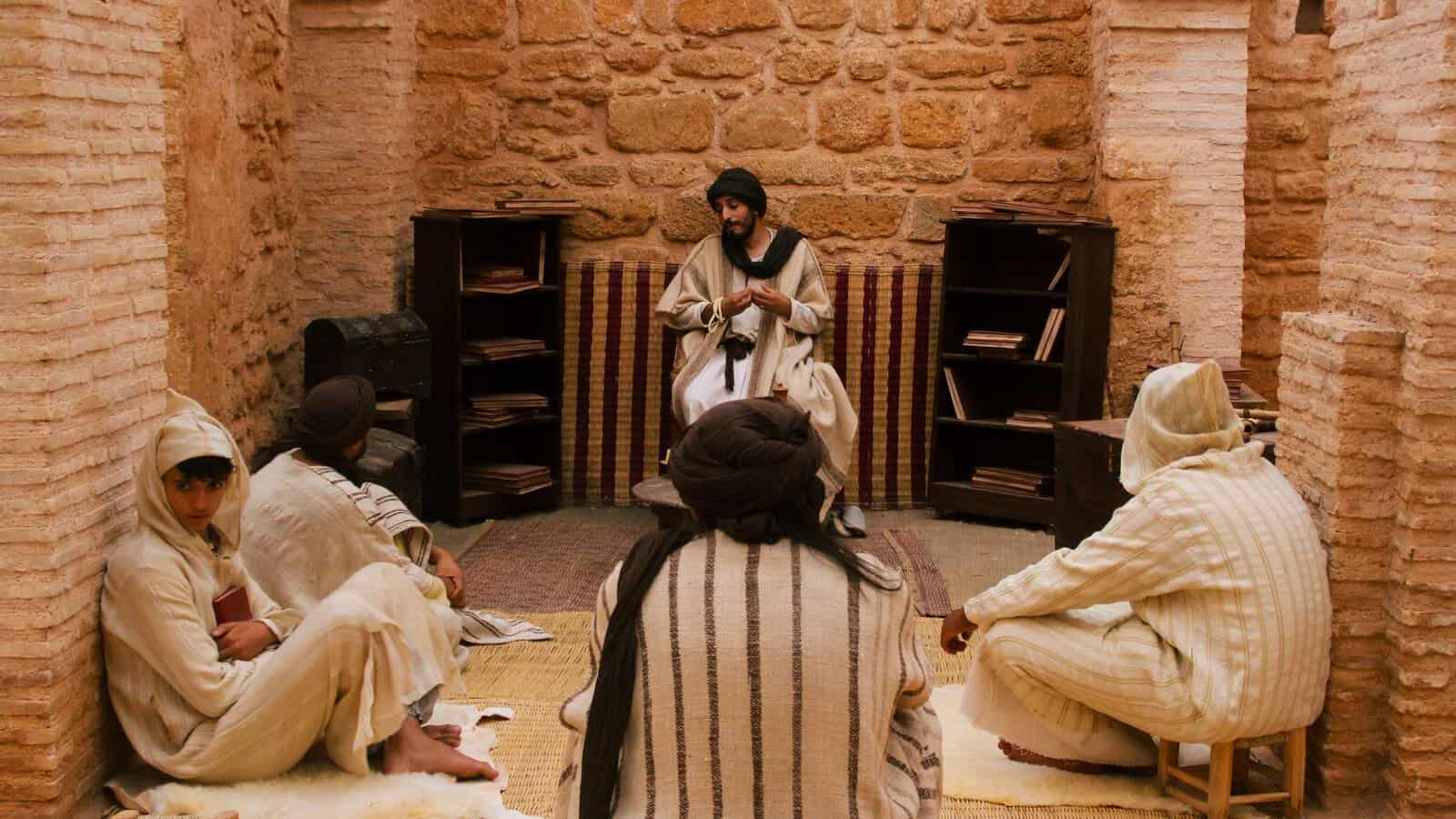
Ask ten students of the Quran what the difference between tajweed and tarteel is, and you will get roughly three answers. Some will say they are the same thing. Some will say tajweed is the rules and tarteel is reciting slowly. A few will say tarteel is what the beautiful reciters on YouTube are doing, and tajweed is the boring part you have to learn first.
None of those is quite right, and the third one is backwards. The two words describe different things, they sit at different levels, and the relationship between them is the single most useful thing a beginner can understand about recitation. Get it clear and a lot of confusion about “how am I supposed to sound?” disappears.
The short answer
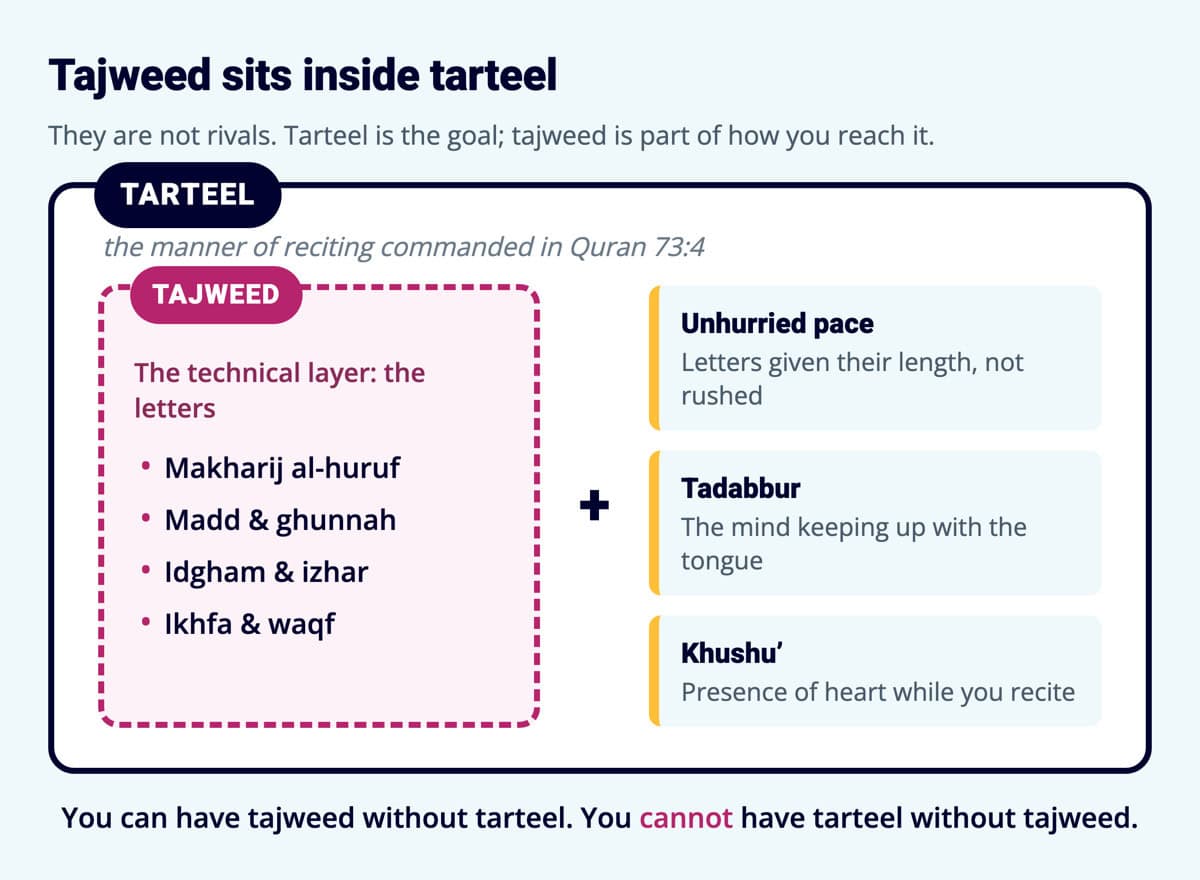
Tajweed is a body of rules. Tarteel is a manner of reciting that the Quran itself commands. Tajweed tells you how each letter should be pronounced, where it comes from in the mouth, and when a sound is held, merged, hidden or bounced. Tarteel is the wider instruction to recite unhurriedly and distinctly, with your understanding keeping pace with your tongue.
They are not rivals and they are not alternatives. Tarteel is the goal. Tajweed is part of how you reach it. You cannot recite with tarteel while mangling the letters, and you can absolutely apply every rule correctly while racing through the page and absorbing nothing. That second case is tajweed without tarteel, and it is more common than most of us would like to admit.
What tajweed actually is
The word comes from the root j-w-d, which carries the sense of making something good, doing it well, bringing it to excellence. In practice, tajweed is the discipline that governs correct pronunciation: the articulation points of each letter (makharij al-huruf), the qualities that distinguish similar-sounding letters (sifat), the rules of prolongation (madd), nasalisation (ghunnah), and what happens when certain letters meet, which is where idgham, izhar, ikhfa and iqlab come in.
Tajweed is, in other words, a technical field. It has terminology, categories and a right answer. Either the meem is being hidden correctly or it is not. Either that madd is being held for the correct count or it is not. This is why tajweed can be taught, tested, and corrected, and why it is nearly impossible to learn properly from a book alone. Someone who already recites correctly has to hear you and tell you what your mouth is actually doing, as opposed to what you think it is doing.
If you want the full map of the rules themselves, our complete guide to tajweed rules covers each category with examples, and what is tajweed deals with the definition and the ruling on learning it.
What tarteel actually is
Tarteel is not a technique. It is a command, and it appears in the Quran directly:
أَوْ زِدْ عَلَيْهِ وَرَتِّلِ الْقُرْآنَ تَرْتِيلًا
“or a little more; recite the Quran slowly and distinctly”
Surah Al-Muzzammil 73:4, Abdel Haleem translation
The root is r-t-l, and the linguistic image behind it is worth sitting with, because it explains the whole concept. Al-Qurtubi notes in his commentary that tarteel carries the sense of arrangement, ordering and good structure, and that the Arabs used the related expression for teeth that are evenly set. Ibn Ashur makes the same point more precisely in al-Tahrir wa al-Tanwir: the origin is thaghr murattal, a mouth whose teeth are slightly spaced rather than crowded together.
That is the picture. Not fast, not crammed, not run together. Each element distinct and in its place, with a little air around it. Applied to recitation, Ibn Ashur explains it as unhurried pronunciation of the letters so that they leave the mouth clearly, with the vowels that deserve lengthening actually given their length.
Al-Qurtubi’s summary of the verse is blunt: do not rush the Quran, recite it unhurriedly and with clarity, alongside contemplation of the meanings. He records al-Dahhak’s gloss as “recite it letter by letter”, and Mujahid’s remark that the most beloved of people to Allah in recitation is the one who understands it best.
So tarteel is doing something tajweed does not do. Tajweed governs the letters. Tarteel governs the encounter: the pace, the clarity, and whether anything is actually landing while you recite.
The difference between tajweed and tarteel at a glance
| Tajweed | Tarteel | |
|---|---|---|
| What it is | A body of technical rules | A manner of reciting, commanded in the Quran |
| Root meaning | j-w-d: to make good, to bring to excellence | r-t-l: to be well ordered and evenly spaced |
| Question it answers | “Am I pronouncing this correctly?” | “Am I receiving this the way it was meant to be received?” |
| Scope | Articulation points, letter qualities, madd, ghunnah, the rules of noon and meem | The whole act: pace, clarity, stopping places, contemplation, presence of heart |
| Quranic basis | Drawn out from the command to recite with tarteel, and from how the Prophet ﷺ recited | Stated directly in 73:4 |
| Can you have it without the other? | Yes, and it is a real problem. Perfect rules applied at speed, with nothing understood. | No. Distorting the letters breaks tarteel by definition. |
| How it is learned | Study plus correction from a qualified teacher | Habit, deliberate pacing, and building the habit of reflection |
| Measured by | Accuracy | Whether the meaning arrives |
Why “tarteel just means slow” is a half-truth
This is the version most people meet first, and it is not so much wrong as badly incomplete. Slowness is a consequence of tarteel, not the definition of it. You can recite very slowly and still not be doing tarteel, if your mind is somewhere else entirely and the letters are sloppy.
Part of the confusion is that tajweed manuals commonly describe different paces of recitation, and tarteel often gets filed away as the name of the slow one. That filing is useful shorthand for a classroom, but it flattens the concept. Read what the commentators actually say about 73:4 and tarteel is doing far more work than marking a tempo.
Ibn Ashur draws out the purpose plainly: reciting this way lets the memorisation take root, lets listeners absorb it, and lets both reciter and listener contemplate the meanings, so that the tongue does not outrun the understanding. That last phrase is the heart of it. Tarteel is the discipline of not letting your mouth get ahead of your mind.
Abdullah ibn Mas’ud put the failure mode in words that have not aged a day. Ibn Kathir records him saying: do not scatter it like scattering sand, and do not rush through it like rushing through poetry; stop at its wonders and move hearts with it. He was describing people who finish quickly. He was not impressed.
The two are not rivals: tarteel contains tajweed
Here is where it comes together, and the clearest statement of it comes from Muhammad Sayyid Tantawi, the late Grand Imam of al-Azhar, in his commentary al-Tafsir al-Wasit.
Tantawi handles both errors at once. On one side, he says the command in 73:4 does not mean reciting in a melodic or performative way that alters the words and undermines correct recitation in its articulation points, its ghunnah, its madd, its idgham and its izhar. On the other side, he says what tarteel positively is: reciting with a beautiful voice, with humility and contemplation, and with complete adherence to correct recitation in terms of the articulation points, the stopping places, madd, izhar, ikhfa and the rest.
Read that list again. Those are tajweed rules. An Azhari authority defining tarteel reaches for the vocabulary of tajweed to do it. That is the relationship in one sentence: tajweed sits inside tarteel as its technical component, and tarteel adds what tajweed alone cannot supply, which is unhurried pacing, contemplation and presence of heart.
The Prophet ﷺ made it concrete. Anas was asked how he recited, and answered that his recitation was characterised by prolonging certain sounds, then demonstrated by stretching the words of the basmalah (Sahih al-Bukhari 5046). Bukhari filed that report under a chapter titled “prolonging the recitation”. The prolongation is madd, a tajweed rule. It shows up in the description of how he actually recited.
And the word itself carries into the next life. Abdullah ibn Amr reported that the Messenger of Allah ﷺ said that the one devoted to the Quran will be told to recite and ascend, and to recite carefully as he used to recite carefully in the world, for his abode will be at the last verse he recites (Sunan Abi Dawud 1464, graded hasan sahih by al-Albani). The verb in the Arabic is rattil, the same word as in 73:4. The way you recite here is the way you will be told to recite there.
What this changes about how you practise
Understanding the distinction is not academic. It changes what you do in your next session.
Stop treating tajweed as a phase you finish. Students often think of tajweed as a course you complete before moving on to “real” recitation. It is not a stage. It is the technical layer of every recitation you will ever do, including the one in your next salah.
Slow down further than feels natural. Most people who think they are reciting slowly are reciting at a moderate pace with pauses. Ibn Ashur reports Aisha describing the Prophet’s ﷺ recitation in terms of a listener being able to count the letters if they wanted to, and contrasting that with the rushing of her audience. That is the reference point.
Read a translation of what you are about to recite. Tarteel requires the meaning to be within reach. If you have no idea what the passage says, the contemplative half of tarteel has nothing to work with. This is also the strongest argument for learning Arabic alongside recitation rather than after it.
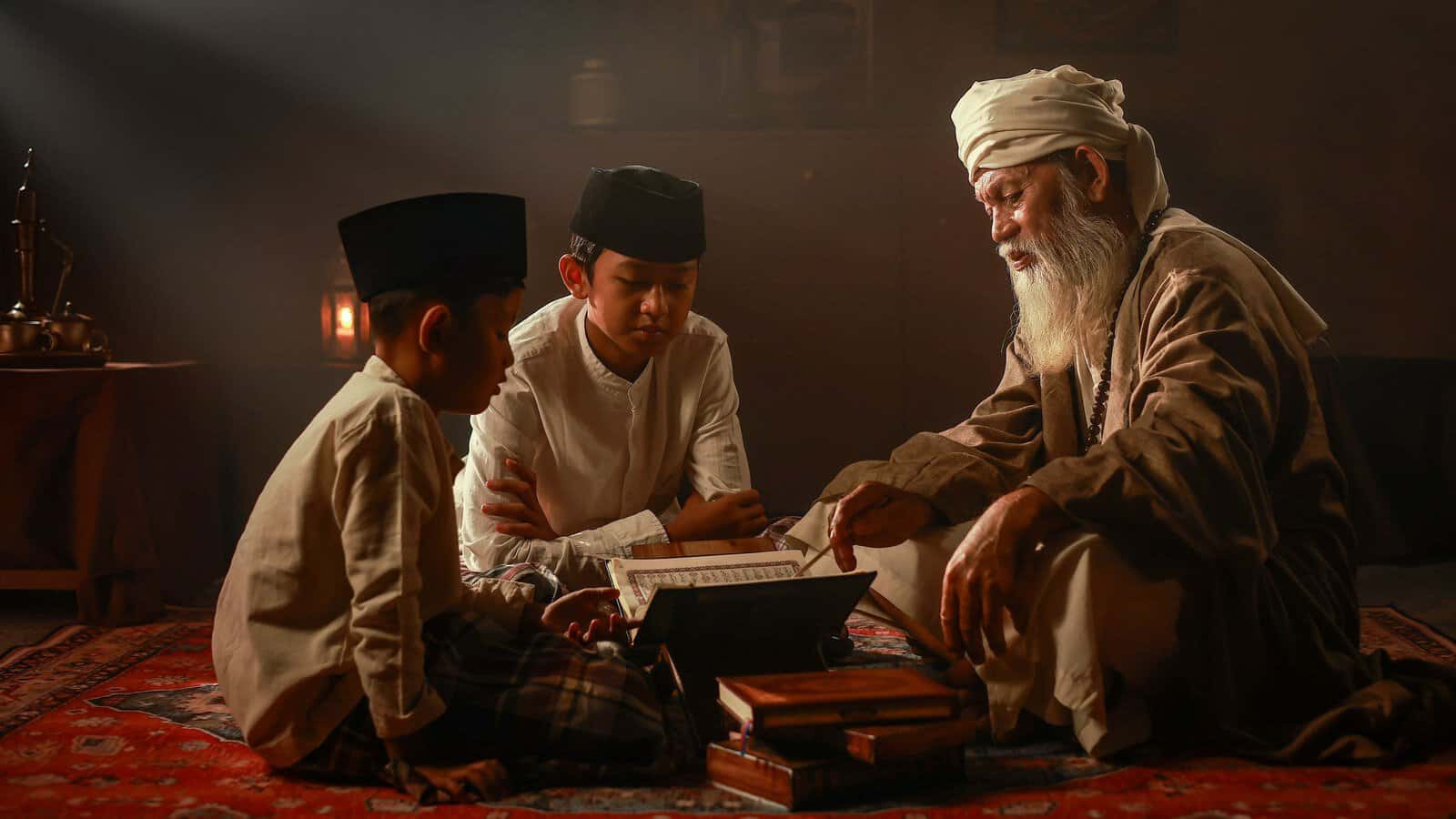
Get your letters checked by a person. This is the part no app replaces. You cannot hear your own ikhfa objectively, and you will not notice the letters you have been substituting for years. Recitation has always been transmitted by hearing and correction, face to face.
Fix your pace before your voice. The melodic beauty people admire in famous reciters sits on top of accuracy and control, not instead of it. Tantawi’s warning is precisely about inverting that order.
Where to start
If you are still working on the letters themselves, begin with Qaida Noorani, which builds pronunciation from the ground up before you take on continuous passages. If you can already read but suspect your rules are shaky, a structured online tajweed course with a teacher who corrects you live is the fastest route to fixing what you cannot hear yourself. Our teachers are Al-Azhar trained and based in Egypt, teaching one to one, which means the correction happens in the moment rather than in a comment on a recording.
You can also read more on reciting the Holy Quran and on the science of tajweed, or see how recitation and memorisation fit together if your goal is hifz.
If you would like someone to listen to your recitation and tell you honestly where you are, you can book a free trial class and start there.
Frequently asked questions
Is tarteel the same as tajweed?
No. Tajweed is the set of rules governing how letters are pronounced. Tarteel is the Quranic command to recite unhurriedly and distinctly, with contemplation. Tajweed is one component of tarteel, not a synonym for it.
Is tarteel just reciting slowly?
Slowness is part of it but not the whole of it. Commentators on 73:4 describe tarteel as unhurried and clear recitation combined with contemplation of the meaning. Reciting slowly while distracted, or slowly with distorted letters, is not tarteel.
Can I have tarteel without tajweed?
Not according to Tantawi’s commentary on 73:4, which defines tarteel as requiring complete adherence to correct recitation, including articulation points, stopping places, madd, izhar and ikhfa. Breaking the letters breaks tarteel.
Which should I learn first, tajweed or tarteel?
They are not sequential. You learn tajweed as a subject, and you practise tarteel every time you recite, from your first lesson. Tarteel is not a level you unlock later.
Is learning tajweed obligatory?
Scholars distinguish between the rules whose neglect corrupts the words and changes the meaning, which must be avoided, and the finer points of refinement. Our article on what tajweed is covers the ruling in more detail.
Does tarteel mean I should recite melodiously like famous reciters?
Tantawi explicitly warns against melodic performance that alters the words or undermines correct pronunciation. A beautiful voice is encouraged, but it sits on top of accuracy rather than replacing it.