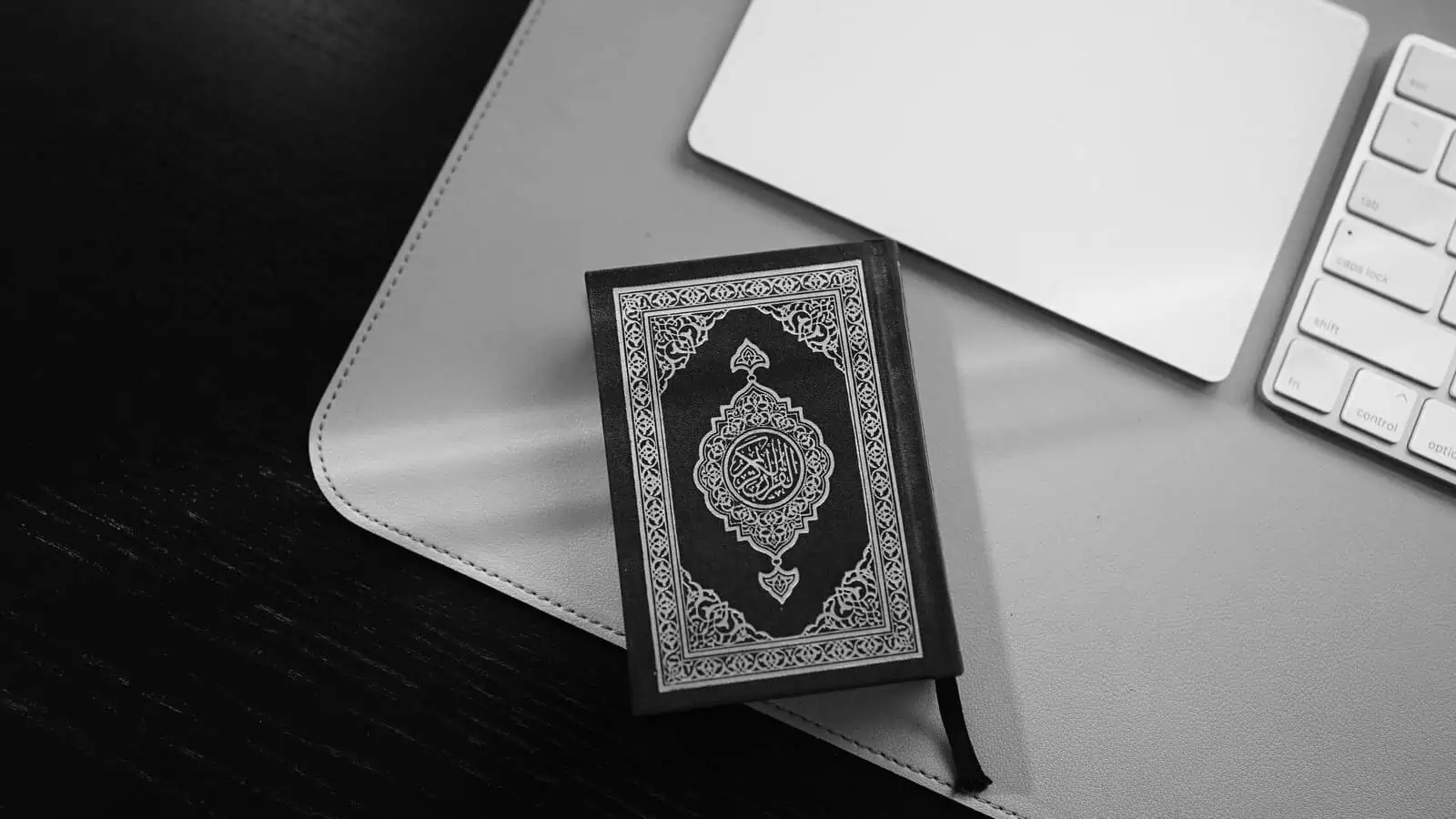

Finishing hifz feels like an ending. It is closer to a handover. For years a teacher set your portions, heard your mistakes and told you what to revise. The day you complete the Mushaf, that structure usually thins out, and the Quran you carry starts to depend on a habit only you can keep. This guide is about that habit: a Quran revision schedule you can actually hold for decades, what the Sunnah says about keeping hifz, and what to do if some of it has already slipped.
The Prophet ﷺ described the problem in one image. Ibn ʿUmar reports that he said: “The example of the person who knows the Qur’an by heart is like the owner of tied camels. If he keeps them tied, he will control them, but if he releases them, they will run away” (Sahih al-Bukhari 5031). Notice what the image assumes. The camels do not stay because they were once caught. They stay because someone keeps checking the rope.
Why Quran Revision Never Ends, Even After Hifz
Many students secretly expect that once the whole Quran is memorised, it will settle into the memory the way a childhood address does. It does not. The Prophet ﷺ said: “Commit yourself to the Qur’an, for by Him in whose Hand is my soul, it is surely more prone to break away than a camel in its bind” (Sahih al-Bukhari 5033). That warning was given to the Companions, the people who heard the revelation first and recited it most.
The Quran also describes where it is kept. Allah says:
بَلۡ هُوَ ءَايَٰتُۢ بَيِّنَٰتٞ فِي صُدُورِ ٱلَّذِينَ أُوتُواْ ٱلۡعِلۡمَۚ
Abdel Haleem translates it: “But no, [this Quran] is a revelation that is clear to the hearts of those endowed with knowledge” (Quran 29:49). In his tafsir al-Wasit, Shaykh Muhammad Sayyid Tantawi explains the people meant here as the believers in it “who memorised it, reflected on it and acted on its guidance.” Memorising sits in that list beside reflecting and acting, which is a useful reminder for anyone planning their revision. Keeping the words is the part you can schedule. Keeping the meaning alive is what makes the schedule worth keeping.
Forgetting is expected, neglect is the problem
The Prophet ﷺ was careful even about how people talk about forgetting. ʿAbdullah ibn Masʿud reports that he said: “It is a bad thing that some of you say, ‘I have forgotten such-and-such verse of the Qur’an,’ for indeed, he has been caused (by Allah) to forget it. So you must keep on reciting the Qur’an because it escapes from the hearts of men faster than camel do” (Sahih al-Bukhari 5032). The instruction attached to it is practical: keep reciting.
You will also meet two narrations quoted far more often than they deserve. One says no sin was shown to the Prophet ﷺ greater than a surah or verse a man learned and then forgot (Sunan Abi Dawud 461). The other says whoever recites the Quran and then forgets it will meet Allah maimed (Sunan Abi Dawud 1474). Al-Albani graded both da’if (weak). A fatwa on Islamweb (no. 19564) notes that al-Nawawi and al-Suyuti counted forgetting the Quran among the major sins on the strength of these narrations, then states that both are weak, and still calls letting a memorised Quran go through neglect blameworthy, because it wastes a great blessing. We cover the ruling in more detail in our guide to what hifz is and what it asks of you. For revision purposes, the takeaway is simple: anxiety is not a plan. A schedule is.
What Changes in Your Revision Once Hifz Is Complete
While you were memorising, every session probably had three parts: new memorisation, recent revision of the last few days, and distant revision of everything older. Our guide to how to memorise the Quran covers how those tracks work during hifz. After completion, one of them disappears, and that changes the whole shape of your day.
| Track | During hifz | After hifz |
|---|---|---|
| New memorisation | The main event. Most energy goes here. | Gone. Its time should not vanish with it; move it into distant revision. |
| Recent revision | Protects the last few days of new work. | Becomes your weak-pages list: the passages that slipped in this cycle. |
| Distant revision | Older portions on a rotation. | The whole job. A fixed cycle through all thirty juz. |
The trap is quiet. New memorisation used to demand an hour, so when it ends, the hour gets swallowed by work, family or study, and only the old revision slot survives. A Mushaf that was sustained by two hours of daily contact is now being held up by twenty minutes. That gap is where the slipping usually starts.
How Long Should a Full Revision Cycle Take?
For a hafiz, reciting the whole Quran from memory is a full revision. So the most useful guidance on cycle length comes from a conversation the Prophet ﷺ had with ʿAbdullah ibn ʿAmr ibn al-ʿAs, who was finishing the whole Quran every night. The Prophet ﷺ told him: “Recite the whole Qur’an in one month’s time.” When ʿAbdullah said he could do more, he replied: “Then finish the recitation of the Qur’an in seven days, and do not finish it in less than this period” (Sahih al-Bukhari 5054). In another narration of the same exchange, he said: “He who recites the Qur’an in a period less than three days does not understand it” (Sunan Abi Dawud 1394, graded sahih by al-Albani).
That hadith is about completing the recitation of the Quran, not about memory techniques, but it gives a hafiz a natural frame: a month as the starting point, a week as a strong and sustainable pace, and nothing so fast that the meaning is lost. The table below turns those cycles into daily amounts. Page counts assume the common 604-page Madinah print, where a juz is roughly twenty pages.
| Full cycle | Daily amount | Approx. pages a day | Who it suits |
|---|---|---|---|
| 30 days | 1 juz | About 20 | Working adults and parents; a sensible baseline. |
| 15 days | 2 juz | About 40 | Recent graduates still in the habit of long daily sessions. |
| 10 days | 3 juz | About 60 | Students preparing for an ijazah or a competition. |
| 7 days | 4 to 5 juz | About 85 | Those with time to recite through the day, often in prayer. |
Pick the cycle you can keep in your worst month, not your best one. A monthly cycle held for ten years protects far more than a weekly cycle that collapses in March. If you cannot manage a juz a day yet, start lower and say so honestly to yourself. The Prophet ﷺ said that “the most beloved deed to Allah is the most regular and constant even if it were little” (Sahih al-Bukhari 6464).
A Weekly Quran Revision Schedule You Can Copy
Here is one way to lay out a week on a monthly cycle. The daily juz is fixed; what changes is where the extra attention goes. Adjust the days to your own life, but keep two things: a slot for weak pages, and a slot where someone else hears you.
| Day | Main revision | Extra focus |
|---|---|---|
| Monday to Thursday | Today’s juz, recited from memory in one or two sittings | Mark every hesitation in pencil as you go |
| Friday | Today’s juz | Recite the surahs you lead prayer with, so they stay prayer-ready |
| Saturday | Today’s juz | Weak pages from the week: read each twice from the Mushaf, then once from memory |
| Sunday | Today’s juz | Recite part of the week’s portion to a teacher, partner or family member |
Three habits make this work. First, recite from memory and only open the Mushaf to check, never to prompt yourself through a page you half-know. Second, use the same printed layout you memorised from. If you learned by picturing where each verse sits on the page, a different layout makes familiar pages feel strange. Third, write the cycle down. A simple sheet with thirty boxes, ticked as each juz is done, tells you the truth on days when your feelings will not.
Find Your Weak Pages Before They Find You
Every hafiz has them. Some pages stay solid for years with little effort; others wobble every cycle. If you treat all thirty juz the same, the weak pages slowly get weaker while the strong ones take up time they do not need.
Common culprits are passages that resemble each other: verses with the same opening, stories told in more than one surah with slightly different wording, endings that share a phrase. Under pressure, the memory jumps from one to its twin. The fix is to study the pair together. Open both places, read them side by side, and name the difference out loud: one word added here, a different verb there. Once you have noticed the difference consciously, you are far less likely to cross over without noticing.
Keep a running list of these pages. On a monthly cycle, give them a dedicated slot each week, as in the schedule above. When a page has been clean for three or four cycles in a row, cross it off. The list should shrink over time. If it keeps growing, your cycle is too fast or your recitation too rushed.
Use Your Salah as Revision

Reciting in prayer is revision under real conditions: no Mushaf, no pausing to check, and a reason to recite properly. In one narration of the camel hadith, Ibn ʿUmar’s report adds: “When one who had committed the Qur’an to memory (or who is familiar with it) gets up (for night prayer) and recites it night and day, it remains fresh in his mind, but if he does not get up (for prayer and thus does not recite it) he forgets it” (Sahih Muslim 789b).
You do not need long nights to benefit. Recite from your current revision juz in your sunnah and witr prayers rather than repeating the same short surahs. If you lead your family in prayer, recite longer passages there. A page recited in salah is revision with the stakes raised, and that is exactly why it sticks.
Recite to Someone Else
The clearest model of revision with a listener comes from the Prophet ﷺ himself. Abu Hurayrah reports: “Gabriel used to repeat the recitation of the Qur’an with the Prophet (ﷺ) once a year, but he repeated it twice with him in the year he died” (Sahih al-Bukhari 4998). The revelation itself was reviewed aloud, with someone listening.
There is a practical reason this matters for you. When you recite alone, your mind fills small gaps for you. You skip a word, the meaning still flows, and you never notice. A listener hears what you actually said. ʿAishah reports that the Prophet ﷺ heard a man reciting at night and said: “May Allah bestow His Mercy on him, as he has reminded me of such-and-such Verses of such-and-such Suras, which I was caused to forget” (Sahih al-Bukhari 5038). Al-Bukhari placed that narration in a chapter titled “Forgetting the Qur’an”. Hearing another person recite brought the verses back.
Set up a regular session, weekly if you can, with a teacher or a hifz partner. Recite a portion they choose rather than one you pick, because you will naturally pick your strong pages. If you are working towards an ijazah in Quran, this is not optional: the whole Quran is recited to a certified teacher, and a shaky revision cycle shows immediately.
When Life Gets Busy: Your Minimum Floor
There will be seasons when a juz a day is not possible: a new baby, exams, illness, a demanding job. The mistake is letting the cycle drop to zero and promising yourself a restart later. A paused cycle tends to stay paused.
Decide your floor in advance, while things are calm. For many people it is a quarter of a juz a day, plus whatever they recite in salah. The cycle slows from one month to four, but it never stops, and every page is still touched several times a year. When the busy season ends, you step back up to your normal pace instead of starting a rescue mission.
If You Have Already Lost Some of Your Hifz
In our teachers’ experience this often happens to people who finished as children and then went through school, university and work without a structure. It is recoverable, and usually quicker than the first time, because the pages are familiar even when the words have gone.
- Test before you plan. Recite the first page of each juz from memory and note how it went: solid, shaky, or gone. That gives you three groups instead of one overwhelming problem.
- Protect what is solid first. Put the solid juz on a light rotation straight away so they do not slide while you work on the rest.
- Treat the shaky juz as revision. Read each page from the Mushaf, recite it from memory, then move on. Many come back within a few passes.
- Treat the lost juz as re-memorisation. Small portions, daily, with recent and distant revision, exactly as during hifz.
- Join everything into one cycle. Once each juz is at least shaky rather than gone, build a single full cycle and keep it.
If you are an adult returning to the Quran after years away, our guide to learning Quran as an adult covers the practical side of fitting this around work and family.
Apps, Audio and Other Tools
Listening to a reciter you trust while commuting is good maintenance, and it can bring back a page you had half-lost. It is not a substitute for reciting, because listening tells you what the page sounds like, not whether you can produce it. Apps that listen to your recitation and flag mistakes can help on days without a partner. We compared the main options in our review of the best Quran memorization apps. Use them to support a cycle, never to replace one.
One more tool is worth mentioning: your tajweed. Revision is the moment old errors either get corrected or get locked in for life. If you notice the same rule slipping on several pages, a short refresher on the rules of tajweed is time well spent.
Keep Your Hifz With a Teacher Who Listens
At Quranic Mind Academy, students who complete the Quran with us continue with guided full-Quran revision and, if they wish, preparation for an ijazah. Our teachers are Al-Azhar trained and teach one to one on live video, so every lesson includes someone hearing exactly what you recite. Whether you finished hifz last month or twenty years ago, they will test where you stand and build a revision cycle around your week. See how our online Quran memorization course works, browse all our courses, or book a free trial lesson to start.
Frequently Asked Questions
How often should a hafiz revise the whole Quran?
A monthly cycle, one juz a day, is a common and sustainable target. The Prophet ﷺ told ʿAbdullah ibn ʿAmr to complete the Quran in a month, allowed him to go down to seven days, and in another narration said that whoever finishes in less than three days does not understand it. Choose the cycle you can keep in your busiest month.
How many pages should I revise each day?
On a monthly cycle, about twenty pages a day, which is roughly one juz in the 604-page Madinah print. On a weekly cycle it is closer to eighty-five. Add a small extra slot each week for the pages that keep slipping.
Can I revise by listening to a reciter instead of reciting?
Listening helps you keep the sound of a passage and can bring back a page you were losing, but it does not test your memory. Revision means reciting from memory and checking yourself. Use audio alongside your cycle, not instead of it.
Is it fine to revise from a Mushaf app on my phone?
Yes, as long as the app shows the same page layout you memorised from. If you remember where a verse sits on the page, a different layout can make a familiar passage feel unfamiliar. Turn off notifications while you revise.
I finished hifz years ago and have forgotten a lot. Where do I start?
Test the first page of every juz and sort them into solid, shaky and lost. Put the solid juz on a light rotation at once, revise the shaky ones page by page, and re-memorise the lost ones in small daily portions. Then join everything into one cycle.
Do I still need a teacher after completing hifz?
Not for every session, but you do need a regular listener. Even the Prophet ﷺ reviewed the Quran aloud with Jibril every year. A teacher or partner hears the small skips your own mind fills in, and that is exactly what solo revision misses.