
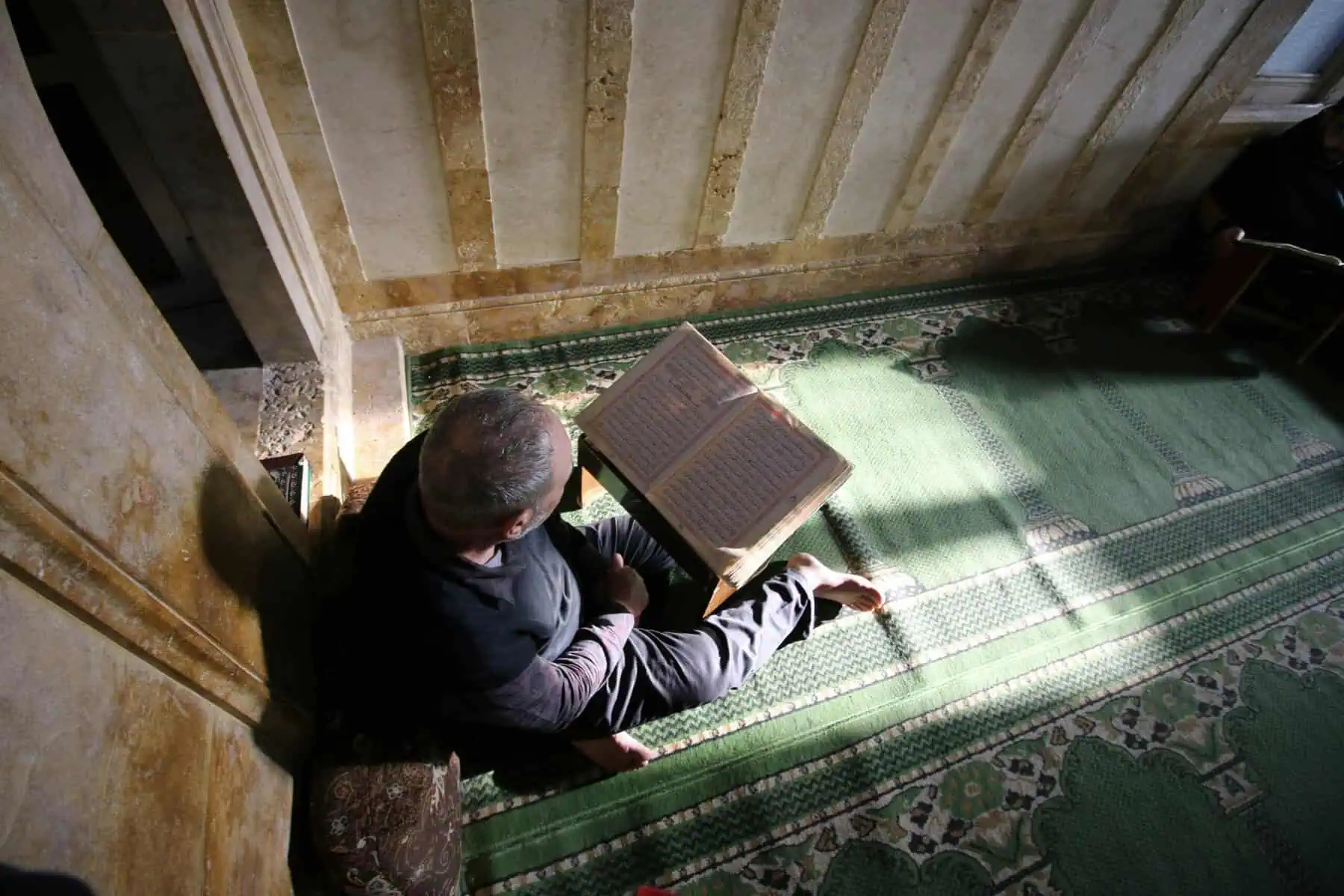
The most common message from new adult students is some version of the same sentence: “I should have learned this as a kid.” The next sentence is usually a list of why it is now too late: too much work, too tired in the evenings, too embarrassed to start at thirty or forty or sixty, too far behind. None of those reasons are correct.
Adults learn the Qur’an every day, in every decade of life. The path is shorter and more practical than most people expect, and the only real requirement is starting in the right order with a real teacher who understands how adults actually learn. This guide is written for the adult Muslim sitting down in front of a Mushaf for the first time, or the returning learner who studied as a child and stopped twenty years ago. If you would rather start with a teacher than a guide, our online Quran classes for adults begin with two free trial lessons.
Why Adults Have an Advantage
The popular assumption is that children learn languages faster than adults. For pronunciation alone, this is partly true. For everything else, including the understanding, the memorisation, and the application, adults usually move faster. Adults bring three advantages a child cannot match:
- Sustained attention. An adult can sit through a focused thirty-minute lesson and concentrate on a single rule. A six-year-old needs games and breaks.
- Analytical understanding. An adult who is told “this is the rule of madd and these are its three sub-types” can hold the structure in mind and apply it. A child has to absorb the same rule slowly through dozens of examples.
- Self-motivation. An adult chooses to be in the lesson. A child is sent. The motivation gap shows in every revision week.
Allah ﷻ said:
“We have made it easy to learn lessons from the Quran: will anyone take heed?”
(Surah al-Qamar 54:17, trans. Abdel Haleem)
Al-Qurtubi explains that Allah made it easy to memorise and helps whoever sets out to memorise it (Tafsir al-Qurtubi on 54:17). That promise is for every age. Most of the Companions who memorised the Qur’an from the Prophet ﷺ were not children. They were grown men and women with families and businesses. The first generation of Muslims was largely an adult generation.
The Four Stages, Honestly

Adult Qur’an learning follows the same four-stage progression as any beginner, but the pace and the framing are different.
Stage 1: The 28 Letters and Their Sounds. In our teachers’ experience, adults usually complete this in four to six weeks at three thirty-minute lessons per week. The challenge is not the letters themselves; it is the sounds of letters like dad (ض), ha (ح) and ‘ayn (ع), which have no English equivalent. A live teacher hears each attempt and corrects in real time.
Stage 2: Joining Letters into Words. The script connects, the three short vowels (fatha, kasra, damma) get added, and the long vowels and sukun appear. By the end of Stage 2 an adult can read any fully voweled Arabic word aloud, even if they do not yet know what it means.
Stage 3: Reading Short Surahs. The teacher selects from al-Fatihah, al-Ikhlas, al-Falaq, an-Nas, then al-Kawthar, Quraysh, al-Ma’un, and so on. The student reads aloud, the teacher corrects each slip, and, in our teachers’ experience, within three to five months most adults are reading short surahs comfortably and applying them in salah for the first time.
Stage 4: Adding Tajweed. The Prophet ﷺ recited the Qur’an slowly, clearly, with every letter given its due. Allah ﷻ commanded:
“…recite the Quran slowly and distinctly…”
(Surah al-Muzzammil 73:4, trans. Abdel Haleem)
The Egyptian method introduces each tajweed rule the moment a surah requires it. Adults absorb the rules quickly because the explanation makes sense and the application follows.
What an Adult Lesson Actually Looks Like
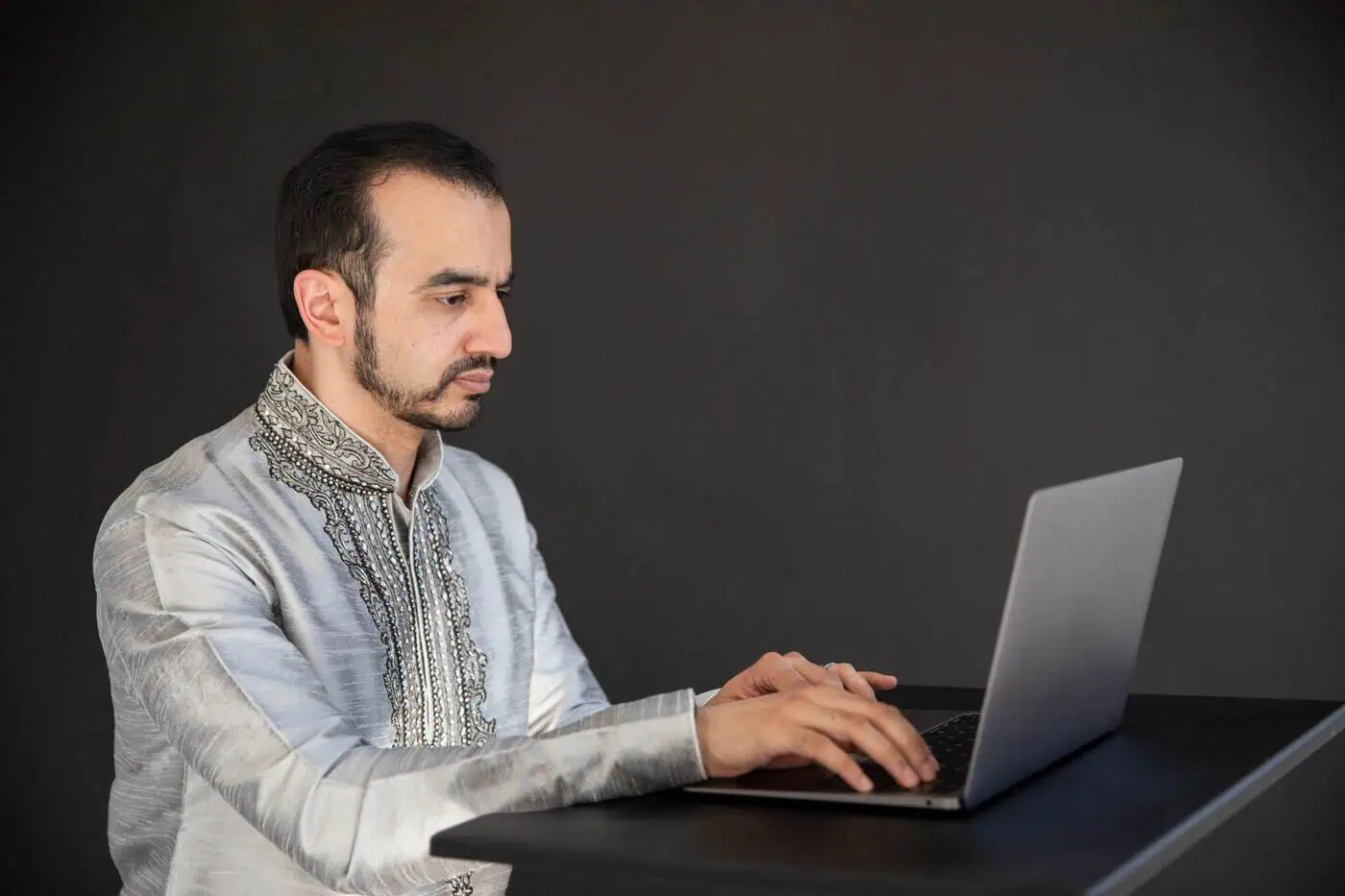
If you have never taken a one-to-one Qur’an lesson, the format is simpler than it sounds. A typical thirty-minute adult session runs like this:
- Minutes 0–3. Salam, brief check-in. Any questions from the previous week?
- Minutes 3–8. Review. Recite whatever was assigned. The teacher listens for tajweed slips and corrects immediately.
- Minutes 8–22. New material. The teacher reads a line, you repeat, the teacher corrects, you recite back correctly two or three times until it is locked in.
- Minutes 22–27. Practice combining the new line with the previous one. Light explanation of any new rule that came up.
- Minutes 27–30. Assignment for the next lesson, du’a, salam.
Adults reach the productive part of the lesson faster than children because the warm-up is shorter and the focus is sharper. Within the first ten minutes the screen disappears and what remains is the teacher, the student, and the Mushaf.
What Stops Adult Learners (and How to Avoid Each Trap)
Our teachers see the same four obstacles come up again and again. None of them are about ability.
1. Embarrassment about the starting point. Many adults delay because they feel they should already know this. The solution is private one-to-one lessons where no one is watching. A good teacher has taught many complete beginners before you. Within two weeks the embarrassment evaporates and the focus shifts to the work.
2. Trying to learn from apps alone. Apps drill vocabulary but cannot correct pronunciation, explain a rule, or guide you through a difficult page. A live teacher is essential at the early stages because mispronunciation in Arabic can change meaning, and once embedded it takes much longer to fix.
3. Skipping the daily ten-minute review. The lesson teaches the new material. The review embeds it. Without it, much of what was covered fades before the next lesson. Ten minutes after Fajr or before bed is enough.
4. Inconsistency. Three short sessions a week beats one long weekend session, because the brain consolidates language during sleep cycles. The Prophet ﷺ said:
“The most beloved deeds to Allah are those done consistently, even if small.”
(Sahih al-Bukhari 6464)
Two consistent lessons a week for two years beats six lessons a week for one month and then nothing.
The Time Question (Honestly)
The most common adult question is “how do I find the time?” The honest answer: you do not find time, you place it. Three thirty-minute lessons a week plus ten minutes of daily review is ninety minutes of class plus seventy minutes of practice, two hours and forty minutes a week in total.
The placement matters more than the total. Three slots that survive in your week, every week, for six months:
- After Fajr while the house is quiet.
- After Maghrib before dinner.
- After the kids are in bed.
- During the morning commute, if you can recite from memory or play a teacher’s recitation.
The students who keep going for years are the ones who treat the lesson the way they treat salah: a fixed appointment with Allah ﷻ, not a discretionary activity that gets cancelled when the day gets busy.
Realistic Timelines for Adult Beginners
The numbers below are for an adult complete beginner studying three thirty-minute lessons per week plus ten minutes of daily review. These are the averages our teachers see; your pace may differ.
| Milestone | Realistic timeline |
|---|---|
| Recognise all 28 letters confidently | 4 to 6 weeks |
| Read voweled words and short combinations | 2 to 3 months |
| Read al-Fatihah and short surahs | 3 to 5 months |
| Read any page of the Mushaf with light effort | 6 to 9 months |
| Recite comfortably with full tajweed application | 12 to 18 months |
Choosing the Right Teacher
The teacher shapes most of the outcome. Five questions to ask before signing up:
1. Where did the teacher study? Strong answers name institutions: Al-Azhar in Cairo, the Islamic University of Madinah, recognised sanad chains. Vague answers like “ten years of experience” without an institutional anchor are a warning sign.
2. Does the teacher hold an ijazah? An ijazah is a formal certification that the teacher has recited the Qur’an correctly to their own teacher in a recognised recitation (most commonly Hafs ‘an ‘Asim). For adult beginners this matters less than for Hifz students, but it indicates a teacher who has been formally tested.
3. Is the teaching one-to-one? For Qur’an recitation, this is non-negotiable. Group lessons work for Islamic Studies, but tajweed correction needs the teacher to hear every individual letter.
4. Can you sit a real free trial? Any serious academy lets you trial a lesson with the actual teacher before paying. The trial should be teaching, not selling.
5. Is a female teacher available for sisters? For many sisters this is a fundamental need. Confirm availability before signing up rather than discovering after.
Learning at Different Adult Stages
The pace and the lesson plan adjust depending on which adult stage you are in.
Adults in their twenties and thirties often have the fastest progression because the memory is still sharp and consistency is easy to maintain alongside work and young families. In our teachers’ experience, expect short surahs within three months and Mushaf reading by month six.
Adults in their forties and fifties sometimes worry that they have left it too late. They have not. The analytical maturity at this age means tajweed rules click quickly. The lesson plan should include slightly more daily review minutes to compensate for slower short-term memory.
Adults in their sixties and beyond can and do learn to read the Qur’an for the first time. The pace is gentler, the lessons are slightly shorter, and the focus is often on the surahs used most often in salah. The rewards, both spiritual and intellectual, are often the most profound at this stage.
Learning Alongside Children
Many adult students sign up at the same time as their children. The parent takes a lesson at one time, the child at another, and they revise together at the dinner table. The children’s side is set out on our online Quran classes for kids page.
The Prophet ﷺ said:
“The best of you are those who learn the Qur’an and teach it.”
(Sahih al-Bukhari 5027)
When parent and child learn together, the household atmosphere changes. The child sees the parent working at the same letters they are working at. The parent earns the standing to discuss the Qur’an at home. Many families find it one of the best decisions they make together.
Your First Three Weeks
If you want to start this week, the simplest path that actually works:
Week 1. Book a free trial lesson with a real teacher. The trial assesses your current level and assigns the correct starting page. Use the rest of the week to set up your study corner (a quiet spot, a printed Noorani Qa’ida or Mushaf, a notebook).
Week 2. Begin two thirty-minute lessons a week at a fixed time you will not move. Do ten minutes of review on every non-lesson day.
Week 3. Add the third weekly lesson if the schedule allows. By the end of week three the routine should feel like part of the week rather than an experiment. The first satisfying moment, the first time you read an unfamiliar Arabic word aloud unaided, in our teachers’ experience, usually arrives within the first month.
Related Guides
- Qur’an Lessons for Beginners: Step-by-Step Adult Path
- Learn Qur’an from Home: A Complete Guide
- Noorani Qa’ida Course: The Standard Beginner Path
- Learn to Read the Qur’an Online
- Reciting the Holy Qur’an: A Beginner’s Guide
- Tajweed Rules: Every Rule Explained
- Arabic Is Your Key to Understanding Islam
Frequently Asked Questions
Am I too old to start learning the Qur’an?
No. Adults learn the Qur’an every day in every decade of life, including the sixties and seventies. The path is the Noorani Qa’ida sequence, written in India by Shaykh Nur Muhammad Haqqani (d. 1925) and now taught across the Muslim world, including the Arab world. In our teachers’ experience, most adults go from zero to reading short surahs in three to five months, then progressing into the rest of the Mushaf from there.
Can I learn without knowing any Arabic at all?
Yes. Learning to read the Mushaf (decode the script) is a separate skill from understanding Arabic words. Most adults learn to read first so they can recite correctly, and later add vocabulary and grammar via the Arabic Language course.
How much time per week do I actually need?
Two to three thirty-minute lessons per week plus ten minutes of daily review. Total: about two and a quarter to two and three-quarter hours per week. Less than that slows progress to a discouraging pace. More than that without a teacher just embeds bad habits.
Can I request a female teacher?
Yes. Female teachers are available for sisters and family classes. Confirm at the trial-booking stage and the assignment will respect it. For how those lessons run and the questions sisters usually ask first, see our guide to learning with a female Quran teacher online.
What if I work full-time and have young children?
This is the most common situation for adult students. The two thirty-minute lessons typically land after Fajr (before work) and after Maghrib (after the kids are settled). Daily review fits into a commute or the last ten minutes before bed. Consistency beats heroic effort.
Is tajweed included in adult lessons?
The foundational rules (madd, ghunnah, qalqalah) are introduced naturally as soon as the relevant surahs come up. A dedicated full tajweed treatment is the next course after Mushaf reading is fluent. The structured curriculum lives in the Tajweed Course.
Do I get a certificate?
Many academies issue an internal completion certificate after the Noorani Qa’ida and after the first juz of Mushaf reading. The traditional certificate that matters most, the ijazah, applies later, when a student has recited the whole Qur’an to an authorised teacher with full tajweed, usually from memory (islamweb fatwa 164257). Some teachers also grant an ijazah for reading from the Mushaf, but many grant it only for recitation from memory, and some treat the Mushaf type as a certificate of recitation rather than a full licence.
The First Step
The hardest part of adult Qur’an study is starting. Once the first lesson happens, every subsequent lesson is easier. Book the trial, find the teacher, set the fixed time, and let the routine carry you for six months. The Mushaf is waiting on your shelf. Open it this week, not next year.


One Response