

The importance of Arabic in Islam goes far beyond culture or ethnicity. Arabic is the language Allah ﷻ chose for the Qur’an, the Sunnah, and the entire body of classical Islamic scholarship. For Muslims living in the UK and across the world, learning Arabic is the most direct way to connect the heart to revelation, deepen worship, and protect belief from the distortions that come with relying only on translation.
This guide explains why Arabic occupies a uniquely sacred place in Islam, what scholars throughout history said about it, and how a non-Arabic speaker can begin learning today.
Why Arabic Is the Central Language of Islam
Arabic Is the Language of Revelation
Allah ﷻ is explicit in the Qur’an that the choice of Arabic was deliberate, not accidental:
- Yusuf 12:2, trans. Abdel Haleem: “We have sent it down as an Arabic Quran so that you [people] may understand.”
- Ash-Shu’ara 26:195, trans. Abdel Haleem: “…in a clear Arabic tongue.”
- Fussilat 41:3, trans. Abdel Haleem: “a Scripture whose verses are made distinct as a Quran in Arabic for people who understand…”
- Ta-Ha 20:113, trans. Abdel Haleem: “We have sent the Quran down in the Arabic tongue…”
Four separate ayat reinforce the same point. The Qur’an was revealed in Arabic because of its precision, depth, and rhetorical clarity. No other language carries the meaning intact in the way Arabic does.
Arabic Is the Language of the Sunnah
The Prophet Muhammad ﷺ taught, judged, and prayed in Arabic. Every authentic hadith was preserved in Arabic by Companions and later narrators who guarded its wording and meaning with great care, and who had to master Arabic to be trusted with it. A single preposition can change a fiqh ruling. A subtle grammatical shift can affect aqeedah. This is why scholars insisted that anyone interpreting Islamic texts must first master the language those texts were spoken in.
Arabic Is the Language of Classical Scholarship
From Sahih al-Bukhari to Imam Shafi’i’s al-Risala, from Ibn Kathir’s Tafseer to Imam an-Nawawi’s Riyad as-Salihin, the foundational works of Islam are written in Arabic. Translations exist, but they are interpretations of one author’s reading. Direct access to the source remains in Arabic.

Where Arabic Shapes Islam Most Directly
Salah and Qur’an Recitation
Every Muslim recites Surah al-Fatihah in Arabic during prayer. For anyone able to recite Arabic, the four schools agree that the Qur’an in prayer must be recited in Arabic, not in translation, and the majority do not allow a translation in its place at all (islamweb fatwa 184177). The Hanafi school allows someone who cannot yet manage Arabic to recite in another language, provided neither wording nor meaning is distorted (Dar al-Ifta fatwa 3248). New Muslims in that position should ask a teacher how to pray while they learn. When a worshipper understands the Arabic words being recited:
- Khushu’ (focus and humility) deepens.
- Du’a becomes personal rather than rote.
- Recitation turns into reflection.
Instead of repeating sounds, the worshipper speaks directly to Allah ﷻ with full awareness. The Prophet ﷺ said, “The best of you are those who learn the Qur’an and teach it” (Bukhari 5027). Learning the Qur’an in its full sense includes understanding what it says.
Fiqh and Islamic Law
Islamic legal reasoning is built on precise Arabic terms. Concepts such as:
- ‘Amm (general) versus khass (specific)
- Mutlaq (absolute) versus muqayyad (restricted)
- Haqiqah (literal) versus majaz (figurative)
These are not stylistic labels. They are technical tools rooted in language structure. Misreading them changes a ruling from permissible to forbidden, or from obligation to recommendation. Arabic mastery is therefore protective, not decorative.
Aqeedah and Theological Precision
In matters of belief, grammar guards meaning. The difference between a nominal and a verbal sentence in Arabic can indicate something fixed and established versus something renewed and ongoing (al-Jurjani, Dala’il al-I’jaz). This is one reason classical scholars read the verses about Allah with close attention to grammar. This is why classical scholars treated Arabic grammar as a religious science, not a linguistic curiosity.
Tafseer and Qur’anic Interpretation
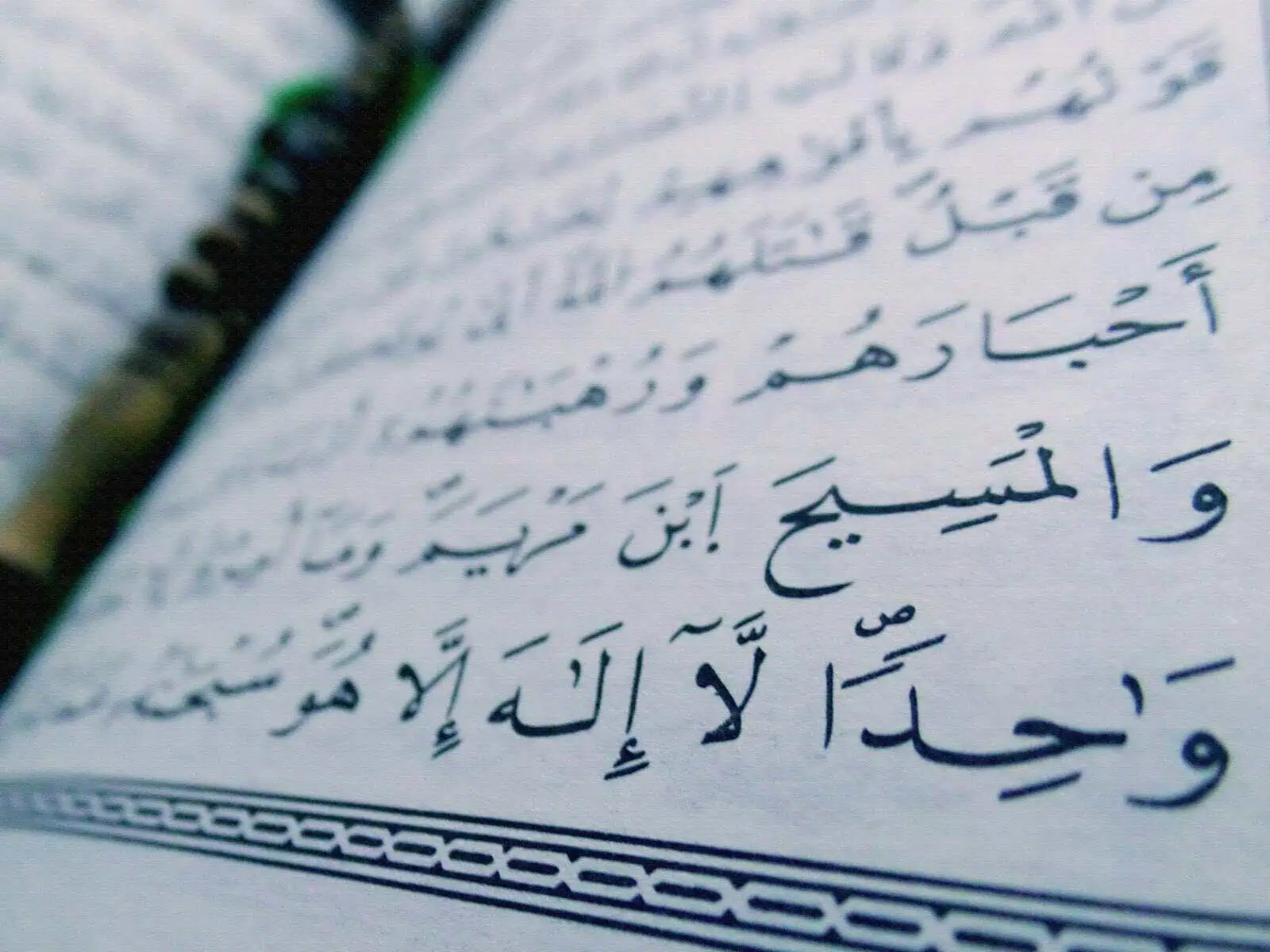
Classical scholars such as Ibn Kathir explain the Qur’an first by the Qur’an itself, then by the Sunnah, then by the explanations of the Companions and their students (introduction to Tafsir Ibn Kathir). Arabic (vocabulary, grammar, rhetoric and classical usage) is the tool that runs through every one of these steps, and none of it transfers fully into English. Without Arabic, every verse a person reads is filtered through someone else’s interpretation, with no way to verify or weigh it.
Allah ﷻ says, “Will they not contemplate the Quran?” (Muhammad 47:24, trans. Abdel Haleem). Genuine pondering requires the words being pondered to be understood at the source.
Why Translation Cannot Replace Arabic
Translations are useful and often necessary as a starting point. They are not, however, replacements for the original. Four reasons explain why.
1. The Linguistic Miracle Cannot Be Translated
The Qur’an’s i’jaz (inimitable miracle) lies in word choice, rhythm, sentence structure, and rhetorical devices specific to Arabic. These features are why the Qur’an itself challenges anyone to produce a chapter like it (al-Baqarah 2:23). The challenge is in Arabic. Translation flattens it.
2. Arabic Words Carry Multi-Layered Meaning
A single Arabic word may simultaneously communicate a literal meaning, a contextual meaning, a rhetorical emphasis, and a spiritual nuance. English usually selects one of those four and discards the rest. The reader gets a faithful slice, not the whole.
3. Sound and Structure Are Part of the Message
Qur’anic Arabic has rhythm and pause patterns that affect how a verse is heard and absorbed. Allah ﷻ instructed: “…recite the Quran slowly and distinctly” (al-Muzzammil 73:4, trans. Abdel Haleem). Tartil is not just slow reading. It is the way Arabic sound conveys meaning.
4. Legal and Theological Precision Requires the Original
Translations simplify. They have to. But fiqh and aqeedah cannot be derived from simplified text. A scholar who works only from translation cannot verify whether a ruling rests on solid linguistic ground or on a translator’s editorial choice.
The Difference at a Glance
| Without Arabic | With Arabic Mastery |
|---|---|
| Dependent on someone else’s interpretation | Direct access to the Qur’an’s wording |
| One layer of meaning per verse | Multiple layers visible at once |
| Risk of importing the translator’s bias | Personal, verifiable understanding |
| Passive reading | Active reflection and study |
| Limited access to classical works | The full library of Islamic scholarship |
Everything above is an argument for learning the language rather than reading about it. The first two lessons are free and taught by native Arabic speakers trained at Al-Azhar, so you can find out what your real starting point is before committing to anything. Book a free trial Arabic lesson.
What Great Scholars Said About Arabic
Imam Shafi’i
In al-Risala, Imam al-Shafi’i wrote that no one who is ignorant of the breadth of the Arabic language, its many modes of expression and its range of meanings, can grasp the overall teaching of the Qur’an, and that whoever knows it is freed from the doubts that come from ignorance of it. Imam Shafi’i was himself a master of pre-Islamic Arabic poetry, and he treated linguistic competence as a precondition for any serious religious work.
Ibn Taymiyyah
Ibn Taymiyyah went further, treating Arabic as part of the religion itself. In Iqtida’ al-Sirat al-Mustaqim he wrote that Arabic is part of the religion and knowing it is obligatory, because understanding the Qur’an and Sunnah is obligatory and cannot happen without it. Some of it, he said, is required of every Muslim and some is a communal duty (fard kifayah) (quoted in islamweb fatwa 136136).
Imam al-Shatibi
In al-Muwafaqat, al-Shatibi explained that the maqasid (objectives) of the Shariah can only be fully grasped through deep linguistic understanding. He treated language as the lens through which divine intent becomes visible.
Ibn Jinni
The grammarian Ibn Jinni dedicated his life to showing how Arabic morphology, with its three-letter roots and patterns, allows a single root to generate dozens of related meanings.
A common thread runs through these scholars. Many were not ethnically Arab, yet they mastered Arabic to serve Islam. Imam al-Bukhari was Persian. Abd al-Qahir al-Jurjani, who laid the foundations of Arabic rhetoric, came from Jurjan in Persia. Sibawayh, the imam of Arabic grammar whose al-Kitab became its foundational reference, was Persian (al-Dhahabi, Siyar). Mastery of Arabic is open to anyone who commits to it.
Common Errors That Come From Weak Arabic
Three patterns appear repeatedly across Islamic history when Arabic is neglected.
Literalism Without Grammar
Some early groups read the verses about Allah’s attributes as if Allah resembled His creation (tashbih). Sunni scholars rejected this on the basis of “There is nothing like Him” (Ash-Shura 42:11, trans. Abdel Haleem). They handled these verses in one of two ways: consigning their meaning to Allah (tafwid), or interpreting them in line with Arabic usage (ta’wil) (Dar al-Ifta research 2324). Both approaches rely on a sound grasp of Arabic.
Misjudging Command Forms
Arabic distinguishes between commands that imply obligation and commands that imply recommendation, often through context and grammar rather than wording alone. Scholars of usul al-fiqh differ on what a bare command implies: the majority hold that it implies obligation unless the context points to recommendation or permission (islamweb fatwa 66156). Reading a command without its context is a common source of error.
Importing Sectarian Frames
When key Arabic terms about iman and amal are read through a translator’s theological lens, the result is sectarian misreadings of verses that the original Arabic does not actually support.
Each of these errors is preventable. Arabic is the prevention.
Why Arabic Matters for Muslims Living in the UK
British Muslims face a specific set of pressures that make Arabic study practical, not just spiritual:
- Cultural assimilation erodes religious vocabulary across generations.
- Identity confusion among second and third-generation youth, who often grow up with English-only Islamic material.
- Dependence on a single translator for any verse encountered in daily life.
Arabic does not isolate a Muslim from British society. It strengthens the Muslim identity within it.
Identity Rooted, Not Borrowed
When children understand Qur’anic Arabic, Islam stops being a foreign tradition handed down through translation. It becomes their own first language of faith.
Confidence in Worship
A teenager who recites Surah al-Fatihah and understands every word walks into prayer differently. The mind stops drifting because the words are no longer meaningless sounds.
Independence From Single-Source Interpretation
Reading translation alone means reading one scholar’s lens. Arabic gives the reader the option to compare, weigh, and reflect rather than accept by default.
Unity Across British Muslim Communities
Arabic is the shared inheritance of Pakistani, Bangladeshi, Somali, Arab, Turkish, and revert Muslims across the UK. It is the one language that crosses every cultural background into the same source text.
Practical Benefits of Learning Arabic Today
Beyond the spiritual case, Arabic mastery produces immediate, lifelong benefits:
- Deeper concentration in Salah, since meaning replaces drift.
- Direct understanding of Qur’anic verses without translator dependence.
- Access to classical works such as Tafsir Ibn Kathir, Riyad as-Salihin, and Imam al-Ghazali’s Ihya.
- Confidence when discussing Islam with colleagues, family, and questioners.
- The ability to detect weak or misleading interpretations on social media.
For non-Arab Muslims, learning Arabic is not about becoming Arab. It is about becoming grounded in the language that carries the religion.
How to Start Learning Arabic With Quranic Mind
Structured guidance is what turns interest into actual progress. Quranic Mind’s Online Arabic Language Course is designed specifically for non-native Arabic speakers and covers reading, vocabulary, grammar, and Qur’anic comprehension in a step-by-step path.
What students benefit from:
- One-to-one live classes with Al-Azhar trained teachers.
- Flexible scheduling that works around UK work and school hours, as set out on our online Quran classes in the UK page.
- Personalised progression plans based on current level and goals.
- Two free trial lessons before any commitment.
The goal is simple: take a learner from zero to reading and understanding Qur’anic Arabic, without overwhelm and without filler. Browse all Quranic Mind courses or jump straight into Arabic with a free trial.
Related Guides
- Arabic Is Your Key to Understanding Islam: How Arabic unlocks deeper Islamic comprehension.
- The Importance of Seeking Knowledge in Islam: Why ilm is fard on every Muslim.
- Tajweed Rules: Recite the Qur’an the way it was revealed.
- Sciences of the Qur’an (Ulum al-Qur’an): The disciplines that illuminate revelation.
- Study Islamic Studies Online: Structured Islamic education from home.
Frequently Asked Questions
Why is Arabic important in Islam?
Arabic is the language of the Qur’an, the Sunnah, and the entire body of classical Islamic scholarship. Worship, fiqh, and aqeedah are rooted in precise Arabic wording that translation cannot fully capture. Learning Arabic gives a Muslim direct access to revelation rather than a filtered version.
Can I understand the Qur’an without Arabic?
You can grasp general meanings through translation, and translations are valuable starting points. Deeper interpretation, linguistic nuance, and legal precision still require Arabic. Many of the misunderstandings people encounter online come from relying solely on translation.
Is Arabic difficult for English speakers?
Arabic uses a different script and grammar, but with structured guidance it becomes manageable. Many British Muslims and reverts have successfully built Qur’anic Arabic through gradual, consistent study. In our teachers’ experience, most students can read the script within a few weeks with proper instruction.
How long does it take to learn Qur’anic Arabic?
In our teachers’ experience, most students build basic vocabulary and grammar foundations within several months of consistent weekly study, and functional Qur’anic comprehension typically takes a year to two years. Conversational fluency takes longer, but it is not required for understanding the Qur’an.
Why is Arabic grammar treated as a religious science?
Because grammar protects meaning. A small grammatical difference in the Qur’an or hadith can shift an interpretation, change a fiqh ruling, or affect a theological conclusion. Classical scholars treated nahw and sarf (grammar and morphology) as protective tools for revelation, not as decorative subjects.
Where can Muslims in the UK learn Arabic online?
Through structured online academies that provide live one-to-one teachers, planned curricula, and flexible scheduling. Quranic Mind’s Arabic course is built specifically for non-native speakers and offers two free trial lessons before any commitment.
Ready to begin your Arabic journey?