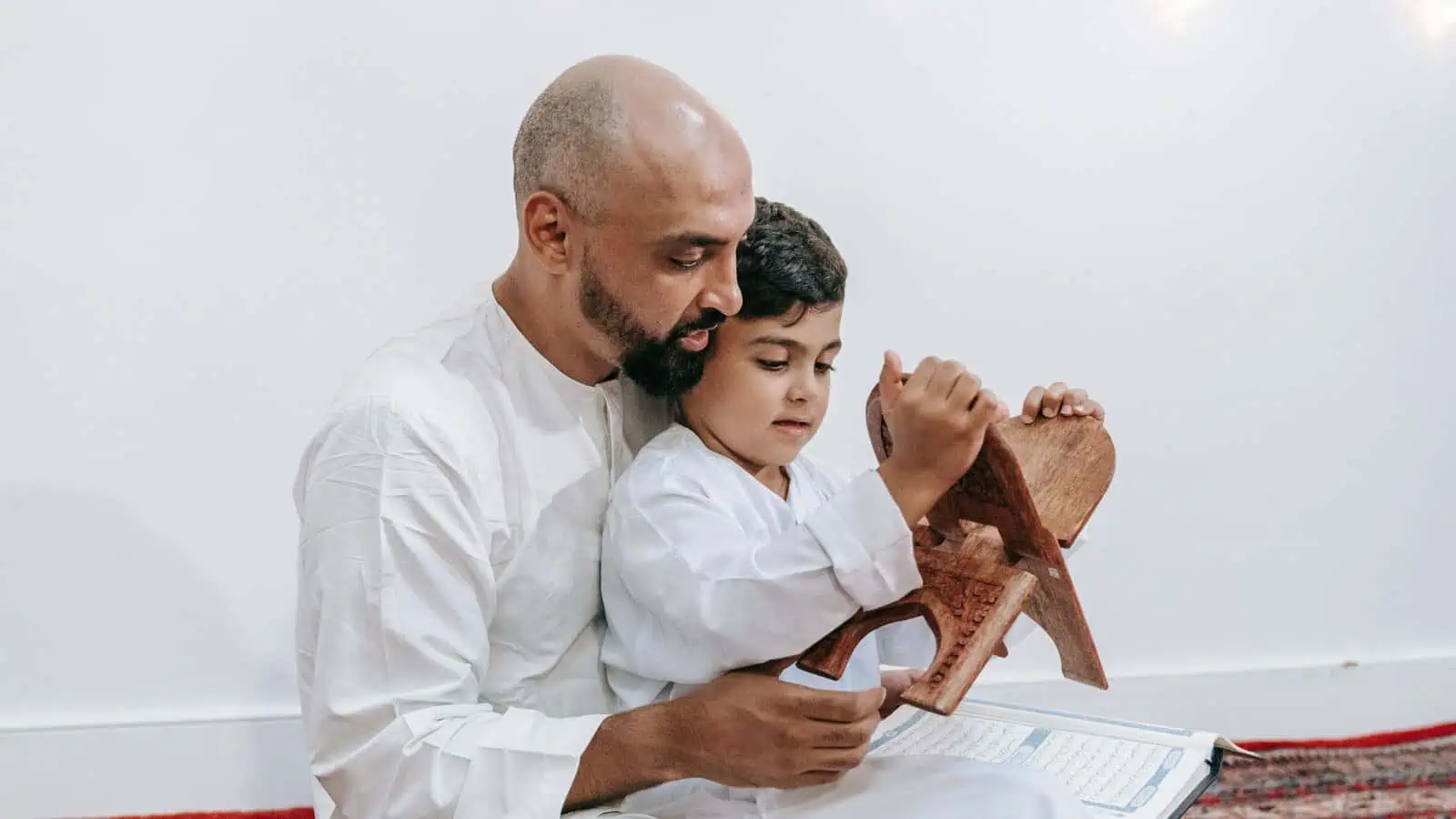
Free Quran classes online are real, and some of them are very good. Mosques stream lessons, volunteers teach on video calls, and there are free apps and websites that will take you from the Arabic letters to reading whole pages. So the honest answer to “are they worth it?” is yes, for some goals. The question that matters is whether a free option can do the specific job you need done, and for one job in particular, hearing your recitation and correcting it, free options usually struggle.
This guide maps out the kinds of free Quran classes you will find, what each one does well, where each one falls short, and how to check a free class before you or your child commit to it. It is written for adults and parents in the UK, US and Europe who want to learn properly without spending money they do not need to spend.
In this guide: the six kinds of free classes · what free does well · where free falls short · free or teacher, by goal · checks before you join · a free weekly plan · free class vs free trial lesson · FAQ
Free Quran Teaching Has Deep Roots
Teaching the Quran without charge is an old and honourable tradition. The Prophet ﷺ said, “The best among you (Muslims) are those who learn the Qur’an and teach it” (Sahih al-Bukhari 5027). Many mosques and volunteer teachers give their time in that spirit, and a great many Muslims learnt their first surahs from an imam or a relative who never asked for a penny.
The Quran also tells us that learning it is within reach:
وَلَقَدۡ يَسَّرۡنَا ٱلۡقُرۡءَانَ لِلذِّكۡرِ فَهَلۡ مِن مُّدَّكِرٖ
“We have made it easy to learn lessons from the Quran: will anyone take heed?” (Surah Al-Qamar, 54:17, Abdel Haleem)
In al-Tafsir al-Wasit, Sheikh Muhammad Sayyid Tantawi explains that this ease covers remembering and memorising the Quran: it was sent down clear in its wording, eloquent in its structure and plain in its meanings, “easy to memorise for whoever wants to memorise it”. The ease belongs to the Quran itself, not to the price of a class. So the real question is not whether free learning is allowed or respectable. It is which free option suits your goal, and what to add when it stops being enough.
Free Quran Classes Online: The Six Kinds You Will Find
“Free Quran classes” covers very different things. A recorded YouTube course and a live one-to-one lesson with a volunteer teacher are both free, but they are not the same product. This table sorts them by what you actually get.
| Free option | What you get | Best for | The usual catch |
|---|---|---|---|
| Mosque classes (in person or streamed) | A local teacher, a group, a fixed weekly time | Children near a well-run masjid, community | Large groups, so little reciting time each; waiting lists; fixed times |
| Volunteer or sponsored online schools | Live group or one-to-one lessons by video call | Motivated adults who can fit a set timetable | Limited places, attendance rules, teachers who change when volunteers move on |
| Recorded video courses | Lessons on letters, vowels and tajweed you can replay | Learning the theory at your own pace | Nobody hears you; quality varies a lot from channel to channel |
| Apps and websites | Text, audio by famous reciters, word-by-word translation, games | Listening, revision, meaning, daily habit | Speech feedback misses fine errors; best features often sit behind a paywall |
| Study circles at home or online | Friends or family reading and discussing together | Consistency, reflection, company | Only as accurate as the best reader in the circle |
| Free trial lessons from academies | One real lesson with a teacher and a level check | Finding your level and testing a teacher | It is a single lesson, not a course |
We have reviewed the free and paid apps separately, by learning goal, in our guide to the best Quran learning apps, and for memorisers in the best Quran memorization apps. If a study circle appeals, our guide to starting a Quran study circle online or locally walks through it step by step.
What Free Quran Classes Do Well
It would be dishonest to pretend that free means poor. For several jobs, free resources are excellent, and paying for a teacher to do them would waste a teacher’s time and yours.
- Getting started. Learning the shapes and sounds of the letters, the short vowels and how letters join is well covered by free videos and printable charts. Our own Arabic alphabet guide for beginners is free and has a 30-day plan.
- Listening. Free sites and apps give you complete recitations by master reciters. Listening to a correct recitation every day trains the ear more than most people expect.
- Meaning. Word-by-word translations and English tafsir are freely available, which makes reflecting on what you read far easier than it was a generation ago.
- Community and habit. A mosque class or a weekly circle gives you a reason to show up. For many adults, that regularity is worth more than any single lesson.
- Encouragement for slow readers. If reading is hard for you, free resources let you keep going without feeling you are wasting money. The Prophet ﷺ said that the one who is skilled in the Quran is with the noble, righteous scribes, “and he who falters in it, and finds it difficult for him, will have two rewards” (Sahih Muslim 798a). Struggling with the Quran is not wasted effort.
Where Free Classes Usually Fall Short
The weak point of most free options is the same one, and it is not the teaching of rules. It is correction.
Recitation is learnt by reciting aloud to someone who listens. Even the Prophet ﷺ recited the Quran with Jibril every year: Abu Hurayrah reported that Jibril “used to repeat the recitation of the Qur’an with the Prophet (ﷺ) once a year, but he repeated it twice with him in the year he died” (Sahih al-Bukhari 4998). A video cannot hear you. An app’s speech recognition can catch a missing word, but it is not built to judge whether your ح is coming from the middle of the throat or whether a ghunnah is held for its full length. We go into this in more detail in how to learn tajweed at home, where we split self-study into what it can and cannot fix.
The other common gaps are practical rather than religious:
- Little reciting time each. In a group of fifteen, an hour-long class may give each student only a few minutes of reading aloud.
- Waiting lists and fixed times. Popular free programmes fill up, and their timetables may not fit school runs, shifts or time zones.
- Teacher turnover. Volunteers have jobs and families. When a teacher moves on, the next one may start you again from a different book.
- No level check and no plan. Many free courses start everyone at lesson one, whatever they already know, and few track progress.
- Attendance conditions. Sponsored places often depend on near-perfect attendance, so a busy month can cost you your place.
None of this makes free classes bad. It means you should match the free option to the job and plan for the part it cannot do.

Free or Teacher? It Depends on Your Goal
The fairest way to judge free Quran classes is by what you are trying to achieve. Here is how we would advise a friend.
| Your goal | Free resources can carry you | Where a teacher makes the difference |
|---|---|---|
| Learning the letters as an adult | Most of the way: charts, videos, a primer | Letters English lacks (ع, ح, ق, ض), and joining them smoothly |
| A child starting to read | A good mosque class, if the group is small | Daily-sized steps, patience, and fixing habits before they set |
| Tajweed | The rules, examples and listening practice | Articulation points, letter qualities and live correction |
| Memorisation (hifz) | Audio for repetition, apps for revision | Someone to hear new portions and revision, and catch mistakes before they are memorised |
| Understanding the meaning | A great deal: translations, tafsir, circles | Answering your questions and guiding what to read next |
| New Muslims learning short surahs for prayer | Audio and transliteration to begin with | Checking that Al-Fatihah is recited without errors that change the words |
A pattern runs down the right-hand column. Free resources teach what to do. A teacher’s main job is to hear whether you are doing it. That is why many families end up with a mix: free tools for the daily work, and a teacher for the part only a listener can do.
How to Check a Free Quran Class Before You Join
A free class still costs you something: your time, and in a child’s case, habits that are hard to undo. These questions take ten minutes to ask and save months.
- Who teaches, and can you hear them recite? Ask for a short recording or listen in to a session. If the teacher’s own recitation is not clear and accurate, nothing else matters.
- How many students, and how much will I or my child recite each lesson? Ask for the number in minutes, not “plenty”.
- Will mistakes be corrected, and how? A good teacher corrects gently and immediately, then makes you repeat the word correctly.
- Is there a level check? Starting at the right point saves weeks of boredom or confusion.
- What are the attendance rules? Know in advance what happens if you miss a session.
- For children: how is safety handled? Can a parent sit in? Are sessions on an approved platform rather than private chats? Is anything recorded, and who keeps it? Do not join a class that discourages parents from being present.
- What happens to your data? Check what details you hand over, and avoid groups that publish children’s names or photos.
- Is “free” really free? Some free courses are a lead-in to a paid one. That is fine if it is said upfront; it is a warning sign if it is hidden.
Most of these questions apply to paid academies too. If you are comparing paid options, our guide on how to choose the best online Quran academy goes through ten checks in detail.
A Free Weekly Plan That Actually Works
If you want to learn the Quran online for free, structure matters more than which app you pick. Here is a simple week built only from free tools, for an adult who can already read the letters slowly.
| When | What to do | Free tool |
|---|---|---|
| Daily, 10 minutes | Listen to one short passage, then read it aloud while following the text | A Quran website or app with audio |
| Daily, 5 minutes | Read the meaning of what you recited | A word-by-word translation |
| Twice a week | Record yourself, then compare with the reciter line by line | Your phone’s voice recorder |
| Once a week | Learn one tajweed rule and find it in your passage | A free video lesson or a written guide |
| Once a week | Read with others and ask the best reader to listen to you | A mosque class or a study circle |
The record-and-compare step is the closest a free plan gets to correction. It will catch skipped words and obvious slips. It will not reliably catch the subtle ones, because you hear your own voice differently from the way others hear it. When your recordings start to sound right to you but you are not sure, that is usually the point to find someone who can listen. For more ideas on daily practice once you are reading, see how to improve your Quran recitation.
A Free Class and a Free Trial Lesson Are Not the Same Thing
Search results for free Quran classes are full of academies offering a free trial, and the two are easy to confuse. A free class is meant to teach you over weeks or months. A free trial lesson is a single real lesson whose job is different: to find your level, show you how a teacher works, and let you decide whether paid lessons are worth it for you.
Used that way, a trial is one of the best free resources there is. You get a qualified teacher’s ears on your recitation for half an hour, which tells you exactly where you stand. Even if you then carry on with free tools, you will know which mistakes to watch for.
At Quranic Mind Academy the trial is one free 30-minute lesson with one of our qualified teachers, and no card is needed to book it. If you decide to continue, you can change teacher at any time, free of charge, and every paid month is covered by our money-back guarantee. Our teachers are native Arabic speakers who teach from Egypt, one-to-one, for children and adults, and sisters can ask for a female teacher (see online Quran classes for ladies). Current fees are on the pricing page; we keep them there rather than in articles so they are always up to date.
So, Are Free Quran Classes Worth It?
Yes, when you use them for what they are good at. Free resources are excellent for the letters, for listening, for meaning, for community and for building a daily habit. They are weakest at the one thing recitation has always depended on: someone who knows the Quran well listening to you and correcting you.
A sensible path for most people is to start free, use a free trial lesson to find out where you stand, and add a teacher when you reach the part that needs a listener. Some people reach that point in weeks, others much later, and some will be well served by a good local mosque class for years. What matters is that the Quran keeps being read, by you and by your children.
Frequently Asked Questions
Are there completely free online Quran classes?
Yes. Some mosques stream their classes, and some volunteer and sponsored schools teach live online at no charge. Places are often limited, there may be a waiting list, and many ask for regular attendance to keep your place. Recorded courses, apps and websites are also free, though they do not hear your recitation.
Can I learn to read the Quran online for free on my own?
You can learn the letters, vowels and basic reading on your own with free charts, videos and audio, and many adults do. What self-study cannot do reliably is correct your pronunciation, because you hear your own voice differently from others. Recording yourself and comparing it with a reciter helps, and a teacher or a skilled reader should check you from time to time.
Are free Quran classes safe for children?
Many are, but check before you join. Make sure a parent can sit in, that lessons happen on an approved platform rather than private chats, and that you know whether sessions are recorded and who keeps the recordings. Avoid any class that discourages parents from being present or publishes children’s details.
Is a free trial lesson the same as a free Quran class?
No. A free class is meant to teach you over weeks or months. A free trial lesson is a single lesson that checks your level and lets you try a teacher before deciding on paid lessons. It is still very useful on its own, because it tells you exactly which mistakes to work on.
Can I learn tajweed for free?
You can learn the rules of tajweed for free from videos, written guides and listening to master reciters. Applying them correctly is harder to learn alone, especially the articulation points of the letters and the length of sounds, because those need someone to hear you and correct you live.
What should I ask before joining a free Quran class?
Ask who teaches and listen to their recitation, how many students are in the group, how many minutes each student recites per lesson, how mistakes are corrected, whether there is a level check, what the attendance rules are, and, for children, how safety and recordings are handled.