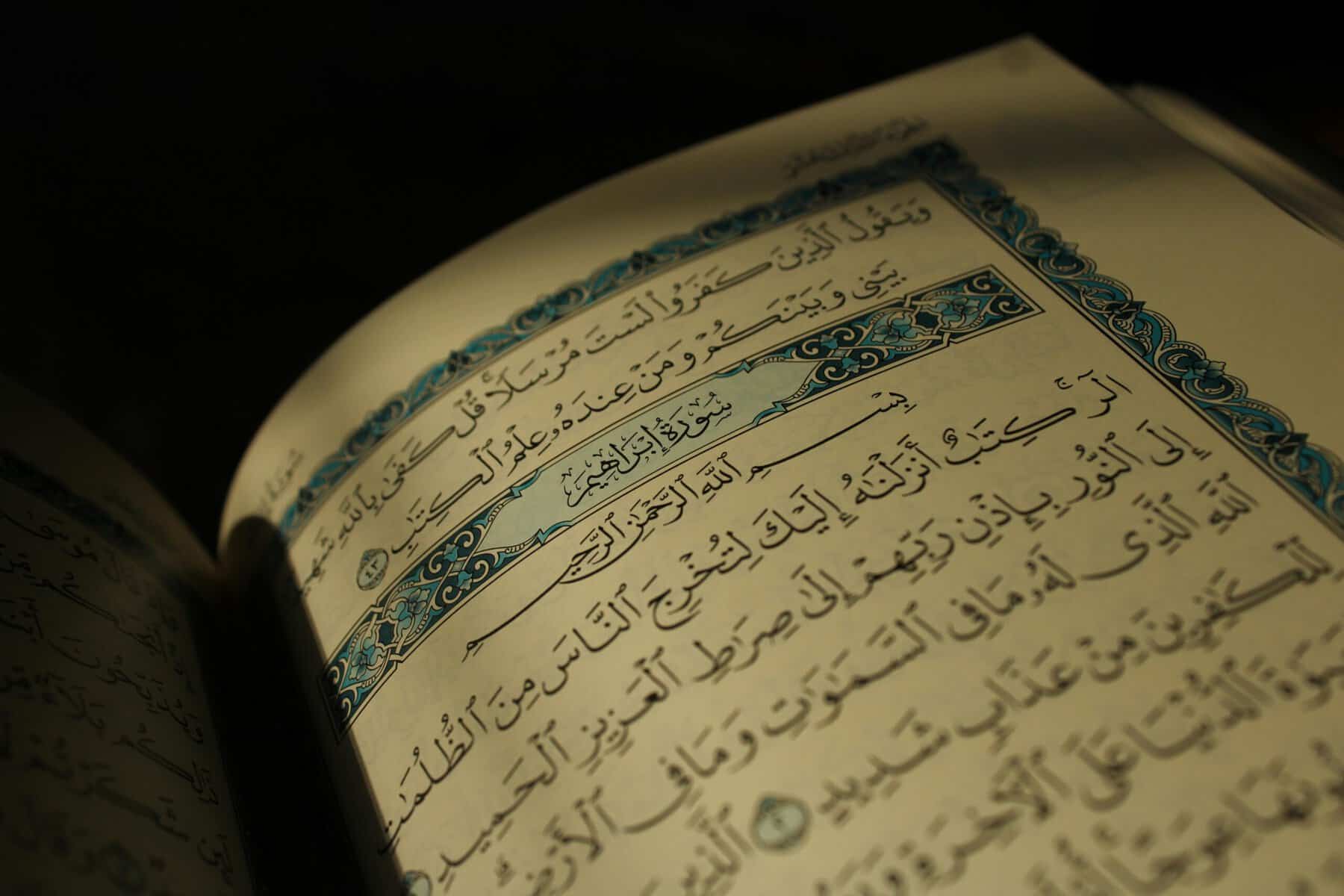
Every Muslim already says Arabic words every day. Allahu akbar in salah. Bismillah before food. Alhamdulillah after a sneeze. The Qur’an itself is in Arabic, the Prophet ﷺ spoke Arabic, and the entire tradition of tafsir, hadith, fiqh, and du’a has been preserved in Arabic for over fourteen centuries.
So when scholars say Arabic is the key to understanding Islam, they are not exaggerating. They are describing the literal medium in which the religion was revealed, recorded, and transmitted. Translation is a bridge. Arabic is the ground itself.
This guide explains why that matters, what changes when you start to read the Qur’an in its original language, and how an adult learner with no Arabic background can build genuine understanding step by step, on their own or through online Quran classes for adults.
Why Arabic Sits at the Centre of Islam
Allah ﷻ chose to send His final revelation in Arabic, and He named the language inside the revelation itself:
“Indeed, We have sent it down as an Arabic Qur’an that you might understand.”
(Surah Yusuf 12:2)
The same point is repeated in Surah Fussilat 41:3, Surah Ta-Ha 20:113, and Surah Ash-Shu’ara 26:195. Five separate verses link the choice of Arabic to the goal of understanding. The language is not incidental. It is part of the message.
That is why the five daily prayers, the call to prayer, the recitation of Surah al-Fatihah, the tashahhud, and the takbirat of Eid are all performed in Arabic by every Muslim, in every country, every day. A Muslim in Cairo, Jakarta, Manchester, and Toronto reads the exact same words from the exact same Mushaf. No other religion has maintained that kind of linguistic continuity for fourteen hundred years.
What Changes When You Read the Qur’an in Arabic
The most honest way to describe what Arabic gives you is this: it removes the middleman. Every translation, no matter how careful, is also an interpretation. The translator picks one of several possible meanings, smooths out grammar that does not exist in English, and inevitably loses sound, rhythm, and emphasis.
Three concrete examples make this clear.
1. One Arabic Word, Three English Words
The word taqwa (تقوى) is usually translated as “piety” or “God-consciousness” or “fear of Allah.” All three are partly right and partly wrong. Taqwa comes from a root meaning to guard, to protect oneself, to be cautious. It is the active state of placing a shield between yourself and what displeases Allah ﷻ. No single English word carries that.
Similarly, rahmah (رحمة) is usually rendered “mercy,” but it shares its root with rahim (the womb), so it carries the sense of mercy that is unconditional, protective, and nourishing in the way a mother is to her unborn child. Translate it as “mercy” and you lose that warmth.
2. Grammar That Carries Meaning
Arabic has features English does not: dual forms, gendered verbs, and verb patterns that change the meaning of a root in predictable ways. The verb kataba (he wrote), with the same three root letters, can become kataba (wrote), kaataba (corresponded with), aktaba (caused to write), iktataba (registered oneself), and so on. The Qur’an uses these patterns deliberately. In English you just see “write” or “dictate” and the precision is lost.
3. The Sound of the Verse Itself
Many surahs were revealed with specific rhythmic and rhyming patterns that move the listener. The Companions wept when they heard the Qur’an recited even before they understood every word. ‘Umar ibn al-Khattab famously accepted Islam after reading a few verses of Surah Ta-Ha, struck not just by the meaning but by the way the verse landed. Reading a translation, the meaning survives, but the recitation does not. The Qur’an is meant to be heard, and to hear it as it was revealed you need at least a basic relationship with the language.
Ibn Taymiyyah summarised this centuries ago: “The Arabic language itself is part of the religion, and knowing it is an obligation, because understanding the Book and the Sunnah is an obligation, and they cannot be understood except through Arabic.”
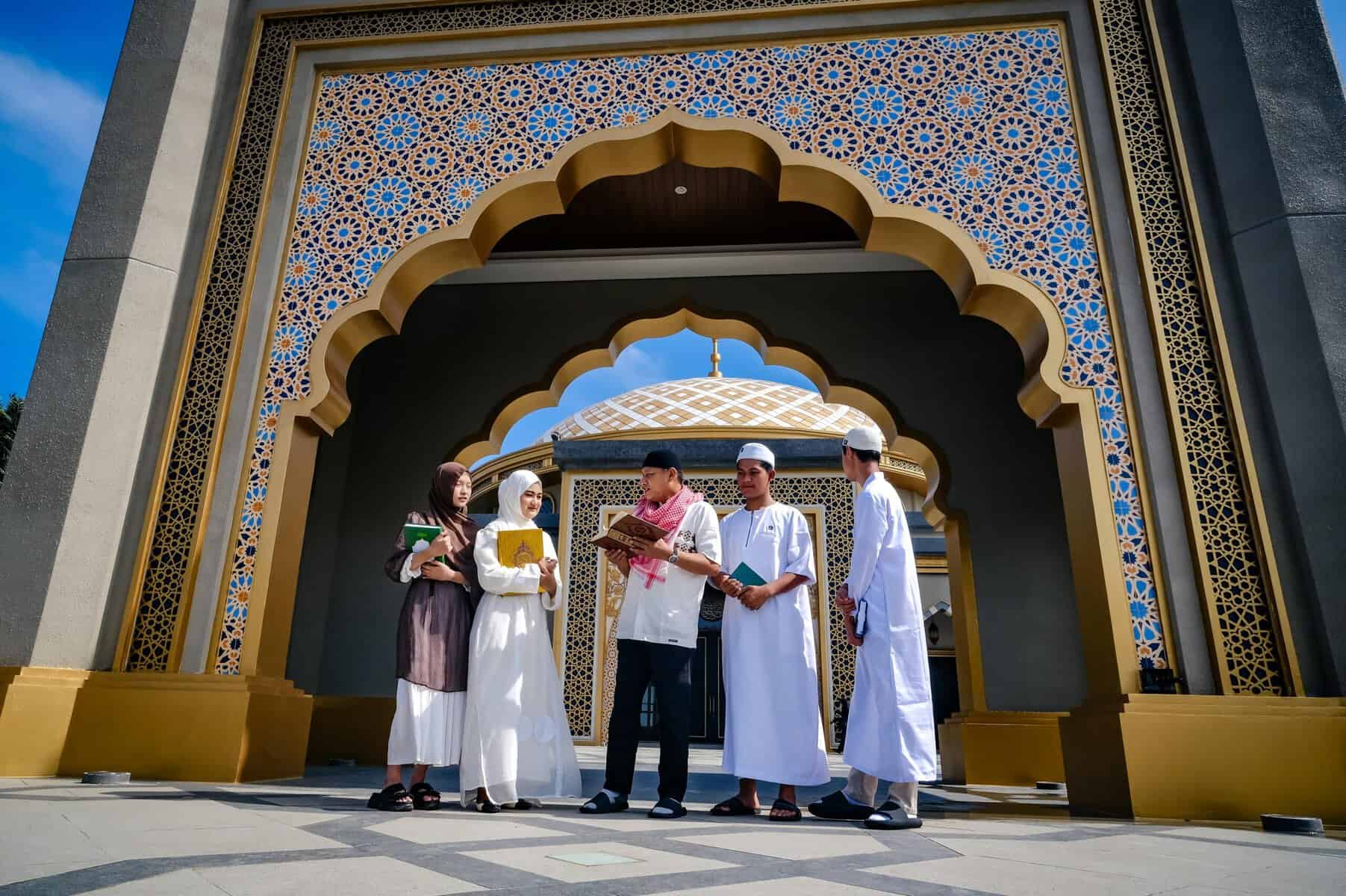
Arabic Inside Salah: From Recitation to Conversation
Most converts and most Muslims raised in non-Arab homes describe the same shift the first time they understand what they are saying in prayer. Before, salah is a sequence of memorised sounds. After, it becomes a conversation.
Take Surah al-Fatihah, which is recited at least seventeen times every day. The opening verse, al-hamdu lillahi rabbi’l-‘alamin, is usually translated “All praise belongs to Allah, Lord of all the worlds.” That is correct. But in Arabic, al-hamd uses the definite article (al-) plus a noun form, which together carry the sense of every kind of praise, in every form, belongs entirely and only to Him. The grammar makes the praise exclusive and total in a way the English cannot.
By the time you reach iyyaaka na’budu wa iyyaaka nasta’in, the inverted word order (the object iyyaaka, “You alone,” placed before the verb) is doing the work that English would need a whole extra clause to do. You can feel the emphasis. You alone we worship. You alone we ask for help.
This is the first thing that changes for adult learners: the words you have been saying for years start to mean what they actually mean.
Arabic Unlocks the Sunnah Too
The Qur’an is one half of the revelation. The Sunnah, the recorded words and actions of the Prophet ﷺ, is the other. The six canonical hadith collections (Bukhari, Muslim, Abu Dawud, Tirmidhi, Nasa’i, Ibn Majah) preserve tens of thousands of narrations in Arabic, and translations of even the most famous works are partial.
A simple example: the Prophet ﷺ said:
“Whoever Allah wishes good for, He gives him understanding of the religion.”
(Sahih al-Bukhari 71)
The Arabic word for “understanding” here is yufaqqih-hu fi’d-din, where the verb form (Form II, with the doubled middle letter) carries the sense of making deep understanding take root, not just casual knowledge. That nuance does not survive in English without a footnote. Hundreds of hadiths have the same problem: small grammatical choices that change the weight of the meaning.
This is why classical Islamic scholarship has always treated Arabic as a prerequisite. You cannot do tafsir without it. You cannot do fiqh without it. You cannot evaluate hadith without it.
Is Translation Enough? An Honest Answer
Translation is allowed and recommended for those who do not yet know Arabic. It is how the meaning of the Qur’an reaches the billion-plus non-Arabic-speaking Muslims in the world. Surah Muhammad 47:24 commands everyone to reflect on the Qur’an, not only Arabs, so translation has been part of how that reflection happens for centuries.
But it has limits. A translation is good for the gist. It is not good for the depth. For salah, du’a, dhikr, tafsir, fiqh, and serious study of hadith, the original language is non-negotiable. That is why every classical Islamic university (Al-Azhar, Madinah, Qarawiyyin, Zaytuna) teaches Arabic before anything else, and why your local scholar studied Arabic before he studied fiqh.
The honest position is this: translation gets you started. Arabic lets you arrive.
The Three Levels of Arabic Most Muslims Aim For
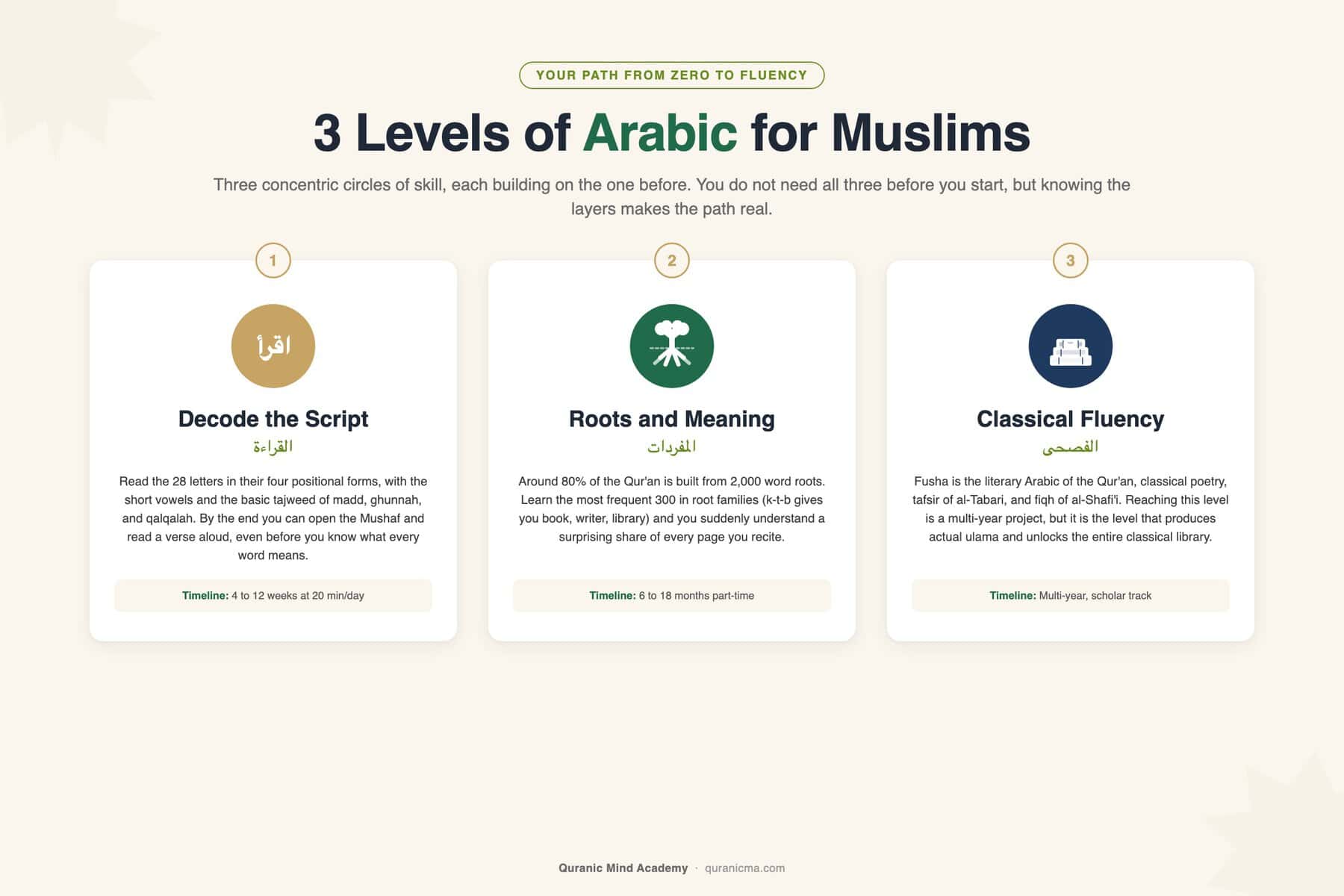
It helps to think of Arabic for Muslims as three concentric circles. You do not need all three before you start, but knowing the layers stops you from feeling overwhelmed.
Level 1: Reading the Arabic script. This is purely about decoding the letters and their sounds. The 28-letter alphabet, the short vowel marks (fatha, kasra, damma), and the basic tajweed rules that govern how sounds combine. This level takes most adult learners between 4 and 12 weeks of consistent study to reach the point where they can read the Mushaf without help, even if they do not yet understand what they are reading.
Level 2: Qur’anic vocabulary and grammar. Roughly 80% of the Qur’an is built from about 2,000 word roots, and those roots are repeated constantly. Learning the most frequent 300 roots already gives you comprehension of a surprising amount of the text. This level usually takes 6 to 18 months of part-time study and is where the “conversation with Allah” feeling in salah typically starts to appear.
Level 3: Classical Arabic (fusha). This is the literary register of the Qur’an, classical poetry, hadith, and traditional Islamic scholarship. It is the level required to read tafsir of al-Tabari, fiqh of al-Shafi’i, or hadith commentary of Ibn Hajar in the original. Reaching this level is a multi-year project, but it is the level that produces actual ‘ulama.
Most Muslims who say “I want to learn Arabic for the Qur’an” really mean Level 1 followed by gradual progress into Level 2. That is a realistic, life-changing goal that fits around a job and family.
What Stops Adult Learners (and How to Avoid Each Trap)
After two decades of teaching adults, four obstacles come up again and again. Naming them helps you avoid them.
1. Trying to learn from apps alone. Apps are useful for vocabulary drilling, but they cannot correct your pronunciation, explain why a verb takes a particular form, or guide you through a difficult page. A live teacher (online is fine) is essential at the early stages because mispronunciation in Arabic can change meaning, and once it is embedded it takes much longer to fix.
2. Trying to memorise vocabulary lists. Arabic is a root-based language. Learning words in isolation is far less efficient than learning root families. The root k-t-b gives you kitab (book), katib (writer), maktub (written), maktaba (library), kitaba (writing) and twenty more, all linked. Learn one root well and you have learned a cluster.
3. Skipping the Qur’anic context. If your goal is to understand Islam, you should learn Arabic with the Qur’an itself, not from a generic modern-standard textbook. The vocabulary you need most is the vocabulary the Qur’an actually uses. Many UK university Arabic courses focus on news Arabic or business Arabic, which is useful but tangential to the goal.
4. Inconsistency. Three short sessions a week beats one long weekend session. Language learning rewards frequency more than total hours, because the brain needs sleep cycles to embed grammar. The Prophet ﷺ said:
“The most beloved deeds to Allah are those done consistently, even if small.”
(Sahih al-Bukhari 6464)
That hadith applies to Arabic study just as much as to night prayer.
A Practical First-Month Plan
If you want to start this week, here is what an honest first month looks like for an adult learner with no prior Arabic.
Week 1. Learn the 28 letters in their isolated form. Use the Noorani Qa’ida or an equivalent primer. Aim for 20 minutes a day. By Friday you should recognise every letter and produce its sound.
Week 2. Learn the four positional forms of each letter (initial, medial, final, isolated) and the three short vowel marks. Start reading two-letter and three-letter combinations aloud. You are not reading words yet, just sound-blocks.
Week 3. Begin reading short, simple verses (Surah al-Fatihah, al-Ikhlas, al-Falaq, an-Nas) with a teacher who can correct your makharij (points of articulation). Do not skip this. The 20 minutes a day with a teacher at this stage is what determines whether you read the Qur’an correctly for the rest of your life.
Week 4. Add the most common 50 Qur’anic words to your active vocabulary (Allah, rabb, nas, din, kitab, iman, etc.) and start noticing them as you recite. The first time you spot al-hamdu lillah on the page and understand it without thinking, the door has opened.
By the end of a single month, with consistent effort, you have moved from zero to recognising the script, reading short surahs, and understanding the most common Qur’anic vocabulary. From there the second month builds on the first, and progress compounds.
How Quranic Mind Academy Teaches Arabic
Our Arabic programme is taught by Al-Azhar-trained Egyptian teachers, one-to-one, online, scheduled around your week. The structure follows the same Cairo-Madinah method that has produced classical scholars for centuries:
- Start with the Noorani Qa’ida so the script and pronunciation are correct from week one.
- Build Qur’anic vocabulary in root families, not isolated lists.
- Introduce grammar (nahw and sarf) only after the script is fluent, so the structure makes sense.
- Apply every lesson to a real ayah or short hadith, so the language is always tied to the religion, never abstract.
You can see the full structure of the Arabic Language course, or sit a free trial lesson with one of the teachers to find your level. The trial is one-to-one with a real teacher, not a sales call, and it includes a written assessment of where to start.
Related Guides
- Learn Arabic: Practical Path for Muslims
- Tajweed Rules: Every Rule Explained
- The Importance of Seeking Knowledge in Islam
- The Sciences of the Qur’an (Ulum al-Qur’an)
- Reciting the Holy Qur’an: A Beginner’s Guide
- Learn Qur’an for Adults
Frequently Asked Questions
Do I need to learn Arabic to be a good Muslim?
You can fulfil the obligations of Islam without speaking Arabic, and translations exist precisely because Allah ﷻ wants the message to reach everyone. But for understanding the Qur’an at depth, praying salah with full presence, and accessing classical Islamic scholarship directly, Arabic is the difference between hearing about Islam and hearing Islam in its own voice. Most adult learners describe it as the single most rewarding investment of their religious life.
How long does it take an adult to learn Qur’anic Arabic?
Reading the script fluently takes most learners 4 to 12 weeks of consistent study (20 minutes a day). Reaching a level where you understand the most common 80% of Qur’anic vocabulary while reciting typically takes 12 to 24 months of part-time study. Classical scholarly fluency is a multi-year project, but you do not need that level to transform your salah and your Qur’an reading.
Is Modern Standard Arabic the same as Qur’anic Arabic?
They share the same alphabet and most of the grammar, but the vocabulary and register differ. Modern Standard Arabic is the contemporary written language of news, books, and formal speech across the Arab world. Qur’anic Arabic is classical Arabic (fusha) from the 7th century with vocabulary tuned to revelation. If your goal is the Qur’an and hadith, study Qur’anic Arabic. If your goal is to read Al Jazeera or talk to Egyptians, learn Modern Standard Arabic (or Egyptian dialect).
Can children learn Qur’anic Arabic more easily than adults?
Yes for pronunciation, no for analytical grammar. Children pick up the script and the sounds faster than adults because their hearing and vocal apparatus are still flexible. Adults catch up on grammar because they already understand how language structure works. The best window is between ages 5 and 10 for the sounds. For adults, the news is that adult learners do succeed at Arabic, often faster than children at the comprehension level, as long as they have a teacher and are consistent.
What is the minimum daily time to make real progress?
Twenty to thirty minutes a day, six days a week, is the sweet spot. Less than that and progress is too slow to feel rewarding. More than that without a teacher just embeds bad habits. With a single 30-minute lesson twice a week plus 15 minutes daily review, most adult learners move from zero to reading the Mushaf within four months.
Do I need to memorise the Qur’an while learning Arabic?
No. Reading and Arabic comprehension are one path; Hifz (memorisation) is another. They reinforce each other, but you can learn Arabic without doing Hifz, and vice versa. Many serious students learn to read first, then begin Hifz only after the script is solid, then learn Arabic grammar alongside the memorisation. That sequencing tends to produce the strongest long-term outcomes.
The Single Step That Matters
The hardest part of learning Arabic is starting. The script looks foreign, the grammar is unfamiliar, and most adults assume they have missed their window. None of that is true. Every year hundreds of adult Muslims, including complete beginners in their fifties and sixties, learn enough Arabic to transform their relationship with the Qur’an.
The path is well-mapped, the teachers exist, and the technology removes every geographic obstacle. The only thing required is to begin, this week, with a real teacher and a realistic schedule. Allah ﷻ did not send the Qur’an in Arabic to keep you out. He sent it in Arabic to be the bridge in. Cross it.