Choosing how your family learns the Quran is one of those decisions that feels bigger than it looks. For generations the answer was simple: you walked to the local mosque or sat with a teacher in your neighbourhood. Today a parent in Manchester or a professional in Toronto can open a laptop and study one-to-one with a qualified teacher thousands of miles away. Both routes work. The question is which one fits your child, your schedule, and the way your household actually runs.
This guide compares online Quran classes and in-person lessons across the factors that matter most: flexibility, teacher quality, personal attention, safety, cost, and motivation. By the end you will have a clear sense of which option suits your family, and why many parents end up combining the two.
Table of contents
- The two ways families learn the Quran today
- Online vs in-person at a glance
- Breaking down the differences
- When in-person classes make sense
- When online classes make sense
- Can you combine both?
- What good online Quran classes look like
- Making your decision
- Frequently asked questions
The two ways families learn the Quran today
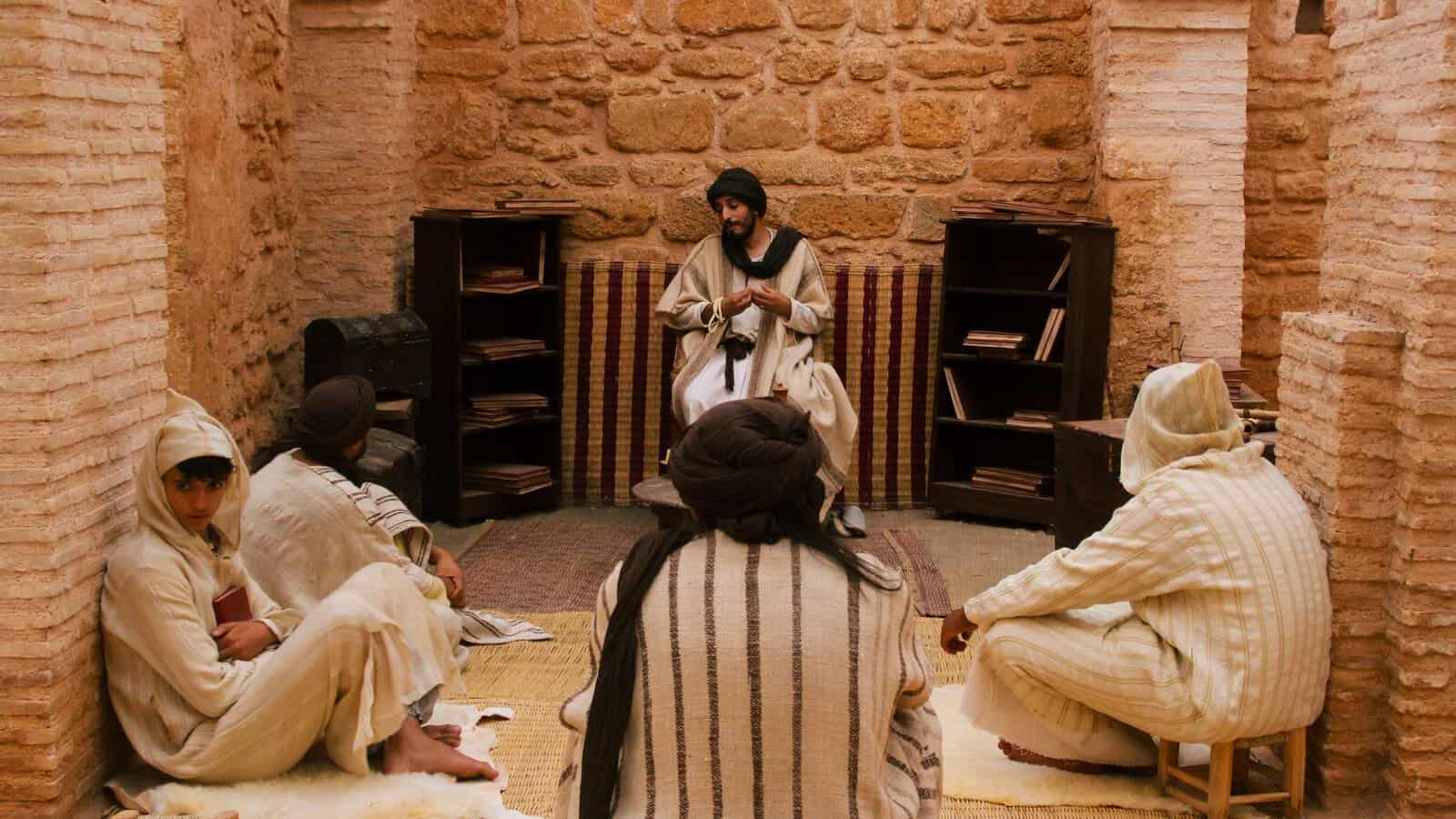
In-person classes usually mean one of two things. The first is a local mosque or weekend madrasah, where children study in a group with one teacher. The second is a private tutor who visits your home or hosts students at theirs. Both put a teacher and student in the same room, with everything that brings: face-to-face correction, a shared physical space, and the rhythm of leaving the house to learn.
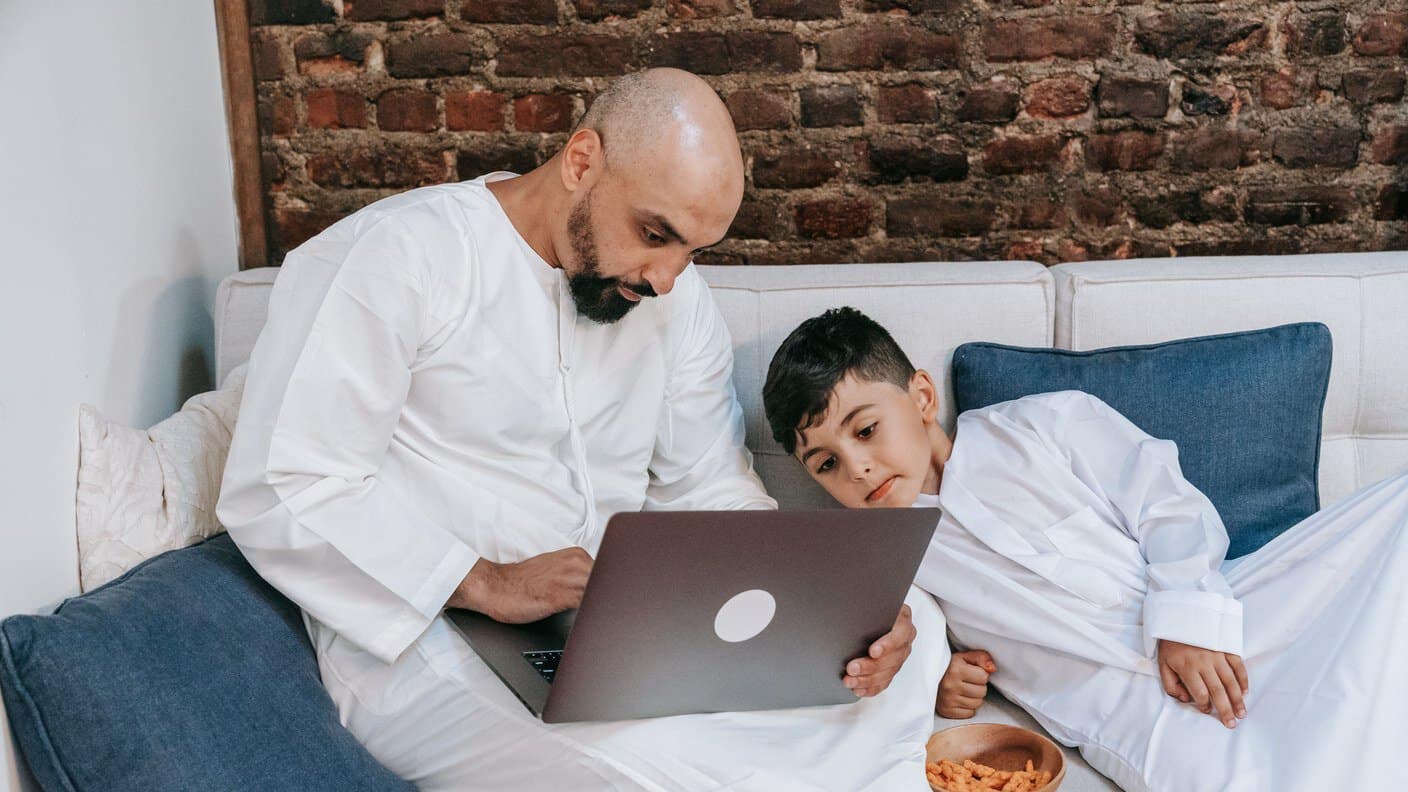
Online classes connect a student and teacher over video, almost always one-to-one. The student recites, the teacher listens, corrects pronunciation in real time, shares a digital Mushaf or worksheet on screen, and sets homework for the next session. Lessons happen from your living room at a time you choose. If you want a fuller picture of the format, our guide on how online Quran classes work walks through a typical lesson step by step.
Online vs in-person at a glance
Here is how the two options compare on the points families ask about most.
| What matters to you | Online classes | In-person classes |
|---|---|---|
| Scheduling | Flexible slots, including early mornings, evenings, and weekends | Fixed class times set by the mosque or tutor |
| Travel | None; lessons happen at home | Daily school run to and from the venue |
| Attention | Usually one-to-one, fully focused on your child | Often one teacher to many students |
| Choice of teacher | Access to specialist and Ijazah-holding teachers regardless of location | Limited to teachers near you |
| Parent oversight | You stay in the room and observe every lesson | You hand over and collect later |
| Community feel | Built mainly through the teacher relationship | Strong; classmates, the masjid, shared routine |
| Pace | Tailored to the individual student | Set by the group average |
A table only tells half the story, so let us look at what each row means in real family life.
Breaking down the differences
Flexibility and consistency
The single biggest reason families move online is time. A weekend madrasah runs when it runs, and a home tutor needs a slot that suits their travel. If your child has football on Saturday, or you work shifts, or Ramadan changes everyone’s routine, fixed timings become a weekly battle. Online lessons let you book a consistent slot that fits around school, work, and sleep, and rebook easily when life gets in the way. Consistency is what actually moves a student forward, and the easiest schedule to keep is usually the one that fits your own week. Many parents find that studying from home removes just enough friction to keep lessons going for years rather than months. Our article on the benefits of choosing to learn Quran from home covers this in more detail.
Access to qualified teachers
In a local setup you are limited to whoever teaches nearby. That might be excellent, or it might mean a crowded class and a long waiting list. Online learning removes the geography problem entirely. A family in a small town gets the same access to experienced, Ijazah-holding teachers as a family in a large city. At Quranic Mind Academy our teachers are Al-Azhar trained and based in Egypt, the heart of classical Quranic scholarship, working one-to-one with students across the UK, the US, and Europe. You are no longer choosing the nearest teacher. You are choosing the right teacher.
One-to-one attention and pace
This is where the two models differ most. A group class moves at the speed of the group. A strong reciter waits while others catch up, and a struggling child can fall quietly behind because there is simply not enough of the teacher to go around. One-to-one online lessons flip that completely. Every minute belongs to your child. The teacher hears every letter, catches every Tajweed slip, and adjusts the pace lesson by lesson. A child who needs longer on the Arabic letters gets it. A child ready to start memorising moves ahead without waiting. For beginners especially, that individual feedback is the fastest way to build correct habits, which is why our Quran lessons for beginners are structured around it.
Safety and your role as a parent
Safeguarding is on every parent’s mind, and it is one of the quieter advantages of learning at home. With online lessons the class happens in your living room, on a device you control, with you free to sit in, listen, and watch the teacher work. There is no drop-off, no unfamiliar building, no walk home in the dark on winter evenings. You see exactly who is teaching your child and how they speak to them, every single session. Reputable academies vet their teachers carefully for qualifications, experience, and character before they ever meet a student. The difference online is that you remain present and in oversight throughout, which many parents of younger children value highly. If you are weighing this up for little ones, our guide to online Quran classes for kids goes deeper on keeping young learners safe and engaged.
Cost and value
Cost is rarely just the lesson fee. In-person learning often carries hidden extras: fuel or transport, time spent driving, and sometimes registration or material charges. Online study removes the travel cost and the hours that come with it, and it tends to offer better value per hour of genuine teaching, because almost all of that time is spent actually learning rather than settling a group. The more useful question than “which is cheaper” is “which gives my child more real teaching for what we spend.” You can compare structured options on our plans page and see what a focused one-to-one hour includes.
Community, discipline, and motivation
Here is where in-person learning keeps a real edge, and it would be dishonest to pretend otherwise. A child who walks into the masjid each week sits among classmates, feels the routine, and absorbs the atmosphere of a place built for worship. That sense of belonging motivates some children in a way a screen cannot easily match. Group settings also build a certain discipline through peer presence. Online learning answers this differently, through a close and consistent relationship with one teacher who knows the student well, plus encouragement and structure from home. Neither is automatically better. It depends on what motivates your particular child, and you know that better than anyone.
When in-person classes make sense
In-person learning is a strong choice when:
- You have an excellent, accessible mosque or teacher nearby with space available.
- Your child is motivated by being around classmates and thrives in a group.
- Being physically present in the masjid community is a priority for your family.
- Your weekly routine is stable enough to keep fixed class times without strain.
If those describe your situation, a good local class can be a wonderful environment, and there is no need to change what already works.
When online classes make sense
Online learning tends to be the better fit when:
- Schedules are busy or unpredictable and you need flexible, consistent slots.
- There is no strong Quran teacher within easy reach, or the local classes are full.
- Your child needs focused one-to-one attention to build confidence or correct habits.
- You want to choose a specialist teacher for Tajweed, recitation, or memorisation.
- You prefer to stay present and oversee lessons yourself.
- You are an adult fitting study around work and would feel more comfortable learning privately.
Adult learners in particular often find online study removes the awkwardness of starting later in life. You can begin from the very first letter, at your own pace, without a classroom, in private online Quran classes for adults. Our piece on choosing to learn Quran as an adult speaks directly to that experience.
Can you combine both?
You do not have to treat this as a permanent either-or. Plenty of families run a hybrid setup, and it works well. A child might attend the local mosque for the community and the group experience, while taking one-to-one online lessons during the week to sharpen Tajweed, keep memorisation on track, or get the focused correction a busy group class cannot give. The masjid provides belonging. The online teacher provides precision. Together they cover what neither does perfectly alone. If your child is already at a local class but progress has stalled, adding a weekly online session is often the simplest way to move things forward without giving up the community they enjoy.
What good online Quran classes look like
Not all online classes are equal, so it is worth knowing what to look for. A strong programme should offer genuinely qualified teachers, true one-to-one lessons rather than large virtual groups, a clear curriculum with progress tracking, the option of a male or female teacher to suit your family, and a free trial so you can judge the fit before committing.
At Quranic Mind Academy, students follow a structured path from the first Arabic letters through fluent, Tajweed-correct recitation and into memorisation, all one-to-one with Al-Azhar-trained teachers. You can explore the full range on our courses page, including dedicated tracks for Quran reading and recitation and Tajweed. Children and adults are both welcome, and parents can read more about our approach to teaching Quran to kids.
Making your decision
The honest answer to “which is better” is that it depends on your family. If you have a thriving local class and a child who loves it, treasure that. If travel, timing, teacher access, or the need for focused attention are holding your child back, online learning solves real problems that in-person study often cannot. For a great many families today, especially those balancing busy lives across the UK, the US, and Europe, online one-to-one lessons turn out to be the option that actually keeps Quran learning going week after week.
Whatever you choose, the goal is the same, and it is a noble one. The Prophet, peace and blessings be upon him, said, “The best among you are those who learn the Qur’an and teach it” (Sahih al-Bukhari 5027). And the Quran itself teaches the believer to keep asking for more: “say, ‘Lord, increase me in knowledge'” (Quran 20:114, Abdel Haleem). The format is a means. Consistent, sincere learning is the aim.
See the difference for yourself
Book a free trial lesson and watch a focused, one-to-one class with a qualified teacher, from the comfort of home. No pressure, no obligation.
Frequently asked questions
Are online Quran classes as effective as in-person lessons?
For most students, yes, and often more so. Because online lessons are typically one-to-one, the teacher hears every letter and corrects in real time, which is hard to match in a group class. The key factors for progress, qualified teaching, individual feedback, and consistency, are all easier to secure online.
Is online Quran learning safe for young children?
It can be very safe. Lessons take place at home on your own device, and you are free to stay in the room and observe every session. You see exactly who is teaching your child and how. Choose an academy that vets its teachers for qualifications and experience, and that offers a trial lesson so you can judge the environment first.
Can my child have a female Quran teacher online?
Yes. One advantage of online learning is choice. Because you are not limited to teachers nearby, you can request a male or female teacher to suit your family’s preference, something a local class may not be able to offer.
Should I switch my child from the mosque to online classes?
Not necessarily. If your local class is working well, you can keep it and add a weekly online lesson to sharpen Tajweed or memorisation. Many families run both. Switch fully to online only if travel, timing, or teacher access are genuinely holding your child back.
Do online classes work for adult beginners?
They are ideal for adults. You can start from the very first letter, learn privately without a classroom, and book lessons around work. Many adult learners feel more comfortable making mistakes and asking questions in a one-to-one setting than in a group.
Written by the teaching team at Quranic Mind Academy. Our tutors are Al-Azhar-trained Quran teachers with Ijazah in recitation, delivering one-to-one Quran, Tajweed, Arabic, and Islamic studies lessons to students across the UK, the US, and Europe. Learn more about us.