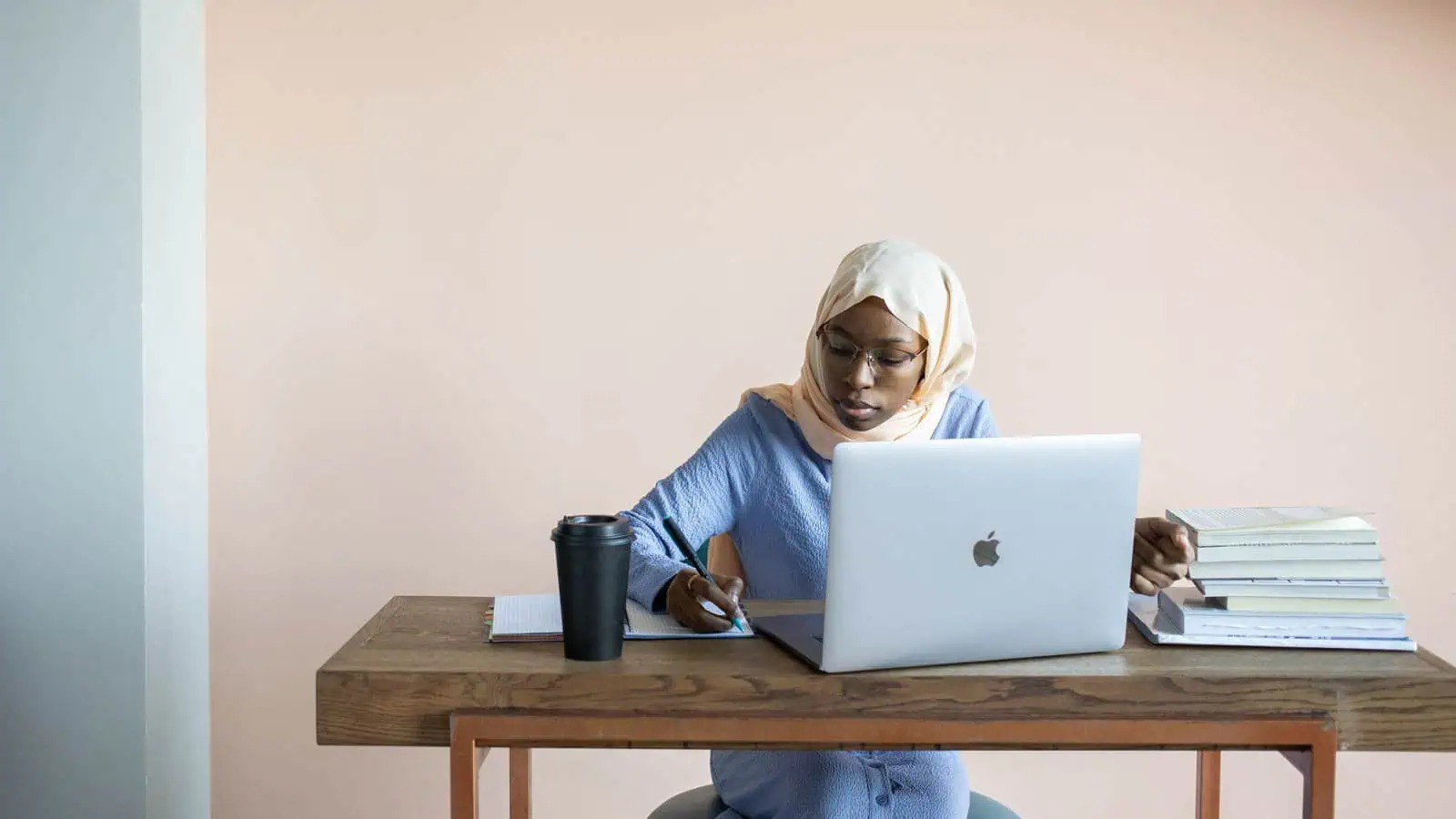
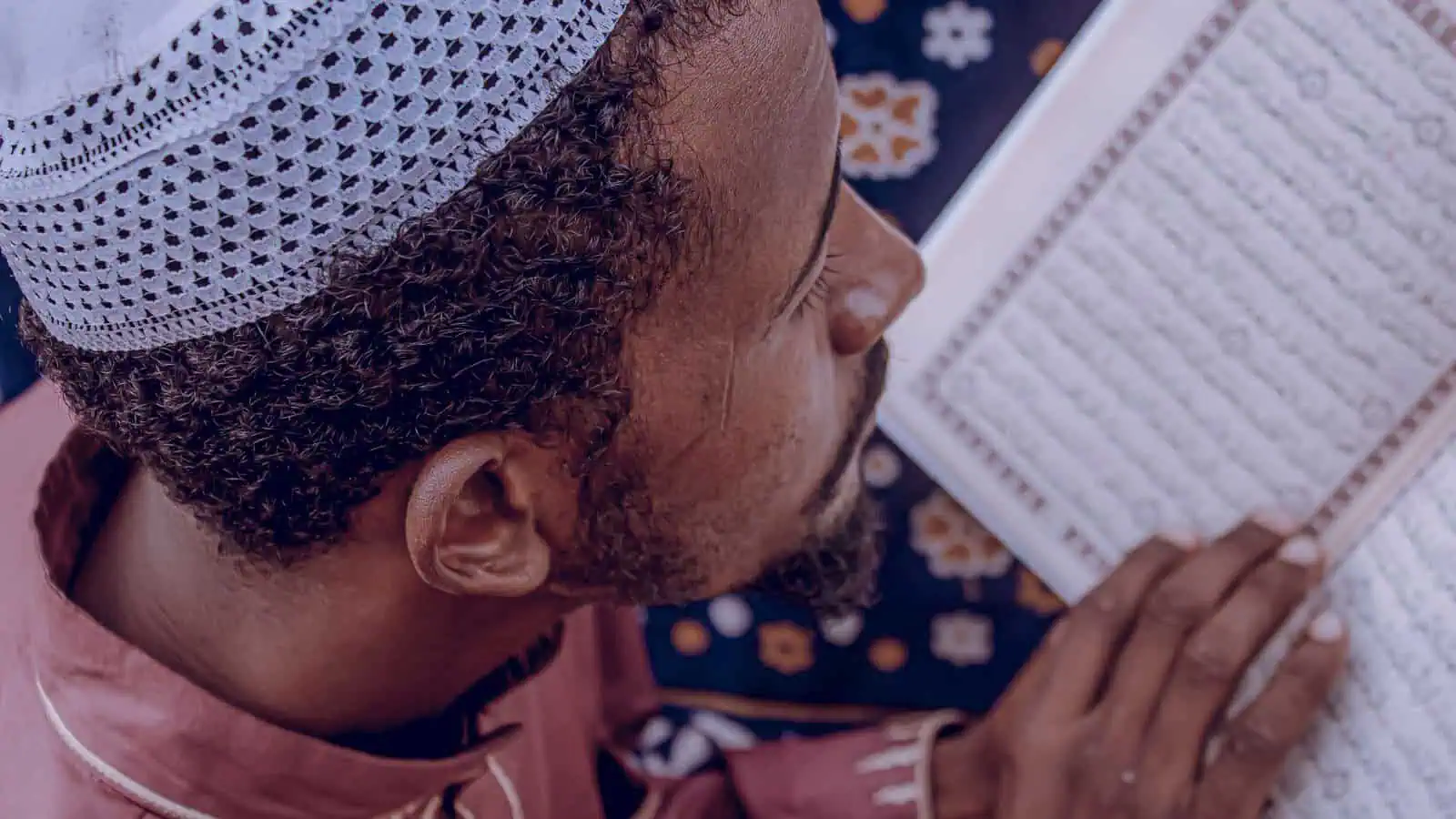
Learning the Qur’an used to mean a long commute to a local mosque, a Saturday-morning madrasa class, or a private tutor visiting the house. For most adults with a full-time job and a family, none of that was sustainable. The result was a generation of Muslims who could pray the obligatory salah but had never read the Mushaf with a teacher.
Reliable home internet, good cameras, and the global pool of Al-Azhar-trained teachers have changed the picture. A working parent in Birmingham can now sit with a qualified teacher in Cairo for thirty minutes after the kids are in bed. A new Muslim in a small town can study the Noorani Qa’ida from her kitchen table. A child can take a Hifz class from her bedroom desk before school.
This guide explains how learning the Qur’an from home actually works in 2026, what kind of progress is realistic, what to look for in a teacher, and how to start this week without spending money on the wrong things.
Why Home Study Works for Modern Muslims
The Prophet ﷺ said:
“The best of you are those who learn the Qur’an and teach it.”
(Sahih al-Bukhari 5027)
That hadith does not say in the mosque or in a particular city. Every Muslim must learn at least what they need to recite in their prayers, and the Muslim community as a whole must keep the entire Qur’an learned and taught (Dar al-Ifta fatwa 19159). How you learn is whatever lets you actually do it. For fourteen centuries that meant in person, because there was no other option. Today the option exists, and for many adults online Quran classes for adults are the only option that fits a real week.
Three practical reasons home study has become the default for serious adult learners:
- You get a one-to-one teacher, not a group of twelve. In a group class of a dozen students, each learner gets only a few minutes to recite individually. In a one-to-one online lesson the whole thirty minutes is yours, and every mispronunciation is corrected on the spot.
- You can study with an Al-Azhar-trained teacher regardless of where you live. Egypt, home of Al-Azhar, is one of the oldest and most respected centres of classical Arabic and tajweed training. Online study brings that quality to anyone with a laptop.
- Time flexibility makes consistency possible. Three short sessions a week in your own home almost always beats one long weekend class somewhere else, because consistency, not heroic effort, is what builds Qur’an skill.
What a Home Qur’an Lesson Actually Looks Like
If you have never taken an online lesson, the format is simpler than it sounds. A typical thirty-minute one-to-one session runs like this:
- Minutes 0–3. Greetings, salam, brief check-in (how was the week, any questions on last week’s work).
- Minutes 3–8. Review of the previous lesson. You recite what was assigned. The teacher listens for any tajweed slips and corrects them immediately.
- Minutes 8–20. The new portion. The teacher recites a line, you repeat it, the teacher corrects, you recite it back correctly two or three times until it is locked in.
- Minutes 20–27. Practice combining the new line with the previous line. Light explanation of any new tajweed rule or vocabulary that came up.
- Minutes 27–30. Assignment for the next lesson, du’a, salam.
The format is identical whether the student is a five-year-old learning the Noorani Qa’ida or a sixty-year-old completing the third juz of Hifz. The screen disappears within the first lesson, and what remains is the teacher and the student and the Mushaf.

What You Need to Start (and What You Do Not)
The setup is deliberately minimal. Anything more is optional.
Essentials:
- A laptop, tablet, or smartphone with a working camera and microphone.
- Reasonably stable home internet (anything that supports a video call works).
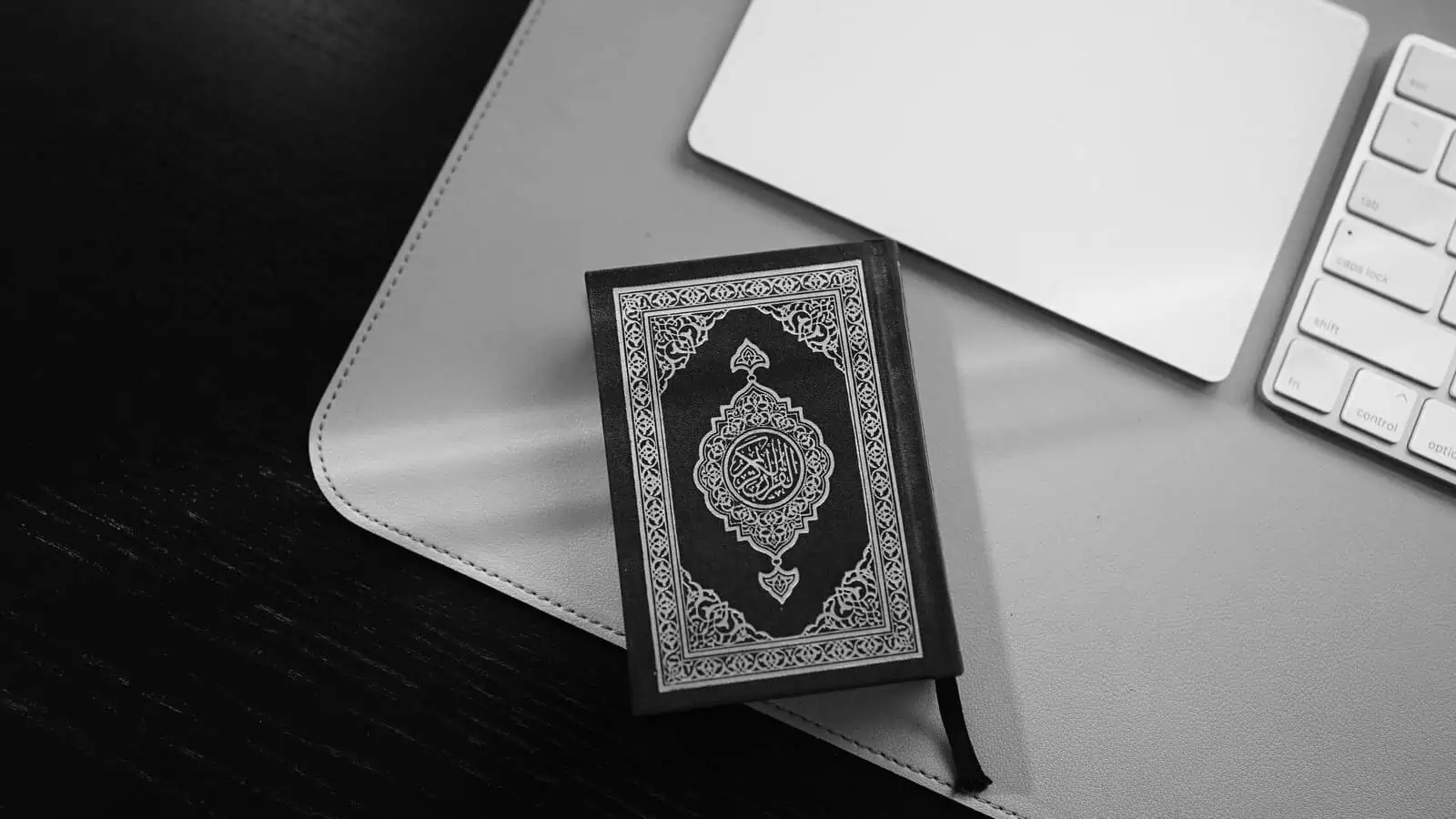
- A printed 15-line Madinah Mushaf (the Uthmani-script edition printed in Madinah, one of the most widely used worldwide). Ask your teacher which Mushaf they read from and use the same one. A digital Mushaf is fine as a backup but a physical copy is strongly preferred for daily reading.
- A quiet corner for thirty minutes. It does not have to be a dedicated room.
Nice to have:
- A simple wooden rehal (book stand) so the Mushaf sits flat on a table.
- Headphones for noisy households.
- A notebook to write down corrections and the next assignment.
You do not need:
- An expensive computer. A five-year-old laptop or a basic tablet works fine.
- A dedicated “Islamic learning” app subscription. Apps drill vocabulary; they do not replace a teacher.
- A particular prayer outfit. Ordinary modest clothing is fine.
Choosing a Teacher: The Five Questions That Matter
The teacher matters more than anything else. Pricing, app interface, and class scheduling are all secondary. Before you commit to any programme, get clear answers to five questions.
1. Where did the teacher study and with whom? The strong answer is named institutions and named scholars: Al-Azhar University in Cairo, the Islamic University of Madinah, the Holy Mosque (Masjid al-Haram) circles, or a recognised local sanad from a teacher whose own teacher trained in those institutions. Vague answers like “ten years of experience” without an institutional anchor are a warning sign.
2. Does the teacher hold an ijazah? An ijazah is a formal certification that the teacher has recited the Qur’an to their own teacher with full correctness in a recognised recitation (most commonly Hafs ‘an ‘Asim). For Hifz students especially, an ijazah-holding teacher matters because Hifz preserved by an ijazah chain is what links you to the Prophet ﷺ.
3. Is the teaching one-to-one or in a group? For Qur’an recitation specifically, one-to-one is non-negotiable. Group lessons work for Islamic Studies or basic Arabic, but tajweed correction needs the teacher to hear every individual letter, every lesson.
4. Can you sit a free trial before paying? Any serious academy lets you trial a real lesson with the actual teacher before you commit. The trial should be teaching, not selling. If the “trial” is a sales call with a coordinator, walk away.
5. Female teacher availability. For sisters and daughters who prefer female teachers, this is a fundamental need. Confirm female teacher availability before signing up rather than discovering after that the rota does not match.
The Three Tracks You Can Start

Most adult learners join one of three tracks, depending on starting point.
Track 1: Read the Mushaf (Noorani Qa’ida + Tajweed). For students who cannot yet decode the Arabic script. Start with the Noorani Qa’ida course, then graduate to reading the Mushaf with tajweed corrections. In our teachers’ experience, most adults reach independent reading in four to six months at three lessons a week.
Track 2: Recite Better (Tajweed for Existing Readers). For students who can already read but were never taught the rules of madd, ghunnah, qalqalah, ikhfa, and the proper makharij. The Tajweed Course covers the full Jazariyyah curriculum in structured terms. In our teachers’ experience, most existing readers see audible improvement in their recitation within eight to twelve weeks.
Track 3: Hifz (Memorisation). For students committing to memorise some or all of the Qur’an. The Hifz programme uses the classical three-track method (new memorisation, recent revision, distant revision) and is built around consistent five-day-a-week sessions. In our teachers’ experience, completing the full Mushaf takes between three and seven years, depending on age and time commitment.
It is fine to combine tracks. Many students do Tajweed once a week and Hifz on the other days, for example.
Realistic Timelines (No Marketing Numbers)
The most common question from new students is “how long until I can read the Qur’an?” The honest answer depends on starting point, age, and consistency. The numbers below are for an adult with no prior Arabic, studying three thirty-minute lessons per week plus ten minutes of daily revision. These are the averages our teachers see with adult students; your pace may differ.
| Milestone | Realistic timeline |
|---|---|
| Read the 28 Arabic letters confidently | 4 to 6 weeks |
| Read short surahs (Al-Fatihah, Al-Ikhlas, Al-Falaq, An-Nas) | 2 to 3 months |
| Read the Mushaf independently with basic tajweed | 4 to 6 months |
| Comfortable recitation with full tajweed application | 12 to 18 months |
| Complete Hifz of the entire Qur’an | 3 to 7 years (depends on intensity) |
Children often reach the first three milestones faster than adults, especially in pronunciation. Adults catch up quickly on the comprehension side because they already understand how language structure works.
What Actually Stops People from Making Progress
After two decades of teaching adults, the same four obstacles come up repeatedly. None of them are about ability.
1. Booking too much, too soon. Some students sign up for five lessons a week, manage two weeks, then burn out. Start with two or three sessions a week that you can sustain for six months. Adding more lessons later is easy. Restarting after burnout is hard.
2. Skipping the daily ten-minute review. The lesson teaches you the new line. The review embeds it. Without the daily review, much of what the lesson taught is lost. Ten minutes after Fajr or before bed is enough.
3. Switching teachers every few weeks. Every new teacher needs time to learn your pronunciation habits and adjust to your level. Commit to a teacher for at least three months before deciding whether the fit is right.
4. Treating it like an evening hobby instead of an act of worship. The students who keep going for years are the ones who treat the lesson the way they treat salah: a fixed appointment with Allah ﷻ, not a discretionary activity that gets cancelled when the day gets busy.
The Prophet ﷺ said:
“The most beloved deeds to Allah are those done consistently, even if small.”
(Sahih al-Bukhari 6464)
Two consistent lessons a week for two years beats six lessons a week for one month and then nothing.
Home Learning for Children: What Changes
Children can start as young as five. The structure is identical to the adult format but the lessons are shorter (twenty to twenty-five minutes), the teacher style is warmer, and parental involvement is closer.
Three things matter most for children:
- Same time, same place. Children flourish on routine. The lesson should be at the same time and at the same desk every week. The brain associates that spot with focus.
- Parent on standby for the first few lessons. Not in the room, but nearby. Younger children need the reassurance that an adult is reachable, and parents need to see how the teacher conducts the lesson so they can support practice during the week.
- No screen distractions on the same device. Close the iPad games, mute notifications, and treat the device as the “Qur’an device” during the lesson. The brain learns context-by-cue.
The kids’ programme is structured around these patterns and assigns one consistent teacher rather than rotating through a pool, because the relationship matters as much as the curriculum at this age.
The Cost Conversation
One-to-one Qur’an lessons from qualified teachers cost real money. Most reputable academies charge per lesson rather than a flat monthly fee, which is fairer because you only pay for what you actually attend. The honest expectation:
- Two thirty-minute lessons a week is the minimum for genuine progress.
- Three to four lessons a week is the sweet spot for adults and children alike.
- Five lessons a week is appropriate for serious Hifz students.
Beware of providers that offer ten lessons for the price of one. The cost has to come from somewhere, and it usually comes from the teacher’s training or hourly rate. A well-trained Al-Azhar graduate has spent more than a decade in classical study; their hourly rate reflects that. See current pricing plans for a transparent breakdown of what each package includes.
Your First Three Weeks
If you want to start this week, here is the simplest path that actually works.
Week 1. Book a free trial lesson with a real teacher. The trial assesses your current level and assigns a starting point. Use the rest of the week to set up your study corner (a quiet spot, a printed Mushaf, headphones, a notebook).
Week 2. Begin two thirty-minute lessons a week at a fixed time you will not move (after Fajr, after Maghrib, or after the kids are in bed). Treat the appointment as fixed. Do ten minutes of review on every non-lesson day.
Week 3. Add the third weekly lesson if the schedule allows. By the end of week three, the routine should feel like part of the week rather than an experiment. In our teachers’ experience, the first audible progress usually arrives within the first month.
Related Guides
- Online Quran Classes in the UK: One-to-One Lessons at UK Times
- Tajweed Rules: Every Rule Explained
- How to Learn Tajweed at Home: Self-Study Tips
- Reciting the Holy Qur’an: A Beginner’s Guide
- Learn Qur’an for Adults
- Qur’an Classes for Kids
- Arabic Is Your Key to Understanding Islam
Frequently Asked Questions
Can I really learn the Qur’an well from home?
Yes, and for many adult learners the home format is what finally makes consistent study possible. The teacher hears every letter you recite, corrects in real time, and the absence of group dynamics means your full thirty minutes are spent on your recitation. The format change is the medium, not the method. The method is the same one-to-one teacher-student transmission (talaqqi) that has defined Qur’an learning for fourteen centuries.
How long does it take to read the Qur’an from scratch?
In our teachers’ experience, an adult with no Arabic background, studying three thirty-minute lessons per week plus ten minutes of daily review, typically reads short surahs by month three and the Mushaf independently with basic tajweed by month six. Children of school age generally reach the same milestones faster on the recitation side but slower on the comprehension side.
Do I need to learn Arabic before I learn to read the Qur’an?
No. Learning to read the Mushaf (decode the script) is a separate skill from understanding the Arabic words. Most adults start by learning to read so they can recite the Qur’an correctly, and later add Arabic vocabulary to understand what they are reciting. The Arabic Language course is the natural next step once reading is fluent.
Can I request a female teacher?
Yes. Female teachers are available for sisters, daughters, and family classes. State the preference at the trial-booking stage and the assignment will respect it.
What if my child is shy or restless?
Both are normal. Good children’s teachers expect it. The first three to five lessons are partly the teacher building rapport before the curriculum starts in earnest. Children who never sat still in a mosque madrasa often do well one-to-one because they have the teacher’s full attention.
What happens if I miss a lesson?
Reputable academies allow rescheduling with 24 hours notice. The lesson is not lost. What matters is not the individual missed session but the overall weekly rhythm, which you protect by not letting one missed lesson become a missed week.
Is the technology complicated?
No. Most academies use a standard video-call platform (Zoom, Google Meet, or a built-in classroom) that takes one click to join. If you can take a video call with family, you can take a Qur’an lesson.
The First Step
The single hardest part of learning the Qur’an as an adult is starting. Once the first lesson happens, every subsequent lesson is easier. Book the trial, find the teacher, set the fixed time, and let the routine carry you for six months. Allah ﷻ rewards the consistent step over the dramatic one. Take that first step from where you already are, in your own home, this week.