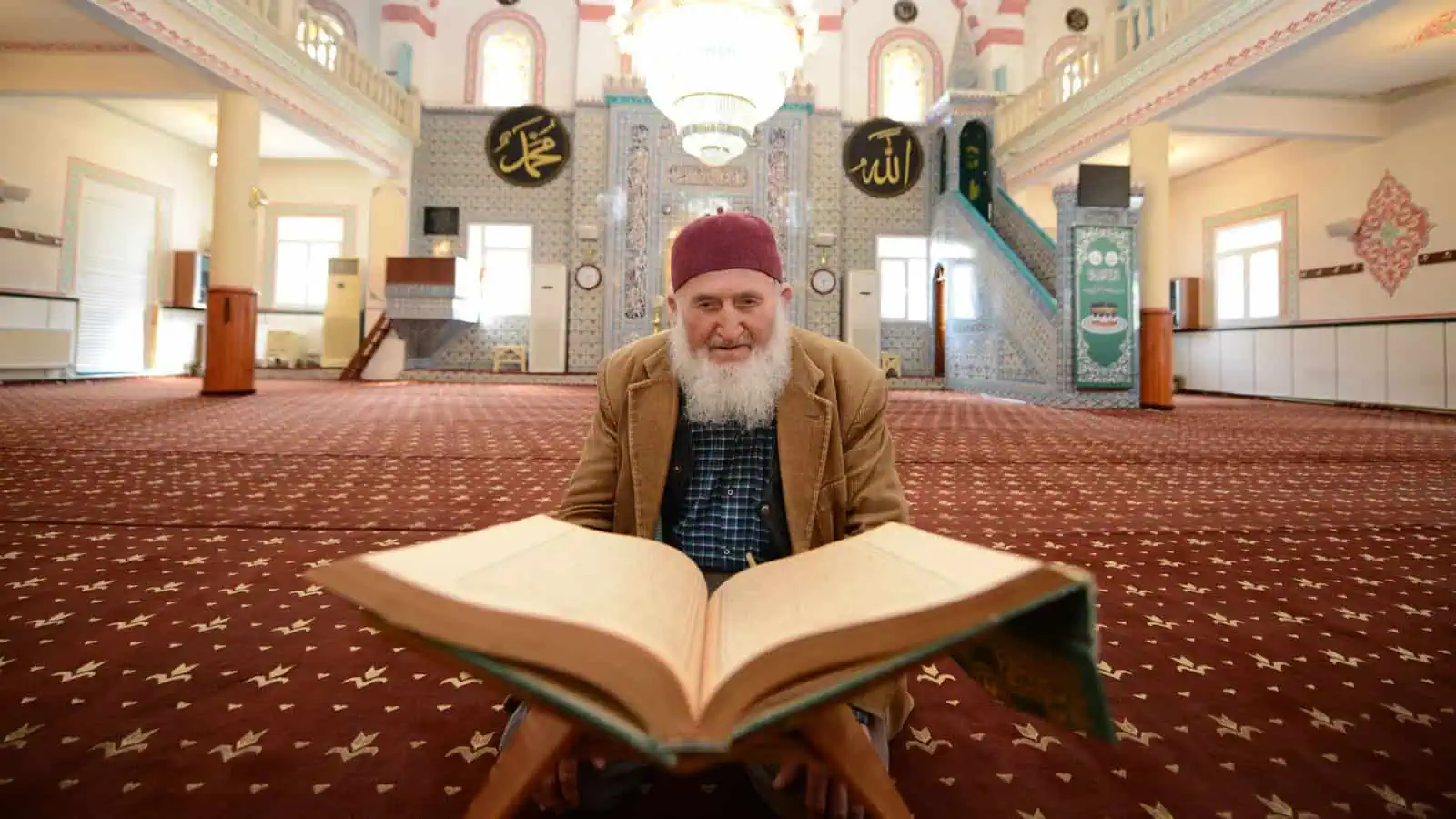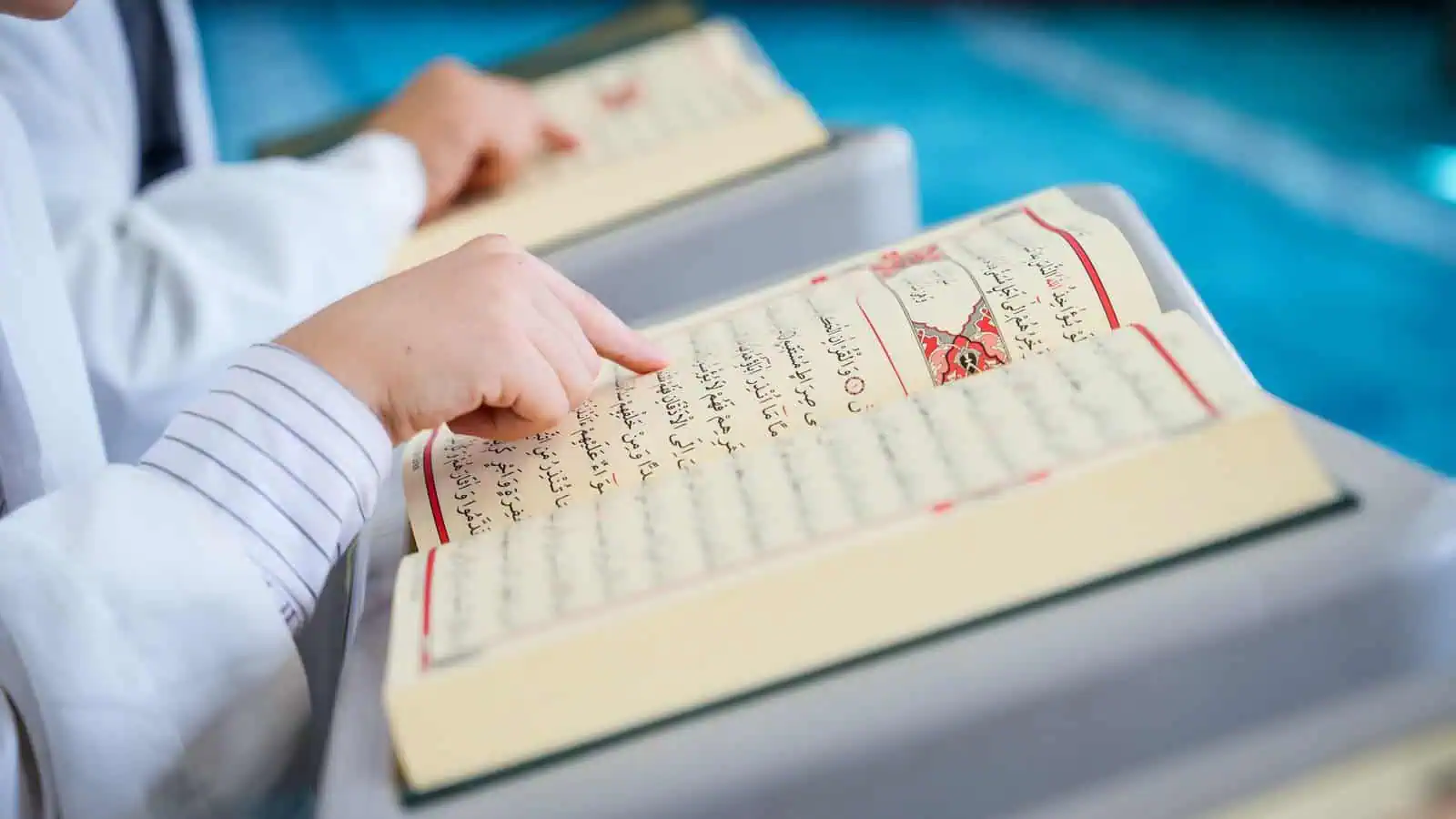
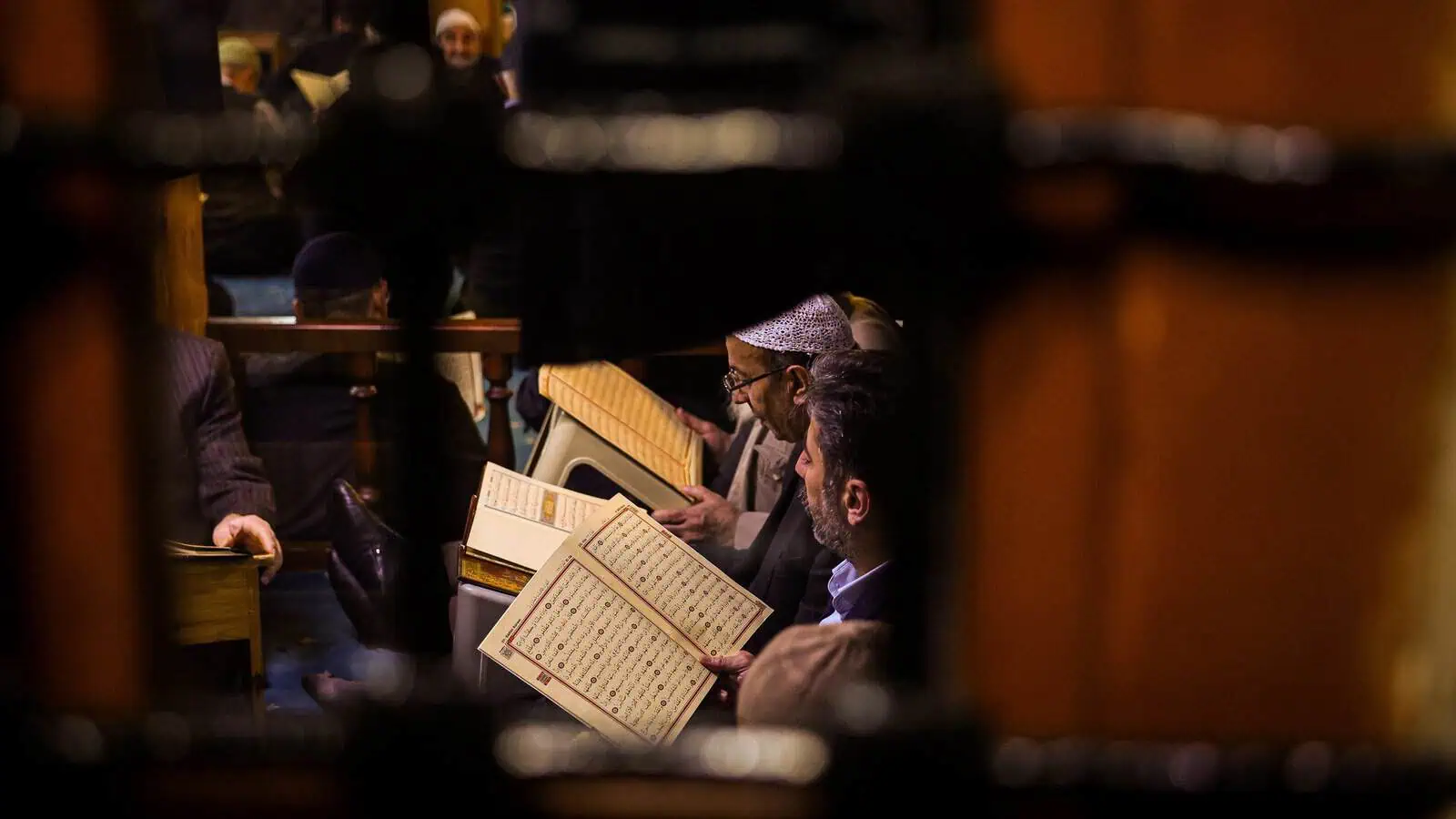
A Quran study circle is a small group that meets regularly to read the Quran together, listen to each other, and talk through what the verses mean. In Arabic it is called a halaqa (also written halaqah), literally “a ring”, because people sit facing one another. You do not need a mosque committee, a budget or a scholar in residence to start one. You need a few committed people, a fixed time, a plan for each session and a reliable book of tafseer. This guide walks through all of it, for a circle that meets in a living room, in a mosque or on a video call.
What a Quran study circle actually is
The word halaqa describes a shape before it describes a method. For centuries students have sat in a ring around a teacher in the mosque, and the name stuck. Today it covers anything from a weekly tafseer reading at a local masjid to four friends who open a shared video link every Thursday after Isha.
What separates a study circle from a lecture is that everyone takes part. People read aloud in turn, someone reads an explanation of the passage from a recognised tafseer, and the group discusses what it asks of them. What separates it from a class is that nobody is being graded. The circle exists to keep its members close to the Quran week after week, which is exactly the thing most people find hardest to do alone.
A circle is not a replacement for a teacher. It is very good at consistency, reflection and encouragement. It is weak at correcting pronunciation, because a room of learners usually cannot hear its own mistakes. We come back to that at the end.
Why gather around the Quran at all?
The clearest text on this is a long hadith in Sahih Muslim. Among other things, the Prophet ﷺ said that no people gather “in the house among the houses of Allah (mosques) and recite the Book of Allah and they learn and teach the Qur’an (among themselves)” except that tranquillity descends on them, mercy covers them, the angels surround them, and Allah mentions them to those near Him (Sahih Muslim 2699a).
Two details in that wording are worth reading slowly. The Arabic verb for “learn and teach among themselves” is yatadarasunahu, which describes study done back and forth between people, not one person reading while the rest listen. And the place named in this narration is a mosque. A second hadith in the same chapter of Muslim promises the same four things, the angels, mercy, tranquillity and being mentioned by Allah, to any people who sit together remembering Allah, without naming a place (Sahih Muslim 2700a). We will not claim more for a home or online circle than these texts say. What they make plain is that sitting together with the Quran is something the Prophet ﷺ praised by name.
The same back-and-forth study shows up at the highest level. Ibn Abbas reported that Jibril met the Prophet ﷺ every night of Ramadan and studied the Quran with him, using the same root word, yudarisuhu (Sahih al-Bukhari 6). Reading the Quran to someone, and having it read back to you, is how it has been preserved and learned from the start.
And the Quran states its own purpose in terms that suit a circle well:
كِتَٰبٌ أَنزَلۡنَٰهُ إِلَيۡكَ مُبَٰرَكٞ لِّيَدَّبَّرُوٓاْ ءَايَٰتِهِۦ وَلِيَتَذَكَّرَ أُوْلُواْ ٱلۡأَلۡبَٰبِ
“This is a blessed Scripture which We sent down to you [Muhammad], for people to think about its messages, and for those with understanding to take heed.” (Quran 38:29, Abdel Haleem)
Muhammad Sayyid Tantawi explains in al-Tafsir al-Wasit that this reflection means thinking about what the verses contain of wise rulings, sound manners and guidance for this life and the next, and that “taking heed” means people of sound minds drawing lessons from the stories of those who came before. Reflection of that kind is easier with company. One person notices a word, another remembers the story it points back to, a third asks the question everyone was thinking. If you want to see how reflection turns daily reading into something that changes you, our guide to the benefits of reading Quran daily builds on the same verse family.
Five formats a Quran study circle can take
Most circles that fail do so because nobody agreed what the circle was for. Pick one format to start with. You can change it later.
| Format | Best for | What a session looks like |
|---|---|---|
| Recitation circle | People who can read but want fluency | Each person reads a page aloud while the others follow in their Mushaf and listen. |
| Tafseer reading circle | Adults who want to understand what they recite | A short passage is recited, then explained from one named tafseer, then discussed. |
| Memorisation partners | Two to four people memorising the same surahs | Each person recites their new portion and revision from memory while a partner checks against the Mushaf. |
| Family circle | Parents and children at home | Fifteen to twenty minutes: a short surah, its story or meaning in simple words, one question for the children. |
| Online circle | Friends in different cities or time zones | Any of the above on a video call, with one person sharing the page on screen. |
Memorisation partners work best alongside a revision plan. If that is your format, our Quran revision schedule gives you weekly cycles you can split between partners.
How to start a Quran study circle in seven steps
1. Write down the purpose in one sentence
“We read and understand Surah al-Kahf together over ten weeks” is a purpose. “We get closer to the Quran” is a wish. The first one tells you what to bring next week and when you have finished.
2. Keep it small
Four to eight people is the range where everyone reads every week and nobody can hide. Above ten, a circle quietly turns into a lecture with an audience. If more people want to join, start a second circle rather than growing the first.
3. Choose one source of explanation and stick to it
Discussion is the point of a circle, but opinions about what a verse means are not tafseer. Read the explanation from a recognised book and discuss what it asks of you, not what you would like the verse to say. Tafsir Ibn Kathir has a widely used abridged English edition; Tantawi’s al-Tafsir al-Wasit and al-Tafsir al-Muyassar suit Arabic readers. Our guide to what tafseer is explains which questions a group can settle by reading and which belong to scholars.
4. Fix the time and keep it
Same day, same time, same length. Weekly beats “whenever we can”, and an hour that ends on time beats two hours that run late and put people off coming back. Agree up front that the circle goes ahead even if only two people turn up.
5. Give everyone a role
A host who opens the room or the link. A reader who prepares the tafseer passage. A timekeeper. Rotate the roles monthly so the circle does not depend on one person’s energy.
6. Run the first session to plan
Use the session plan below exactly as written for the first month. Improvising too early is how circles drift into chatting.
7. Review after six weeks
Ask three questions: Is everyone still coming? Is the pace right? Are we acting on anything we read? Adjust the format if the answers are no. Six weeks is long enough to judge and short enough to fix.
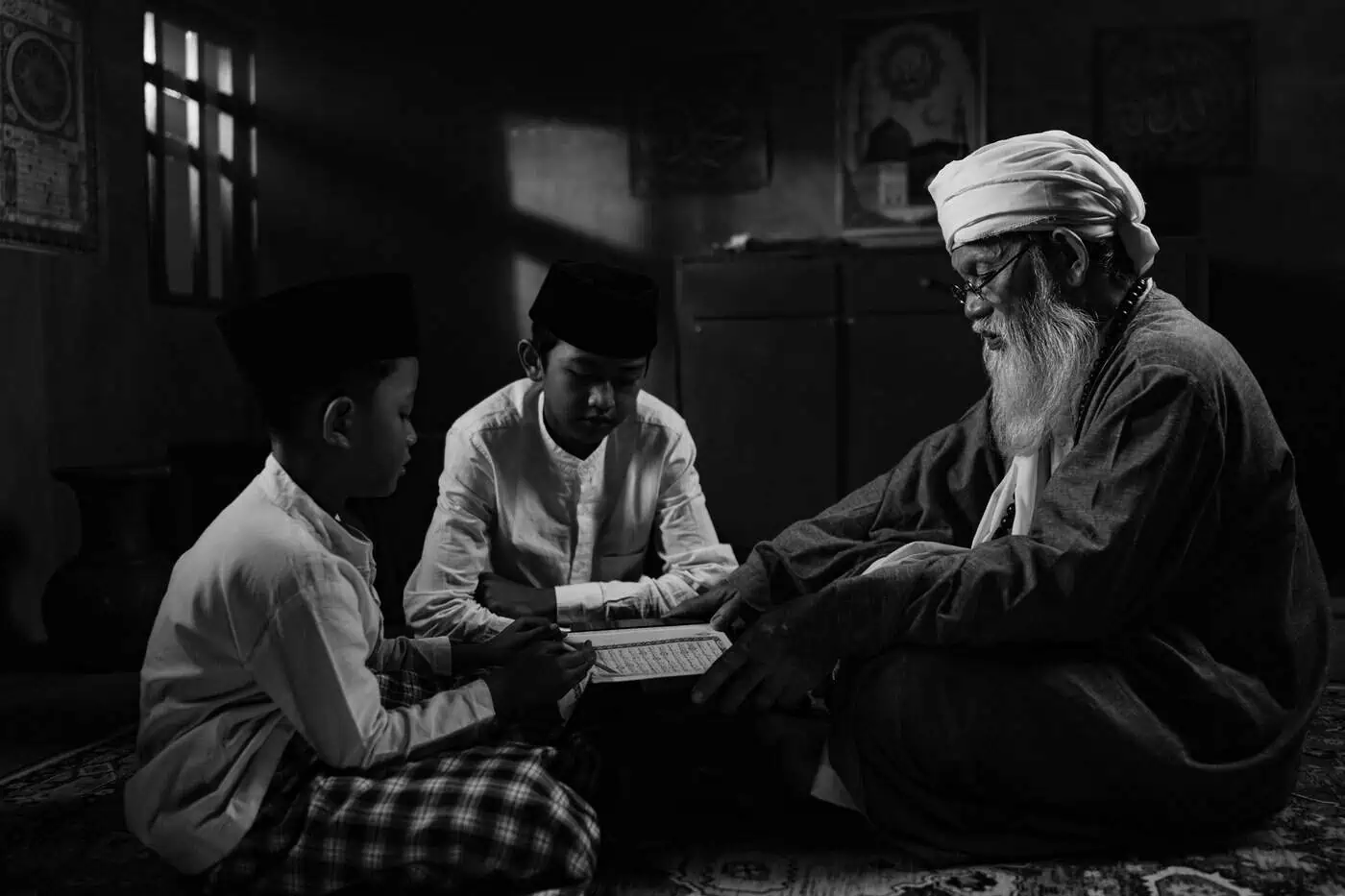
A circle does not need a hall. Three people and one Mushaf are enough to begin.
A 60-minute session plan you can copy
| Time | Segment | What happens |
|---|---|---|
| 0 to 5 min | Open | Settle in, remind everyone of the passage and last week’s takeaway. |
| 5 to 20 min | Recite | Each person reads a few verses of the passage aloud in turn. Others follow in the Mushaf. |
| 20 to 35 min | Explain | The prepared reader reads the tafseer of the passage from the agreed book, slowly. |
| 35 to 50 min | Reflect | Discuss two questions: What does this passage ask of me? What stood out that I had not noticed before? |
| 50 to 60 min | Commit and close | Each person names one thing to act on this week. Confirm next week’s passage and roles. |
Fifteen minutes of recitation sounds short. It is deliberate. The circle’s job is to read with understanding, and a passage of five to ten verses is plenty to discuss well. If your group’s recitation needs work, our guide on how to improve Quran recitation has a routine each member can do between sessions.
Online or local: which suits your circle?
A local circle has the warmth of sitting in one room and, if it meets in a mosque, the setting named in the hadith of Muslim. It is also harder to sustain: travel, childcare and weather all cancel sessions. An online circle survives all three and lets friends in Manchester, Toronto and Houston read together, but it needs firmer habits, because it is easy to half-listen with a camera off.
For an online circle, four habits make the difference: cameras on during recitation, one person sharing the Mushaf page on screen so everyone is on the same line, everyone muted except the reader, and the link kept the same every week so nobody has to hunt for it. Our comparison of online and in-person Quran classes covers the same trade-offs for lessons with a teacher.
Who to invite
The Quran addresses this directly. Allah told the Prophet ﷺ: “Content yourself with those who pray to their Lord morning and evening, seeking His approval, and do not let your eyes turn away from them out of desire for the attractions of this worldly life” (Quran 18:28, Abdel Haleem). Tantawi reports, among the narrations the commentators mention about this verse, that leaders of Quraysh asked the Prophet ﷺ to sit with them alone and give his poorer Companions, such as Bilal, Ammar and Ibn Mas’ud, a separate gathering, and that Allah forbade it. His conclusion is that people’s real worth lies in faith and taqwa, not wealth or standing.
For a circle, that has a plain practical meaning. Invite people for their commitment, not their status or how well they already read. The member who struggles to read a line and shows up every week is worth more to the circle than the confident reader who comes once a month. Circles are commonly organised as a men’s circle, a women’s circle, or a family circle at home; sisters looking for structured lessons alongside a circle may find our guide to online Quran classes for ladies useful.
The manners that keep a circle healthy
- Intention. The verse above praises people “seeking His approval”. A circle that becomes a place to show off knowledge or win arguments has lost the reason it exists.
- Listen fully. When the Prophet ﷺ asked Abdullah ibn Mas’ud to recite to him, Ibn Mas’ud read from Surah an-Nisa until verse 41, and the Prophet ﷺ said “Enough for the present”, with tears in his eyes (Sahih al-Bukhari 5050). Listening closely to someone else’s recitation is part of the practice, not time spent waiting for your turn.
- Correct gently and only what you are sure of. If you hear a clear misreading, wait until the reader finishes the verse, then point to the word. If you are not sure, say nothing and ask a teacher later.
- Say “I don’t know”. When a question goes beyond the tafseer you are reading, write it down and take it to a scholar. A circle that guesses at rulings does more harm than good.
- Keep the Mushaf in view. Recite from the page, even if you have the passage memorised, so the group can follow and spot slips.
Five reasons circles fade, and the fix for each
The time keeps moving. Fix the slot and protect it. A circle that reschedules every week becomes a circle that meets every month, then not at all.
It grows too big. Split at nine. Two circles of five do better than one of ten.
It depends on one person. When the organiser travels, the circle stops. Rotating roles is the cure.
Discussion drifts. Without a fixed tafseer and a fixed question, an hour on Surah al-Asr can become an hour on politics. The session plan above exists to prevent this.
Nobody’s recitation improves. Members notice after a few months that they read no better than when they started, and lose heart. That is the limit of peer study, and it has a straightforward answer.
Where a teacher fits in
The Prophet ﷺ said: “The best among you (Muslims) are those who learn the Qur’an and teach it” (Sahih al-Bukhari 5027). A circle does the second half of that hadith well: members teach each other what they have read, and reflection grows with every session. The first half, learning to recite correctly, usually needs one person who can hear exactly where your makharij slip and tell you how to fix it.
Many circle members pair the weekly gathering with a short one-to-one lesson. The circle keeps them reading and reflecting; the lesson fixes the pronunciation the circle cannot hear. If you are an adult starting out, our guide to learning Quran as an adult explains what that path looks like, and what tajweed is shows why a trained ear matters.
Your first lesson with one of our qualified teachers is a free 30-minute trial, with no card needed. Every paid month after that is covered by our money-back guarantee, and you can change teacher at any time, free of charge.
Frequently asked questions
What is a halaqa?
A halaqa (also spelled halaqah) is a study circle: a group that sits together, traditionally in a ring, to read and learn the Quran or another Islamic subject. The word means “ring” or “circle” in Arabic. A Quran halaqa usually combines recitation in turn, reading an explanation from a tafseer, and discussion.
How many people should be in a Quran study circle?
Four to eight is a good range. Everyone gets to read every week, discussion stays focused, and nobody can drift into just listening. If more people want to join, start a second circle rather than letting one grow past nine or ten.
Do we need a scholar to run a Quran study circle?
No, but you do need a reliable source. Read the explanation of each passage from a recognised tafseer rather than offering personal interpretations, and take questions about rulings to a qualified scholar. A circle is for reading, reflecting and encouraging each other, not for issuing opinions.
Can a Quran study circle meet online?
Yes. Many circles meet on a video call so friends in different cities can take part. Keep cameras on during recitation, have one person share the Mushaf page on screen, keep everyone muted except the reader, and use the same link every week.
What should we study first in a Quran study circle?
Start with a short, well-known passage that everyone can read, such as one of the shorter surahs of the last juz or a section of Surah al-Kahf, and read its tafseer from one agreed book. A clear, finite goal of eight to ten weeks keeps the group motivated.
Is a study circle enough to learn to recite the Quran correctly?
Usually not on its own. A circle is excellent for consistency and understanding, but members rarely hear their own pronunciation mistakes. Pairing the circle with lessons from a qualified teacher who can correct your recitation directly gives you both.